Time on the Job
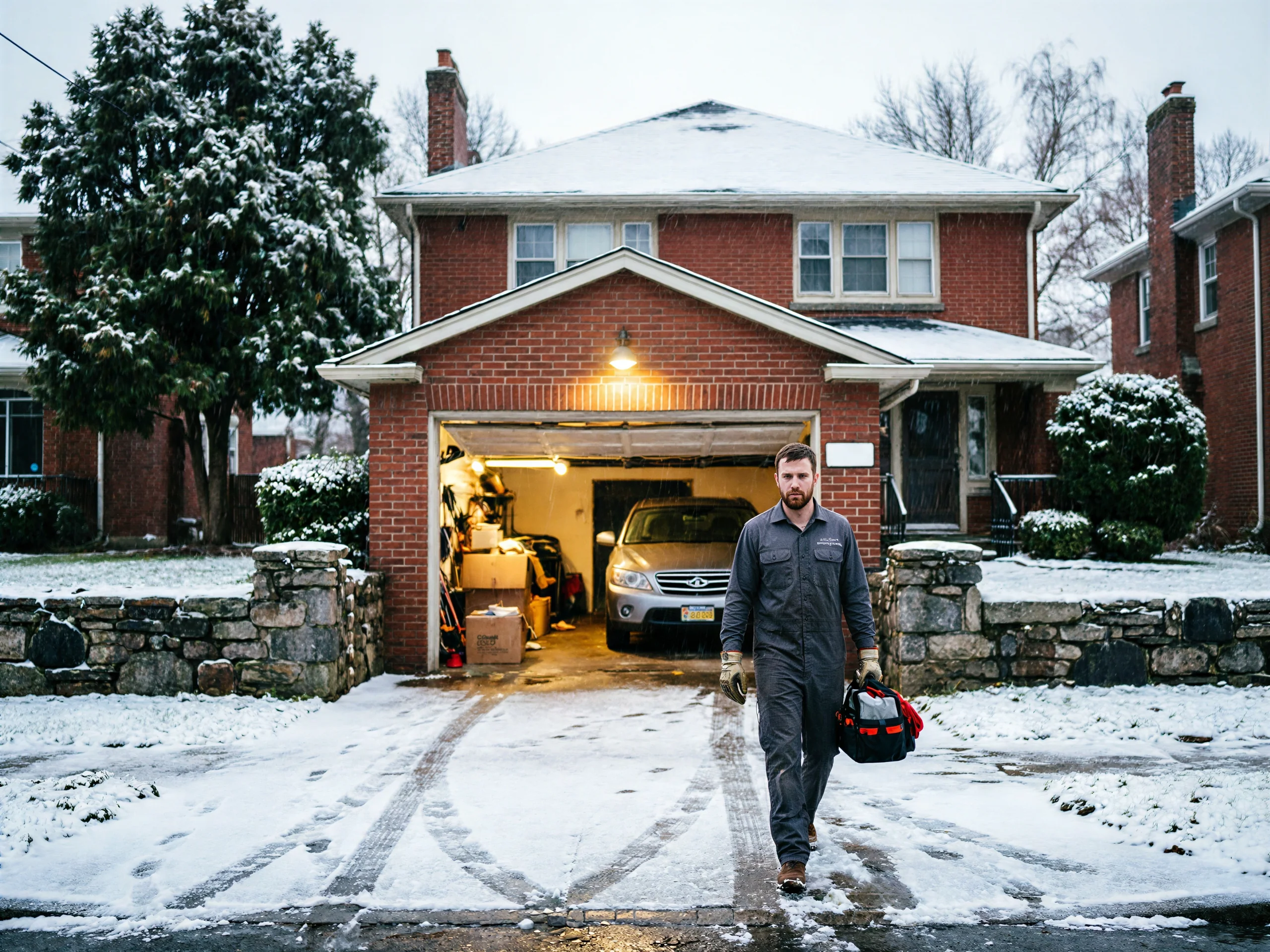
Randallstown sits about seven miles out from our shop in Ellicott City, which is close enough that a spring call here doesn't turn into a half-day trip, but it's far enough that we load the truck for the job before we leave rather than guessing on site. A broken torsion spring on a double door and a snapped extension spring on a single-car door need different cable, different winding bars, different hardware - so when you call, we ask what the door looks like and how it's failing before we're on the road. That seven-mile stretch runs through Catonsville and Woodlawn, both inside our normal service area, so there's nothing unusual about the drive itself. What matters more is what's waiting at the house: this part of the county was mostly built out in the 1970s, and that one fact shapes almost everything else about the repair.
Doing It Yourself
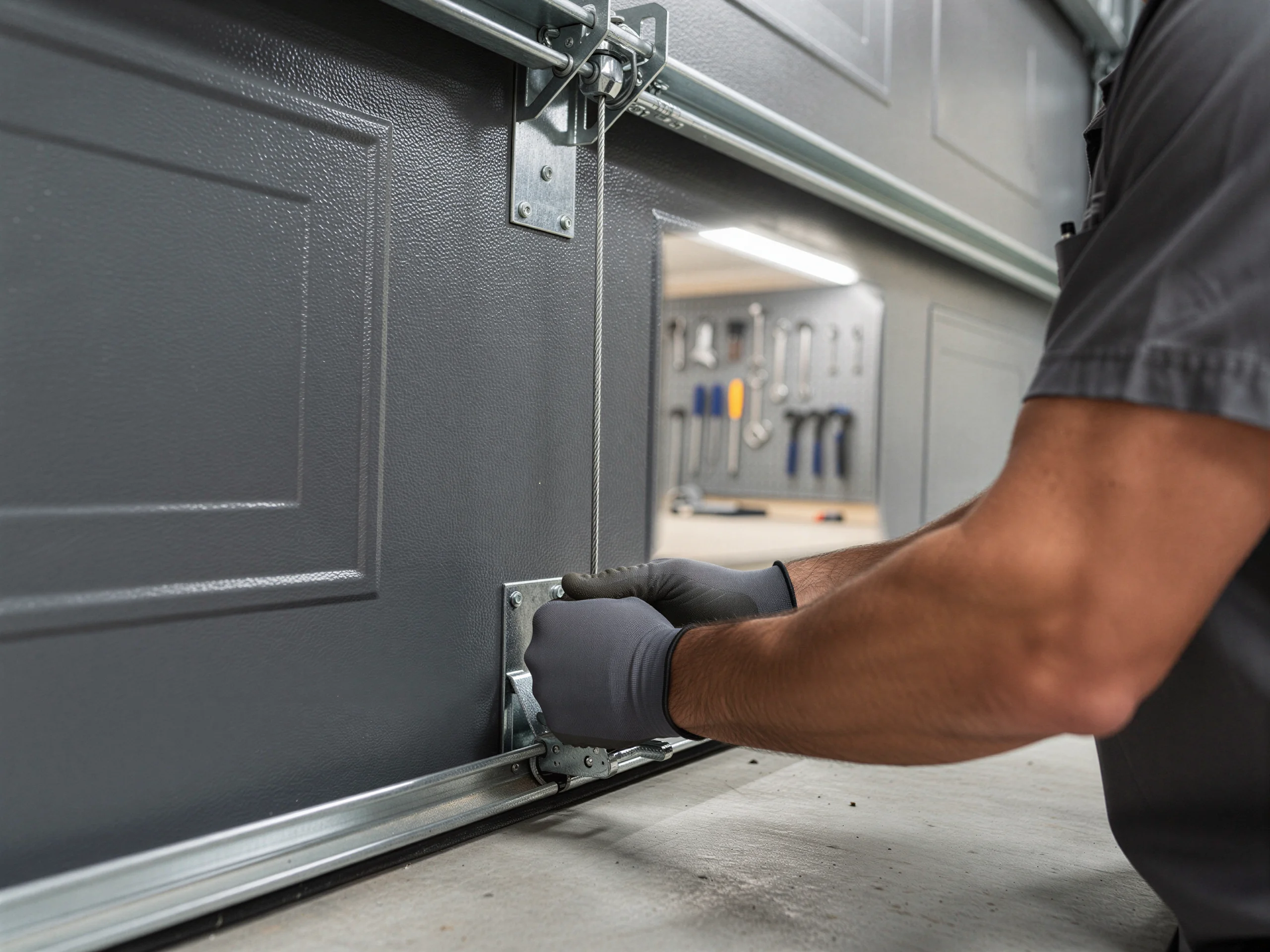
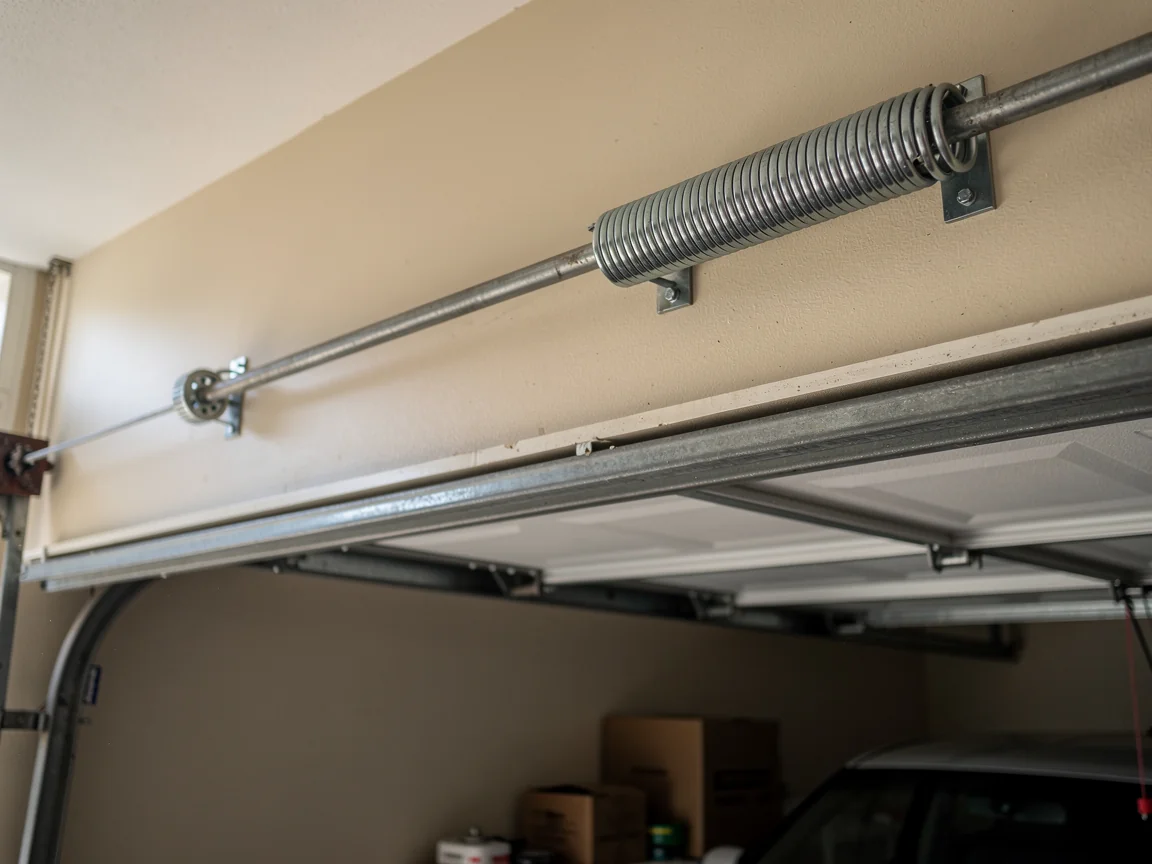
A torsion spring is wound under enough tension to break a finger or worse, and the winding bars for 1970s-era hardware aren't always the same diameter as what's sold at a hardware store today.
Online video temptation
We're not going to walk you through winding one over the phone - that's the one job on a garage door we tell people flat out not to attempt themselves, no matter how good the online video looks.
Manual evenness check
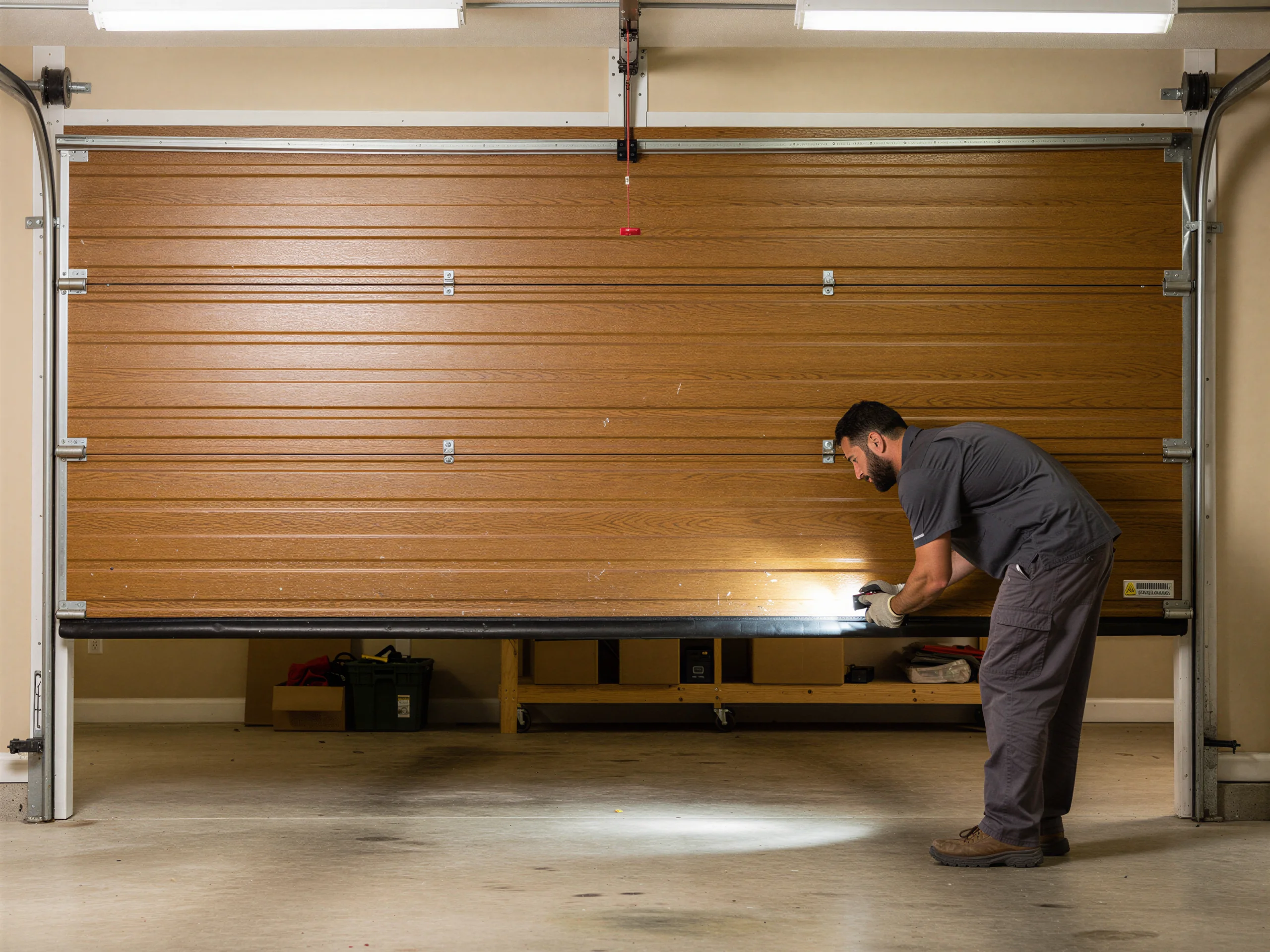
Extension springs are lower-risk to look at, but even there, a frayed cable under load can whip. What you can safely do: unplug the opener, see whether the door moves evenly by hand with the spring disconnected from the equation, and note whether one side of the door is noticeably lower than the other.
Wire gauge and direction
That tells us a lot before we even arrive. Replacing a spring yourself on a door this age also means sourcing the right wire gauge and wind direction, which isn't always obvious on hardware that's forty-plus years old and has been repainted or swapped once already.
The Complications
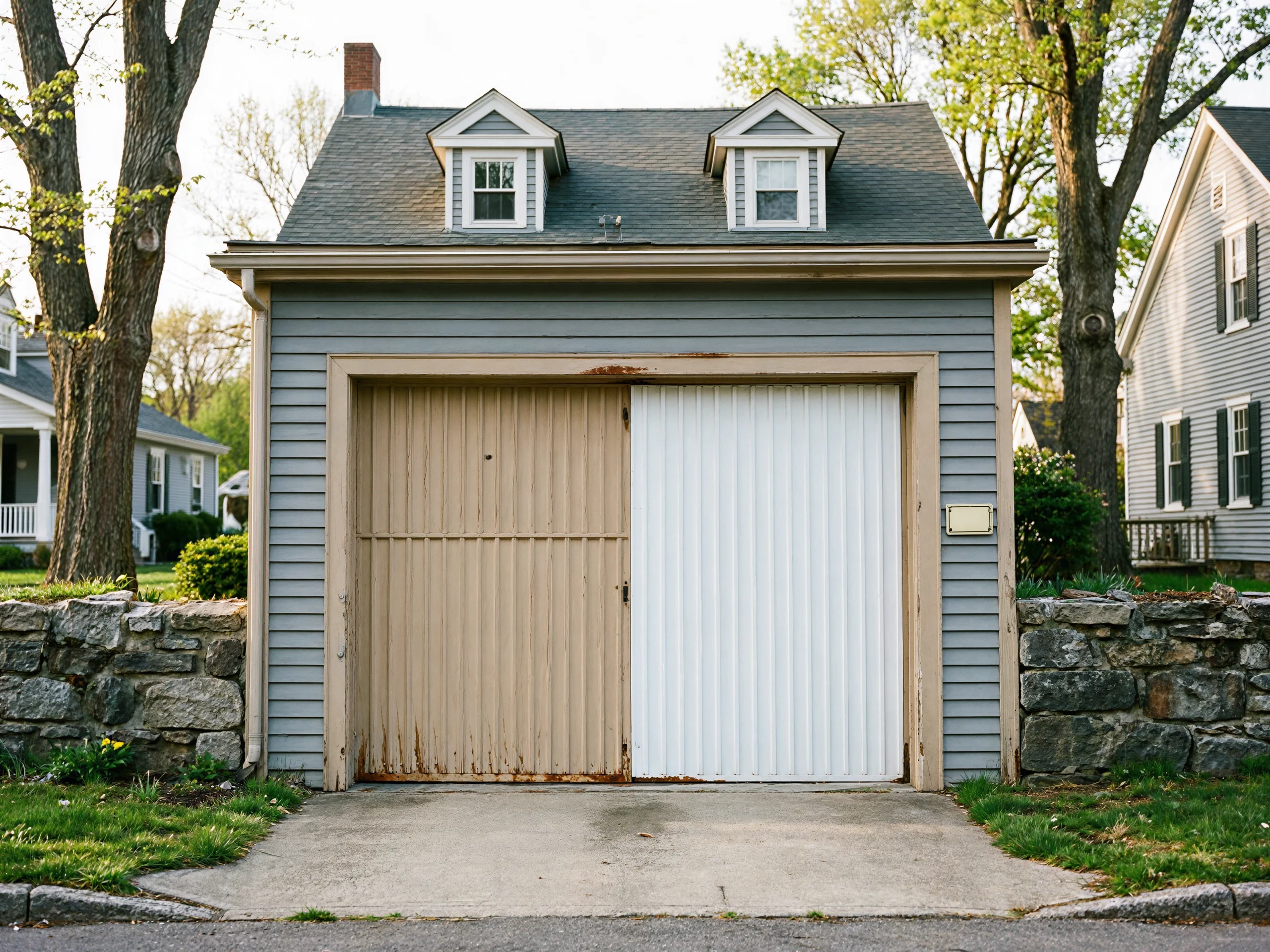
Houses in this part of the county went up mostly through the 1970s, with a median build year around 1976, and that means a lot of original torsion hardware still in place - center bearing plates, stationary cones, and end bearing plates that were standard then but aren't always a drop-in match for springs sold now. On some of these doors the torsion tube is a slightly different diameter than current stock, which means we're adapting fittings rather than grabbing an off-the-shelf spring and calling it done. We also see steel doors from that era without the reinforcement strut that modern doors have, which changes how the spring load distributes across the panel. None of this makes the repair impossible - it just means a spring call on a 1970s door in Randallstown isn't the same fifteen-minute swap as a spring call on a door built in 2015.
How It Shows Up
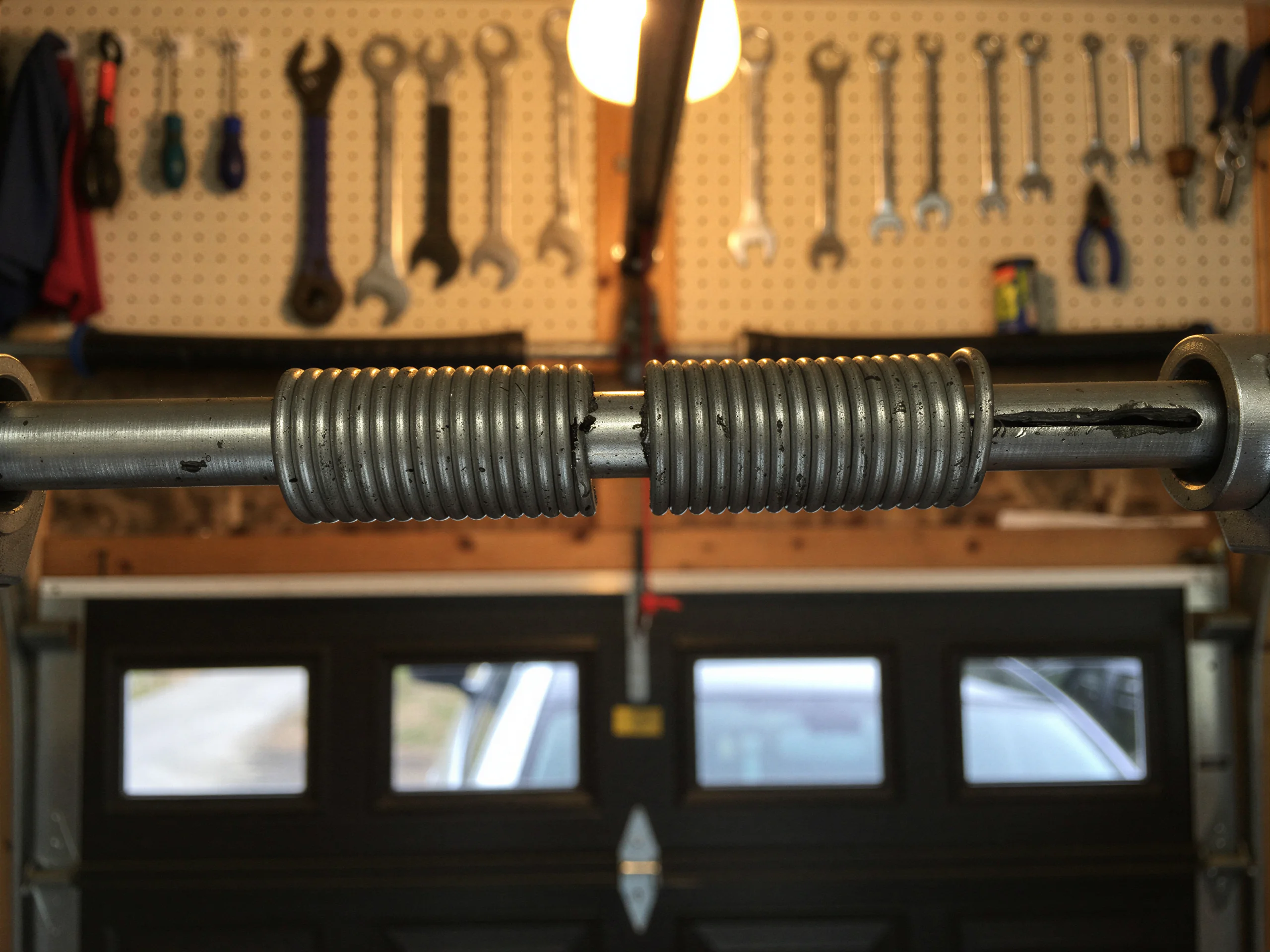
The classic sign is a loud bang from the garage, usually when nobody's touched the door in hours - that's a torsion spring letting go on its own under fatigue, not from someone using the door wrong.
Opener cannot lift alone
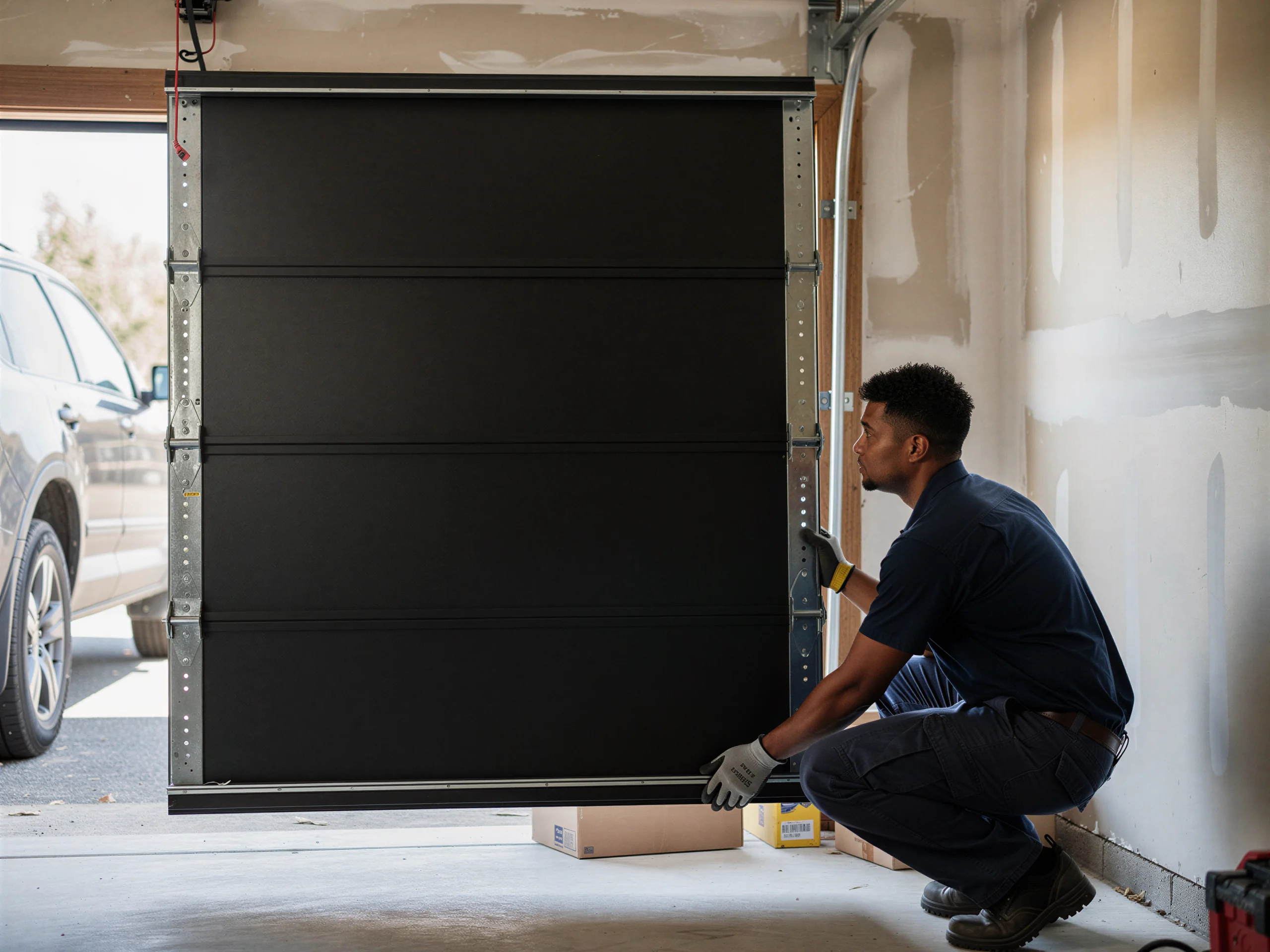
After that, the door either won't budge when the opener tries, or it opens a few inches and stalls because the opener isn't built to lift the full weight of the door alone.
One spring gone uneven
You might also notice the door feels uneven when you lift it by hand, heavier on one side, which usually means one spring on a two-spring setup has already gone while the other is still holding.
Slow drift from stretching
On older extension-spring doors, the sign is slower: the door starts drifting down on its own after you open it, a little more each week, as the spring stretches past where it can hold tension.
Why It Happens Here
This area sits in a cold, severe climate band, and steel spring wire fatigues faster through repeated hard freezes and thaws than it does in a mild climate - the metal contracts, the coil tension shifts slightly, and over thousands of cycles that adds up to an earlier failure than you'd expect from the spring's rated cycle count. Combine that with hardware that's been on the door since the mid-1970s in a lot of these houses, and you've got springs that are both older than average and working through harder winters than average. The broader service area runs about 177,301 owner-occupied houses across 510,015 households with a median income near $109,790, but Randallstown's own numbers run a bit different - around 13,829 households and a median income closer to $88,544 - which is part of why we see more repair calls here than full-door replacement calls. People fix what's fixable before they replace it, and on a spring, that's almost always the right call anyway.
Talk to a local pro
Garage door service in Ellicott City?
Same-day service with honest, upfront quotes.