
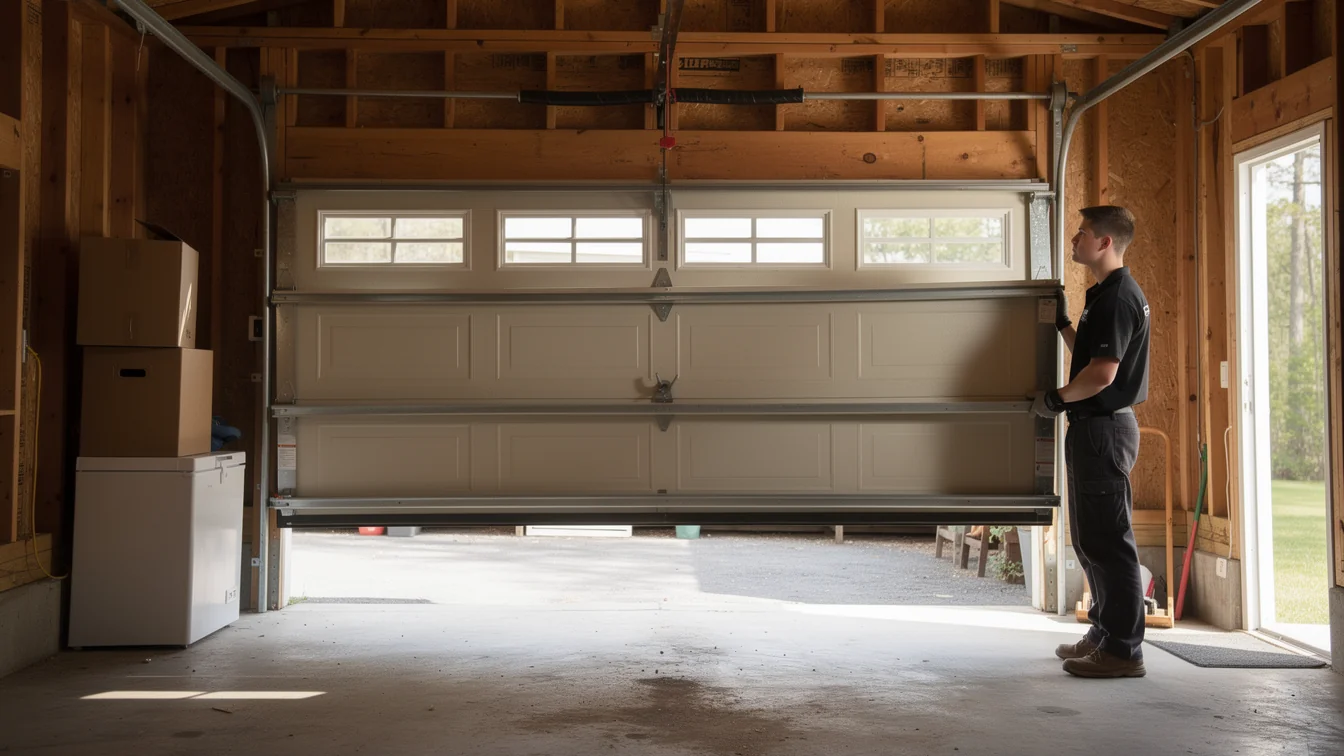
What We Check First on an Ellicott City Garage Door Call
A look at what a tech checks first on Ellicott City garage doors, tied to the 1955-2014 housing stock and the area's cold-climate stress on springs, tracks, and openers.
Read moreBlogEllicott City, MD · 4 min read
Why wide garage doors built during Ellicott City's 1960s-70s boom flex and fail in wind, and what the area's cold climate adds to that stress.
Local detail
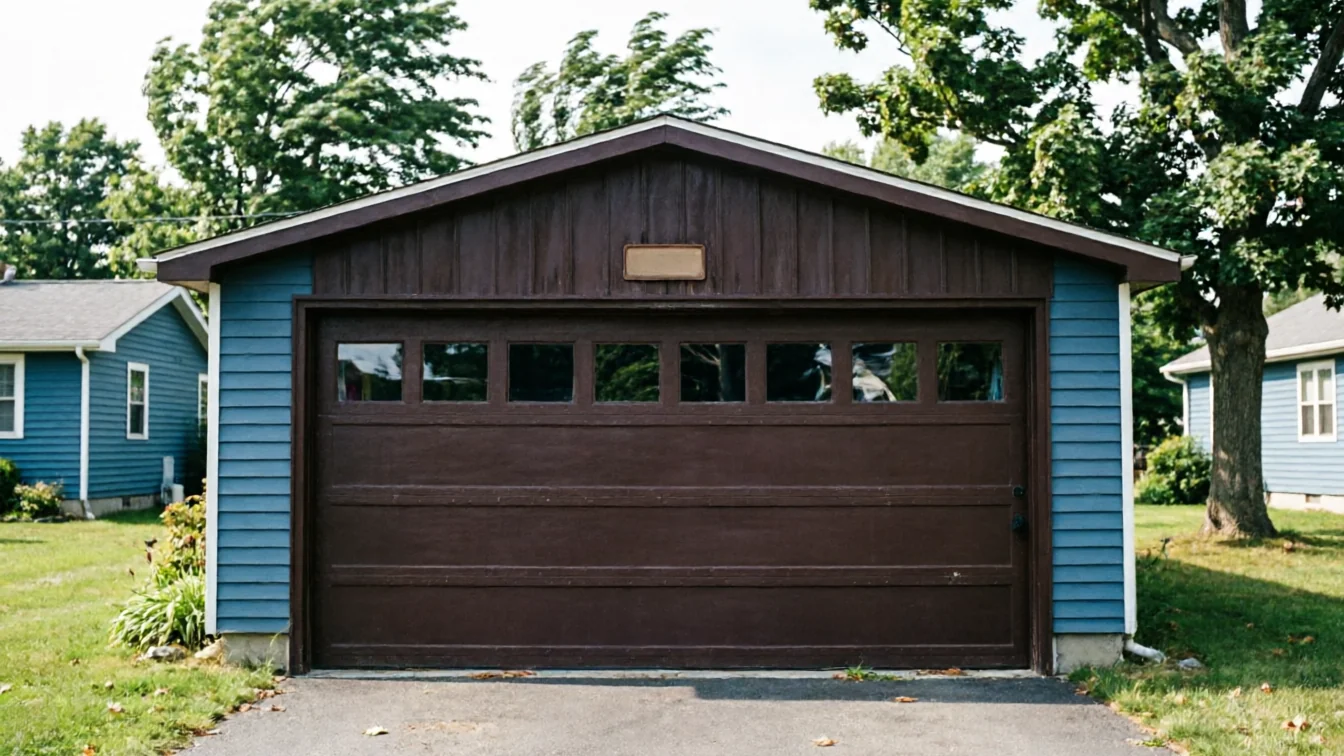
A single-car door shrugs off wind because it's narrow and stiff. A double-wide door - 16 feet across, sometimes more - is a different animal. Wind doesn't push evenly on a panel that size. It gusts, it drops, it hits one corner harder than the other, and the door has to resist that load across a span with almost no vertical support in the middle.
Most of the housing stock across this service area went up between 1955 and 2014, with a median build year of 1979, and the bulk of it dates to the 1960s and 70s. That's the era when the two-car attached garage became standard on split-levels and colonials, and it's the era that produced a lot of wide doors on tracks and hardware that were never engineered with a horizontal strut in mind. Without that strut, a wide steel or wood panel bows under lateral wind load the same way a yardstick bows if you push on the middle of it. Do that enough times and the panel takes a permanent set, even if it never actually fails outright.
This isn't a defect. It's just what happens to a wide, unbraced door when the wind leans on it for years.
The area
Tightening a loose roller bracket or swapping a bent hinge is reasonable weekend work. Wind damage on a wide door usually isn't, because by the time you can see it - a bow in the middle panel, a track pulling away from the wall, a top panel that no longer sits flush - the door has already been flexing past its design limit for a while.
The honest answer here is that a bowed panel on a double-wide door is rarely a one-part fix. The track alignment, the roller brackets, and sometimes the opener's travel limits all shift together once a panel deforms, and forcing the door back into line without checking all three usually just moves the problem to a different part of the door. If the bow is minor and caught early, a strut retrofit can sometimes stop it from getting worse. If the panel has already taken a permanent bend, replacing that section - or the whole door, depending on age - is the straighter path. We'll tell you which one you're looking at before we start charging for parts.
What we find
Ellicott City sits in a cold-severe climate band, which means real winter temperature swings on top of whatever wind load a door is already carrying. Steel panels contract in cold and expand in mild stretches, and that cycle works on the same bolts and brackets that wind is pushing against sideways. A bracket that's slightly loose from thermal cycling gives a gust more room to work with - the door has a little more play, a little more flex, before anything resists it.
It's a compounding effect rather than two separate problems. A door built in the 1960s or 70s on original hardware, sitting through decades of cold-severe winters, has had far more cycles of expansion, contraction, and wind flex than a door installed in the last ten years with modern reinforced track. That's not a reason to assume every older door is in trouble - plenty hold up fine - but it's the reason we check strut bracing and track alignment specifically on wide doors from that era rather than treating every inspection the same.
How we work
We don't have a published price list to hand you here, and we're not going to invent one. What we can tell you is how the decision usually breaks down. A strut retrofit on a door that hasn't bowed yet is the cheaper, smaller job - it's reinforcement, not replacement. A door with a visible bend in a panel is a repair-versus-replace call, and that call depends on the door's age, whether matching panels are even still available for it, and how much of the rest of the hardware is original.
Across this service area, roughly 177,301 houses are owner-occupied, and a large share of those still run original garage doors from the 1960s-70s building wave. With a median household income of $109,790 in the area, we see plenty of owners who'd rather spend on a proper fix once than patch the same door every winter. That's a reasonable way to think about it: a strut and bracket check now costs less than a bowed panel and a stuck track in February.
Questions
A door in good condition with proper bracing can take normal wind without failing. The risk goes up on older wide doors from the 1960s-70s stock that were never fitted with a horizontal strut - repeated flexing over years can bow a panel even without a single dramatic storm. It's cumulative, not usually a one-time event.
Look at the middle panel straight-on from outside when the door is closed. A slight bow that's visible from an angle but not head-on is often catchable with a strut retrofit. A bend you can see straight-on, or one that's changed the door's fit against the track, usually means that panel needs replacing.
Yes, indirectly. This area sits in a cold-severe climate band, and the expansion and contraction steel panels go through across winter cycles loosens brackets and bolts over time. That loosened hardware gives wind more room to flex the panel, so the two stresses compound rather than acting separately.
Recommendation
More garage door guides for Ellicott City homeowners.
A look at what a tech checks first on Ellicott City garage doors, tied to the 1955-2014 housing stock and the area's cold-climate stress on springs, tracks, and openers.
Read more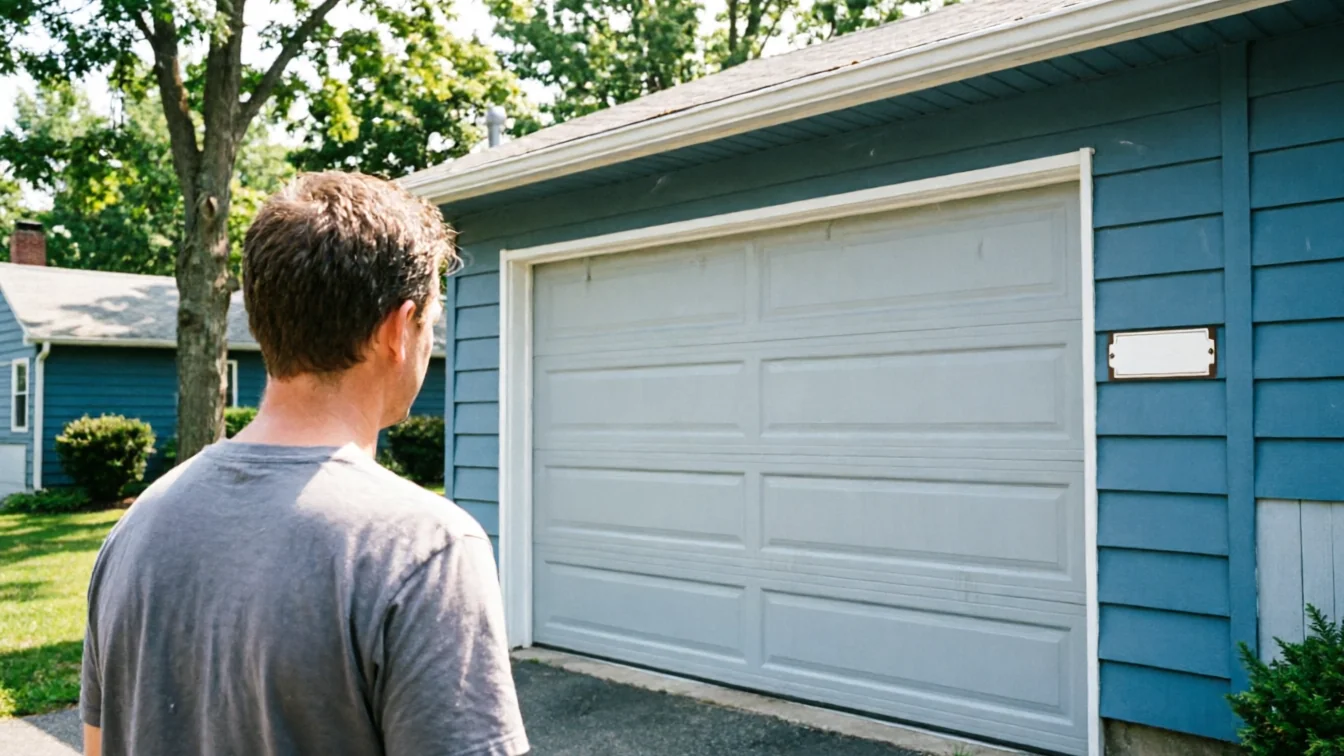
In Ellicott City, houses mostly date to 1955-2014, median 1979; cold winters wear out old springs and openers.
Read more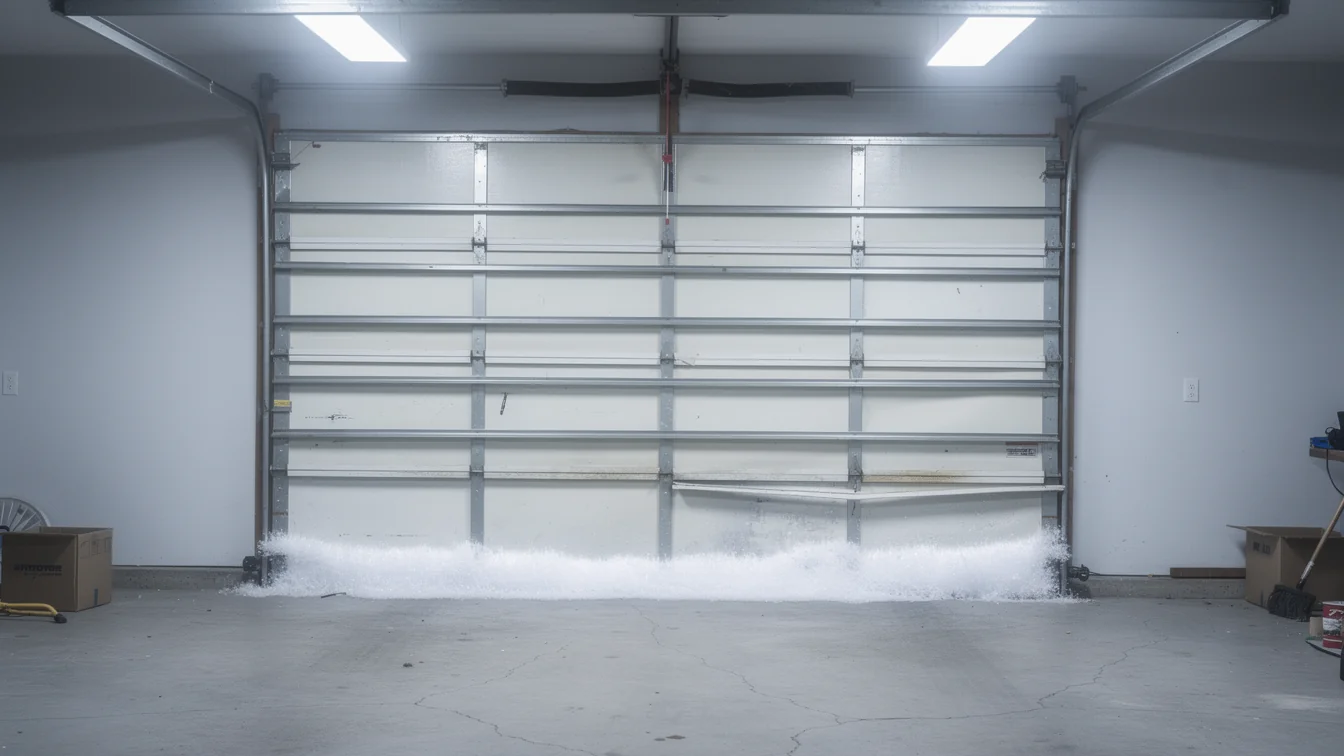
Ellicott City Garage Door Pros on what an uninsulated, single-layer garage door built on 1960s-70s specs is actually doing to your house and when to replace it.
Read moreReady when you are
Ellicott City Garage Door Pros repairs and installs garage doors, springs and openers in Ellicott City, MD and the surrounding area.