
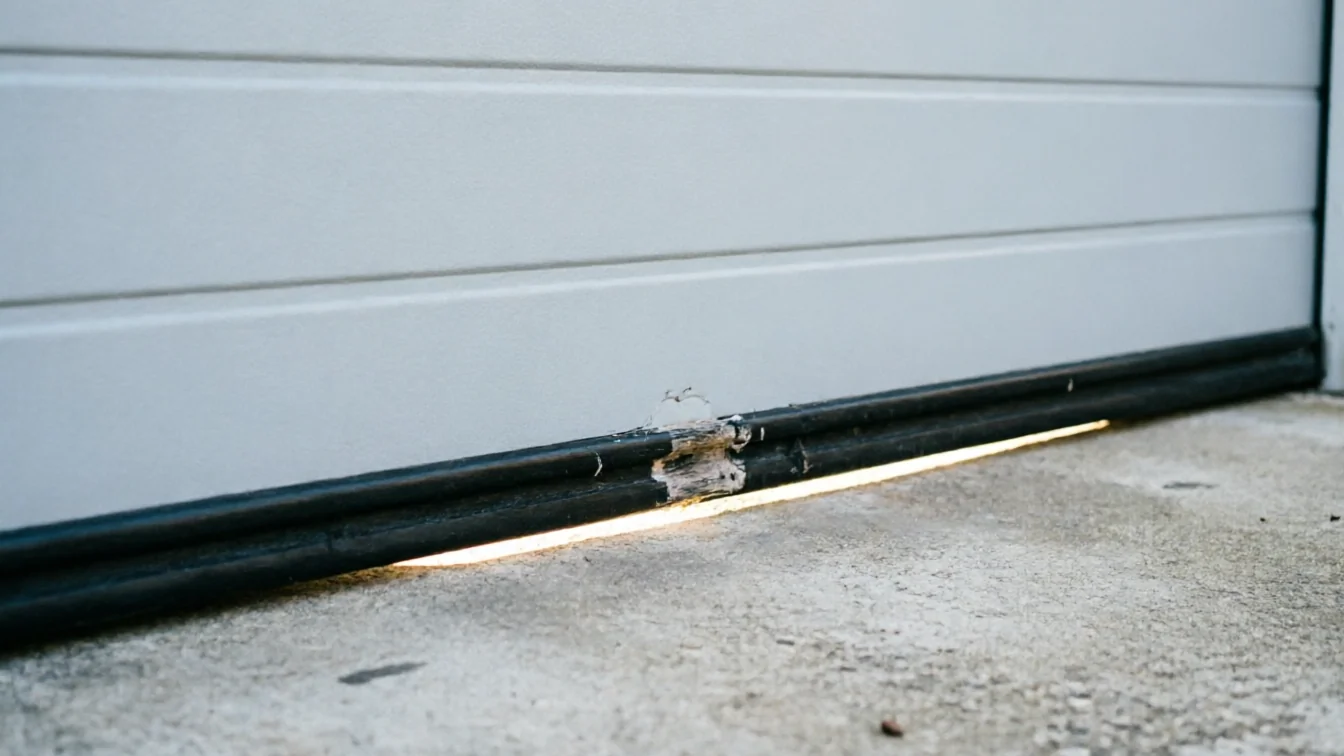
Why Garage Doors in Ellicott City Let in Cold Air
Ellicott City's 1960s-70s housing stock and cold winters mean worn weather seals let in real draughts.
Read moreBlogEllicott City, MD · 5 min read
Ellicott City's 1960s-70s housing stock and severe cold winters put real strain on garage door openers during power cuts. Here's what actually happens and what to do.
Local detail
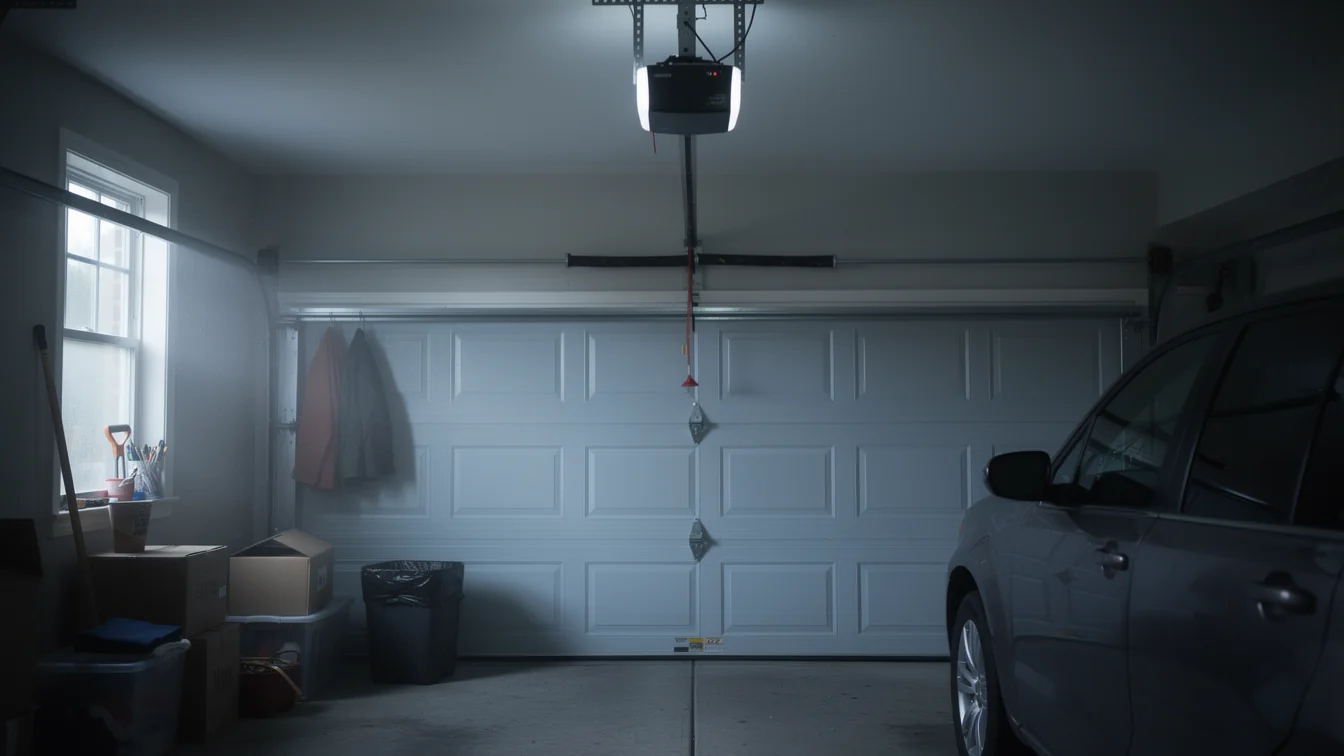
Most of the housing stock around Ellicott City went up between 1955 and 2014, with the bulk of it dating to the 1960s and 70s. Openers installed in that era, and a lot of the replacement units that went in later, run on standard household circuits with no battery backup built in. When the power drops, the opener drops with it. The door itself doesn't care, it's just dead weight on a spring, but the motor that lifts it has no way to work without line power.
In garages built during that 1960s-70s push, the opener is often wired into a single outlet shared with nothing else, sometimes on an older circuit that wasn't sized for anything beyond a light bulb and a chain-drive motor. That's not a defect, it's just what the code allowed when the house was built. It means when a storm knocks out power to a block, the opener is the first thing to go quiet, well before anyone notices the fridge.
The spring and the opener are two separate systems. A power cut doesn't touch the spring. If the door was balanced and moving freely before the outage, it's still balanced after. The problem is entirely about getting the motor a way to run, or getting the door open without the motor at all.
The area
Every residential opener has a manual release, a cord or lever that disconnects the carriage from the drive so you can lift the door by hand. That's the right first move during an outage, and it's not a repair job, it's what the release is for. Pull it, lift the door, drive out, pull it closed behind you.
Where this turns into a call for someone who does this for a living: if the door is hard to lift by hand even with the opener disconnected, you don't have a power problem, you have a spring problem that the outage just exposed. A door on a worn or undersized torsion spring will feel heavy or uneven the moment the motor isn't doing the lifting for it. Don't force it and don't have two people muscle it up unevenly, that's how a cable jumps a drum.
The other line: if the manual release cord is frayed, missing, or the carriage won't disconnect cleanly, that's a mechanical fault, not an electrical one, and it needs hands-on work rather than a wait for the power company. On older openers original to houses from that 1960s-70s build wave, the release mechanism itself can be the first part to wear out, since it's been getting pulled for sixty years of outages, storms, and ordinary household life.
What we find
This area sits in a severe cold climate band, which matters here in a way it wouldn't somewhere milder. Cold snaps stress overhead lines and transformers, and that's when outages cluster, usually in the same stretch of weeks when nobody wants to be out in the garage fighting with a door. Cold also thickens the grease in an opener's drive gear and stiffens spring steel slightly, so a motor that's already working against a sluggish mechanism is more likely to trip its own overload protection even on the nights power stays on.
Garages attached to houses from that 1960s-70s stock were rarely built with much insulation, since that wasn't standard practice at the time. A door and opener in an unheated, uninsulated bay take the full swing of a severe cold winter directly, no buffer. That accelerates the kind of wear that eventually turns an ordinary outage into a day you can't get the door open at all, power or no power.
None of this means the door breaks every time the lights flicker. It means the margin for error is smaller here than in a climate that doesn't swing this hard, and a door that's already marginal gets exposed first.
How we work
We don't have a flat number to quote you here, and we're not going to invent one. What we can tell you is how the decision tends to break down. A manual release and a lift-by-hand during an outage costs nothing and takes two minutes. A worn release mechanism or a spring that turns out to be the real issue is a parts-and-labor job, and the honest limitation is that we can't price it sight unseen, since torsion spring sizing depends on door weight and the opener's history, not on the outage that revealed the problem.
Households in this service area have a median income around $109,790, and across the roughly 177,301 owner-occupied houses here, we see a wide range of ages and opener types, from original 1960s-70s installs to recent replacements. That range is exactly why we won't give a single number for "opener repair after a power cut." What we will say: if the manual release works and the door lifts evenly by hand, you likely don't need a service call at all. If it doesn't, that's worth having looked at before the next outage, not during it.
Questions
Yes, in almost every case. Find the manual release cord or lever hanging from the opener carriage, pull it to disconnect the door from the motor, and lift the door by hand. If it lifts smoothly and evenly, your door and opener are fine, you just lack power. Reconnect the release once power is back by closing the door and pulling the cord again.
This area sits in a severe cold climate band, and cold thickens the grease in an opener's gearing while stiffening the torsion spring slightly. A motor already near its limit can trip its own safety shutoff on a cold night even with power on. It's more noticeable in garages built during the area's 1960s-70s housing wave, which usually have little or no insulation.
No. The manual release disconnects the door from the motor entirely, so if the door is still heavy or uneven after you've pulled it, the problem is mechanical, most likely the spring, not electrical. That needs hands-on diagnosis rather than waiting for the power company to restore service.
Recommendation
More garage door guides for Ellicott City homeowners.
Ellicott City's 1960s-70s housing stock and cold winters mean worn weather seals let in real draughts.
Read more
A breakdown of what a garage door service call actually covers in Ellicott City, where 1960s-70s stock and cold-severe winters wear differently than newer builds.
Read more
In Ellicott City, houses mostly date to 1955-2014, median 1979; cold winters wear out old springs and openers.
Read moreReady when you are
Ellicott City Garage Door Pros repairs and installs garage doors, springs and openers in Ellicott City, MD and the surrounding area.