Time on the Job
Randallstown's median household income sits at $88,544, well under the $109,790 median across the wider area this company covers. That gap matters more than it sounds like it should, because it decides what gets fixed and what gets replaced.
Budget shapes repair choices
At the income level this town runs at, a torsion spring job or a worn roller set gets repaired. A door that needs a full new section, insulation, and a heavier opener to match it gets put off a season longer than it should.
Older doors, fewer upgrades
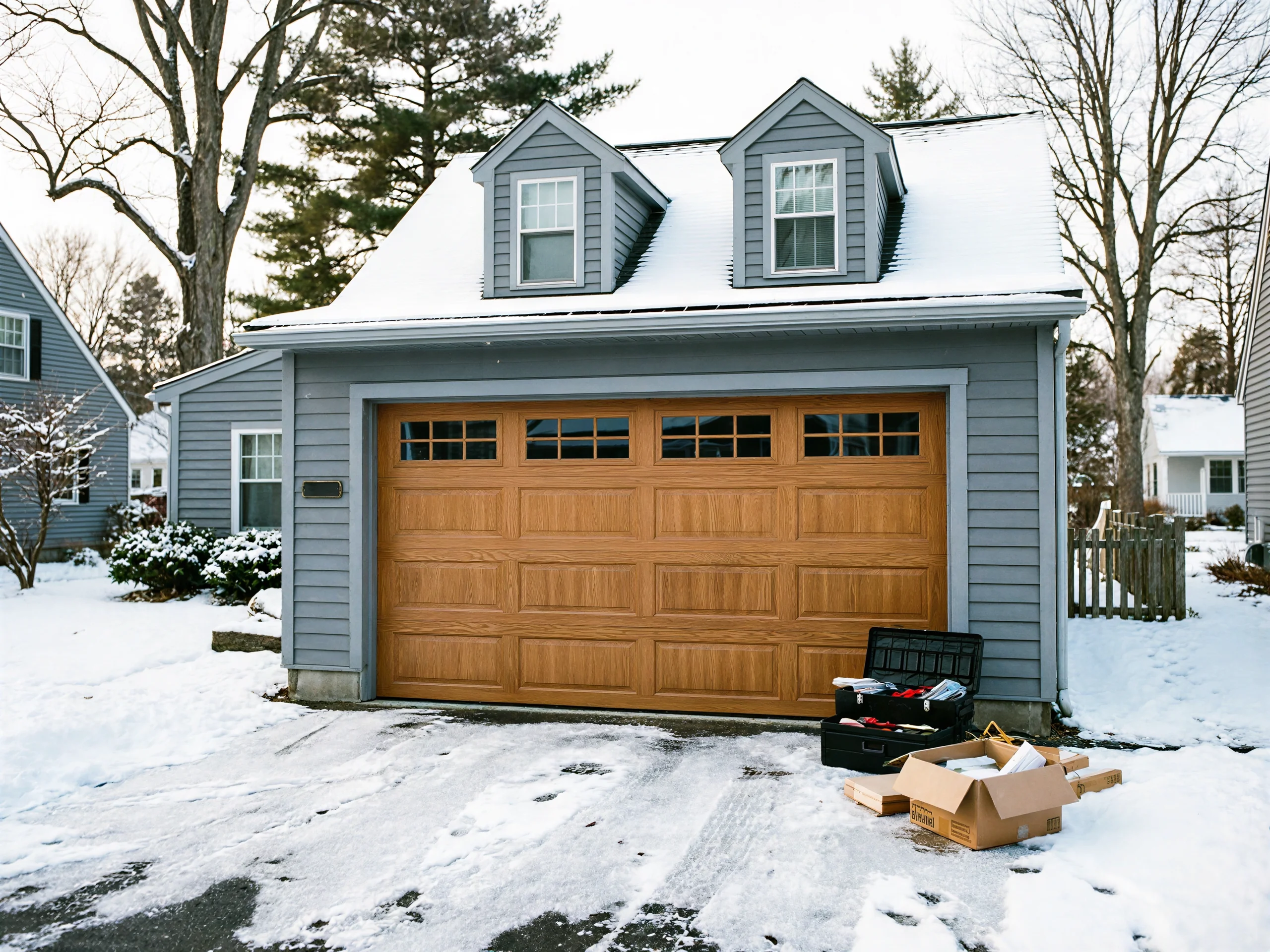
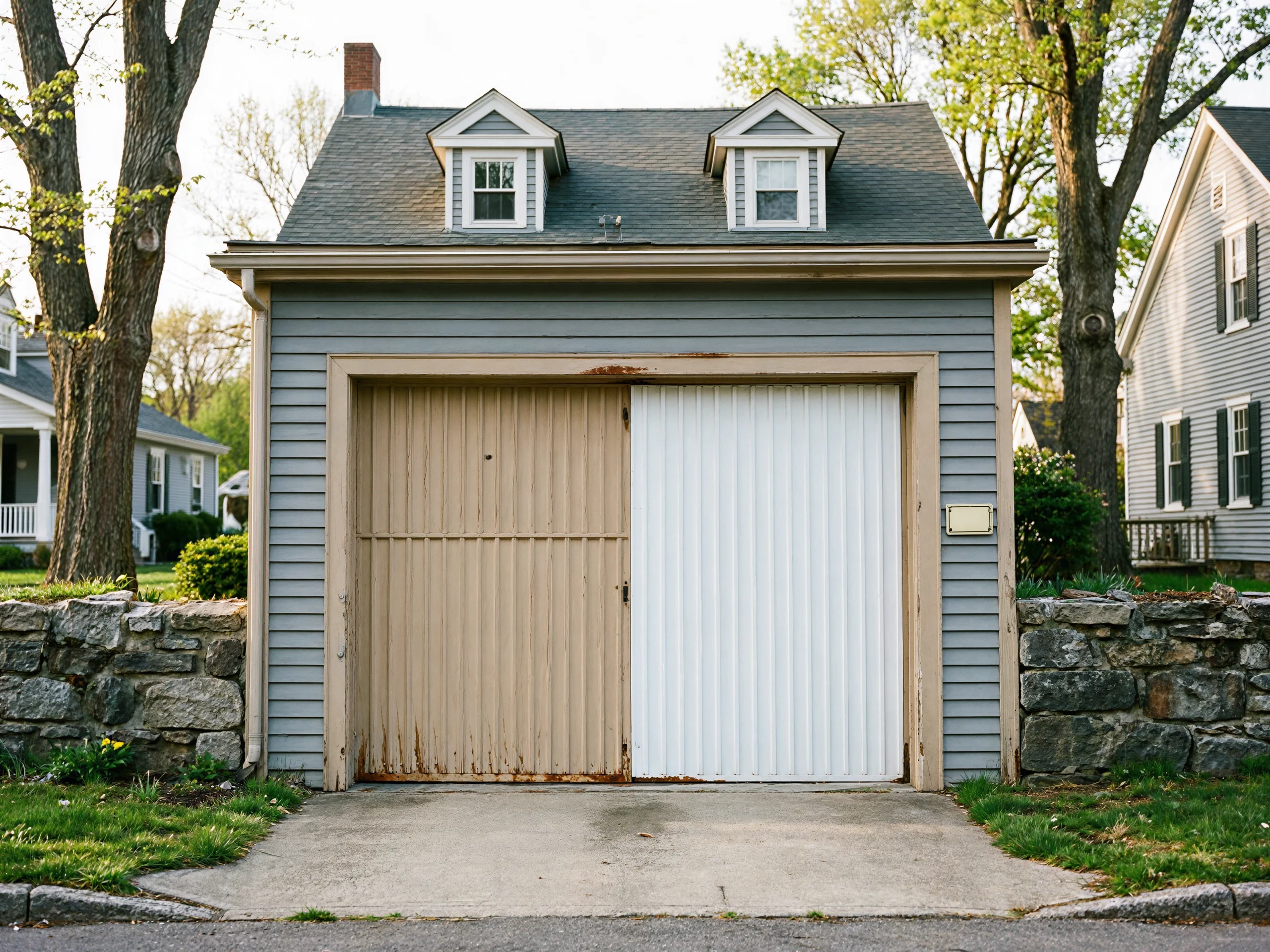
Neither choice is wrong, but it does mean the doors on this side of the loop tend to be older than they'd be in a town with more room in the budget for upgrades. Most of the houses here went up around 1976, which lines up with the 1960s-70s housing stock that makes up a lot of this company's service area.
Fifty-year-old spring systems
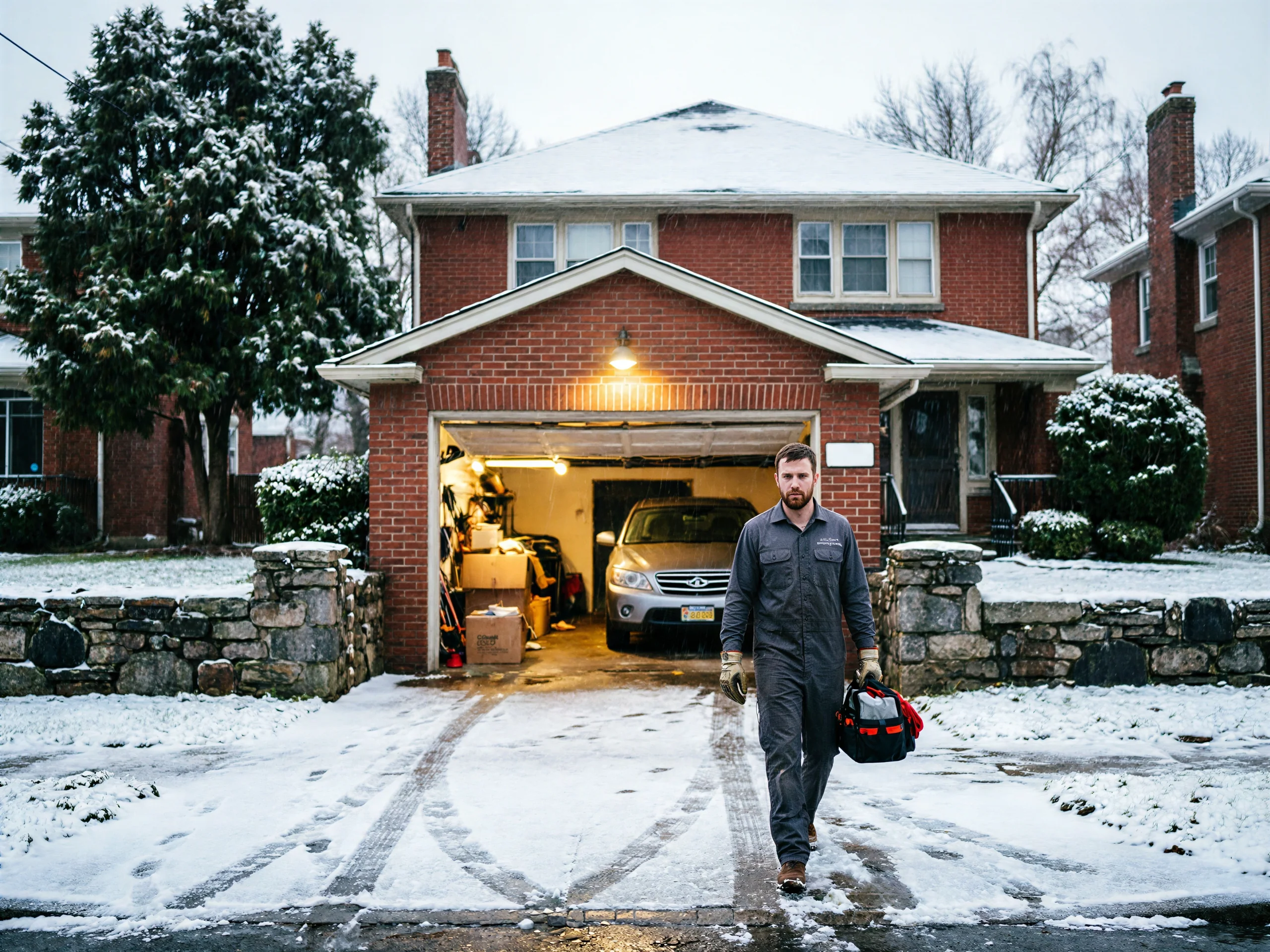
That's a door and a spring system now pushing fifty years old if nobody's replaced the torsion hardware since the house was built. We drive out from Ellicott City, about 7 miles away, and that's the house we usually find waiting.
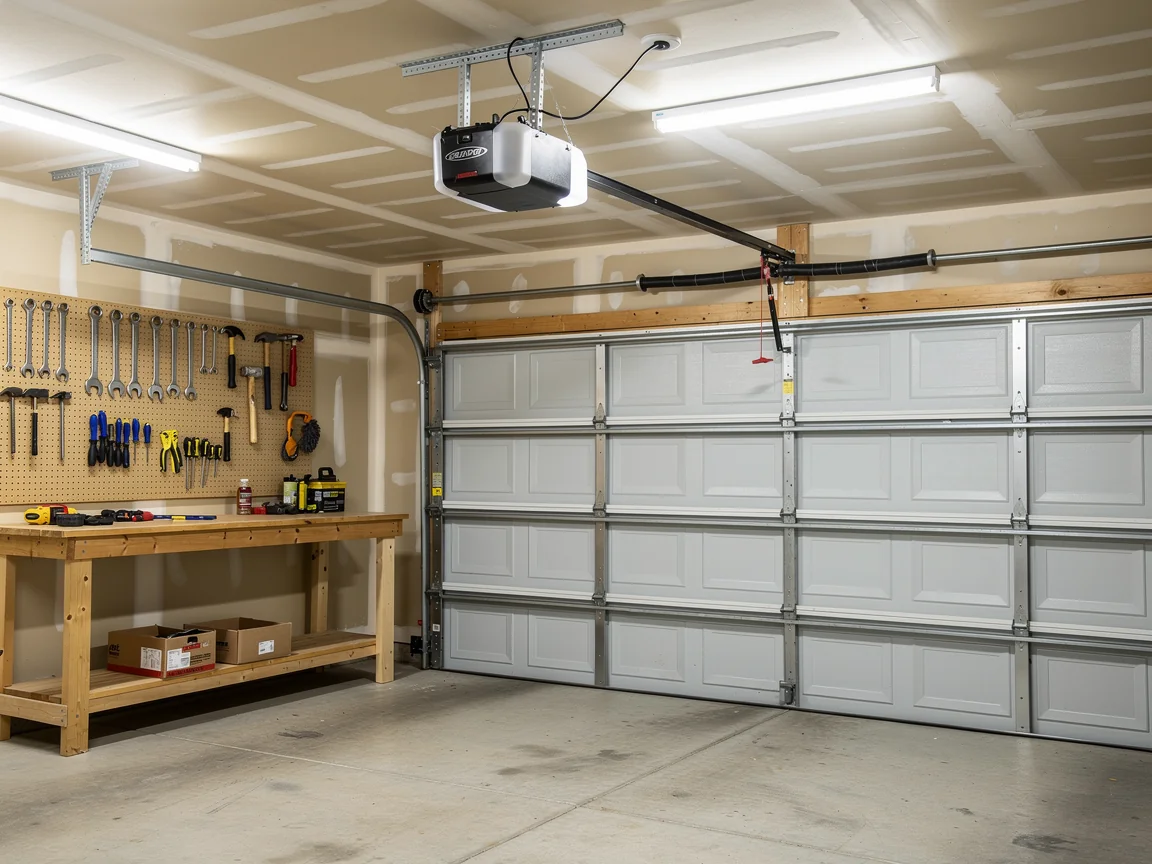
Doing It Yourself
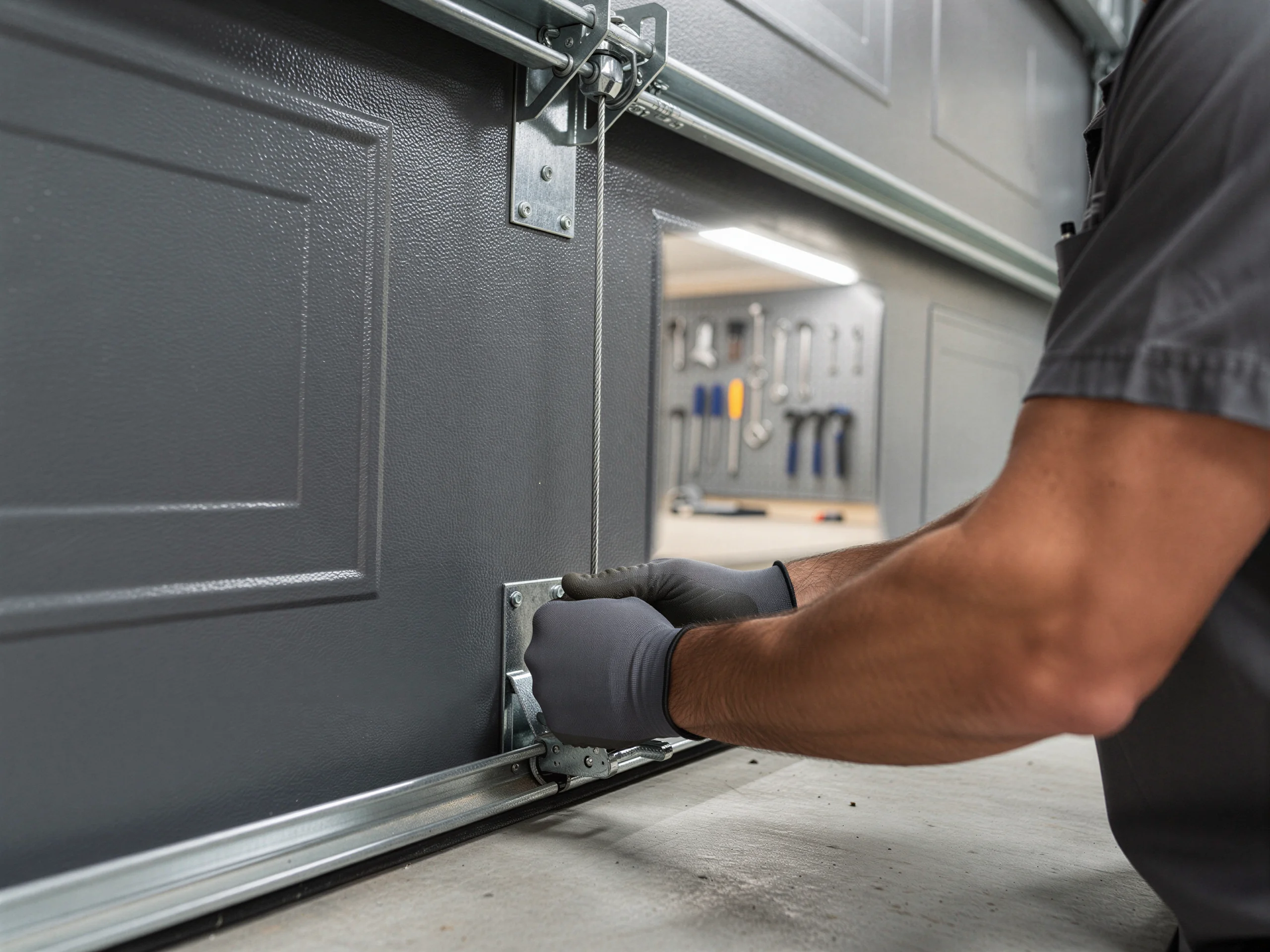
There's a short list of things worth checking yourself before you call anyone. Pull the release cord and see if the door moves smoothly by hand with the opener disconnected - if it's heavy or catches, that's a spring or track problem, not an opener problem.
Photo-eye lens cleaning
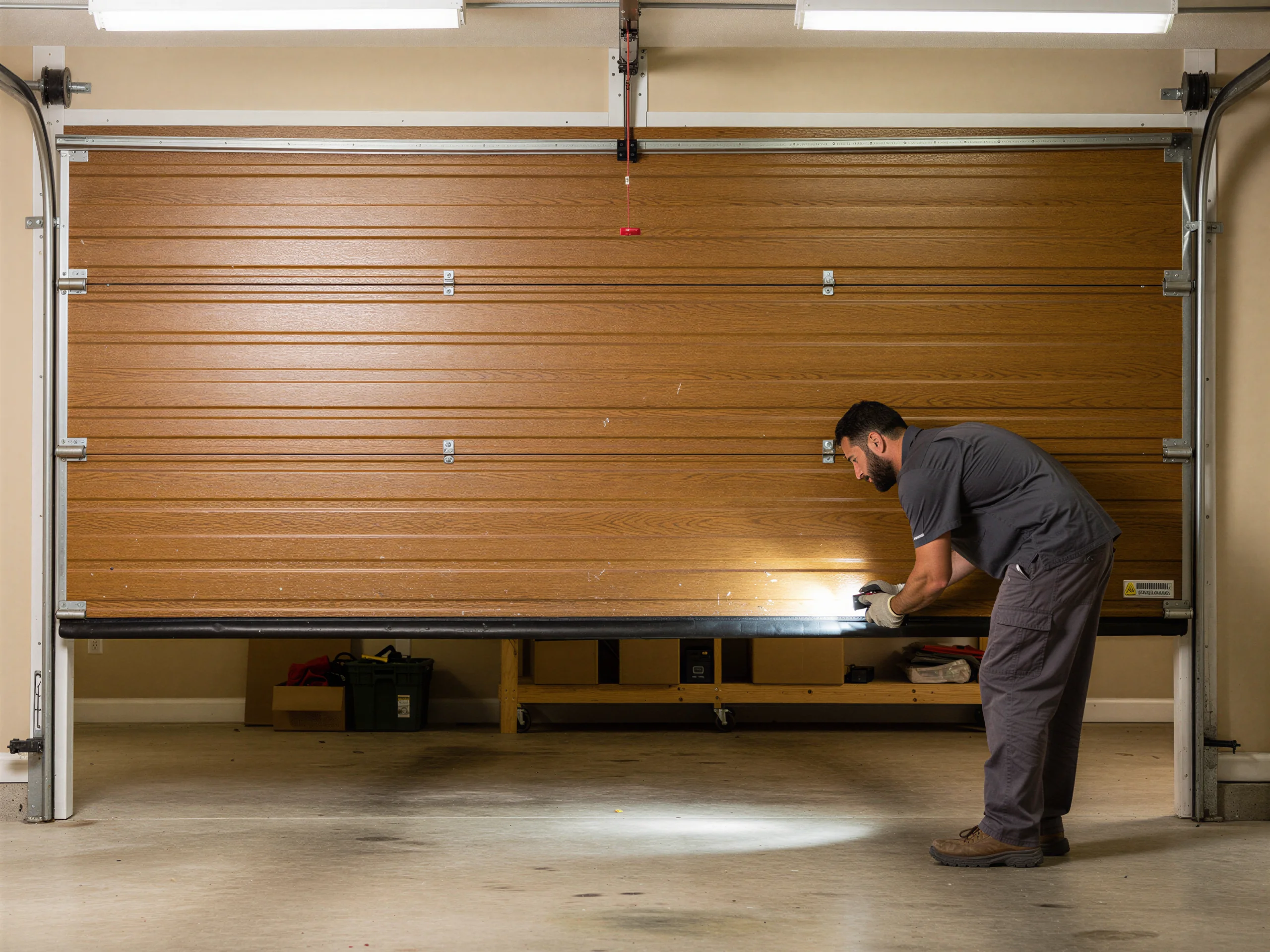
Look at the bottom corners of the door for rust or rot if it's an older steel or wood panel. Check that the photo-eye sensors near the floor are aligned and the lenses aren't fogged or dusty. What you shouldn't touch is the torsion spring itself.
Single spring, no backup
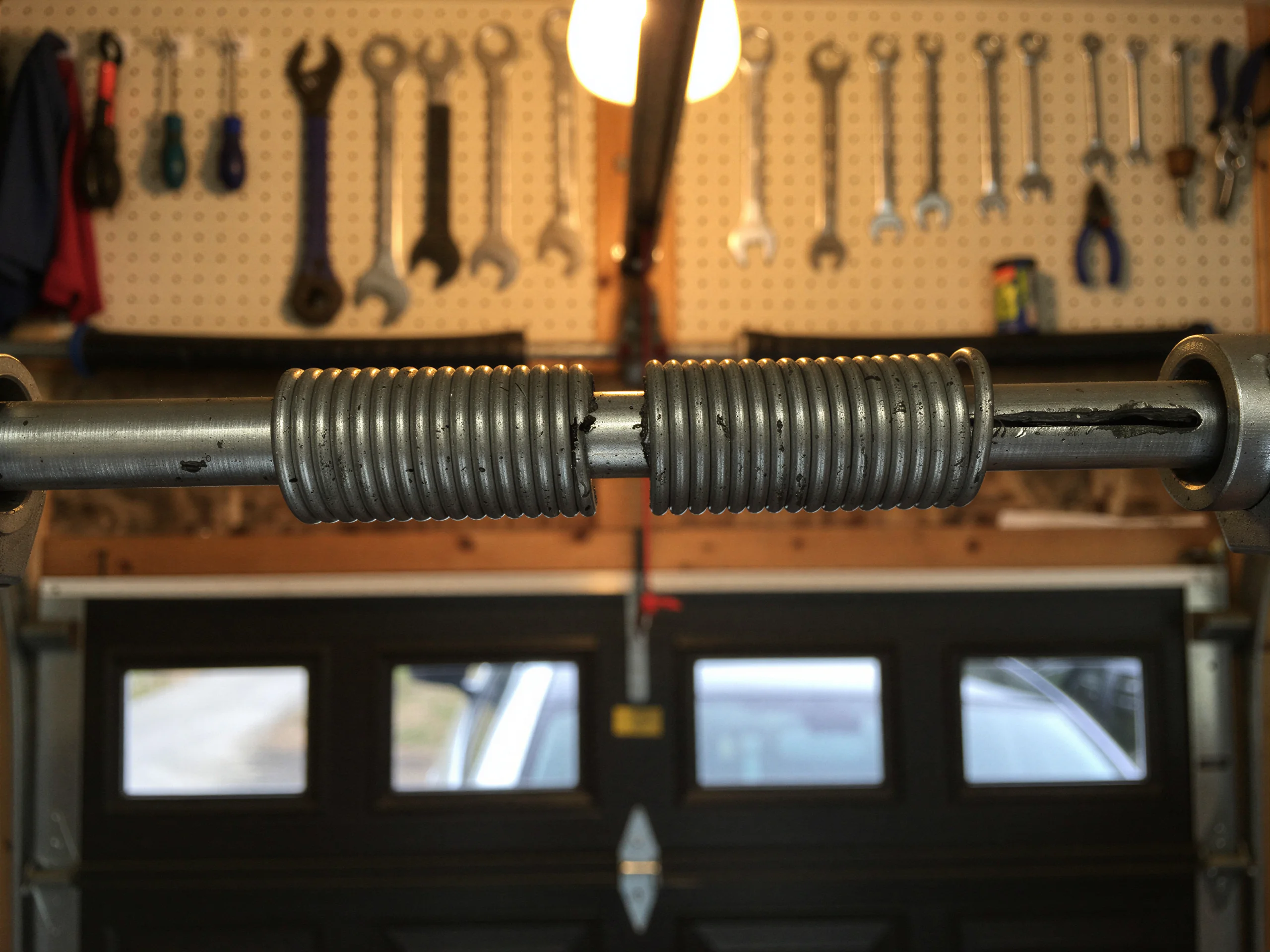
It's wound under enough tension to break a hand or worse, and on a standard double door from this era there's usually just one spring doing all the work, not two - which means there's no backup holding the door up if it lets go while you're under it.
Repeat repair failures
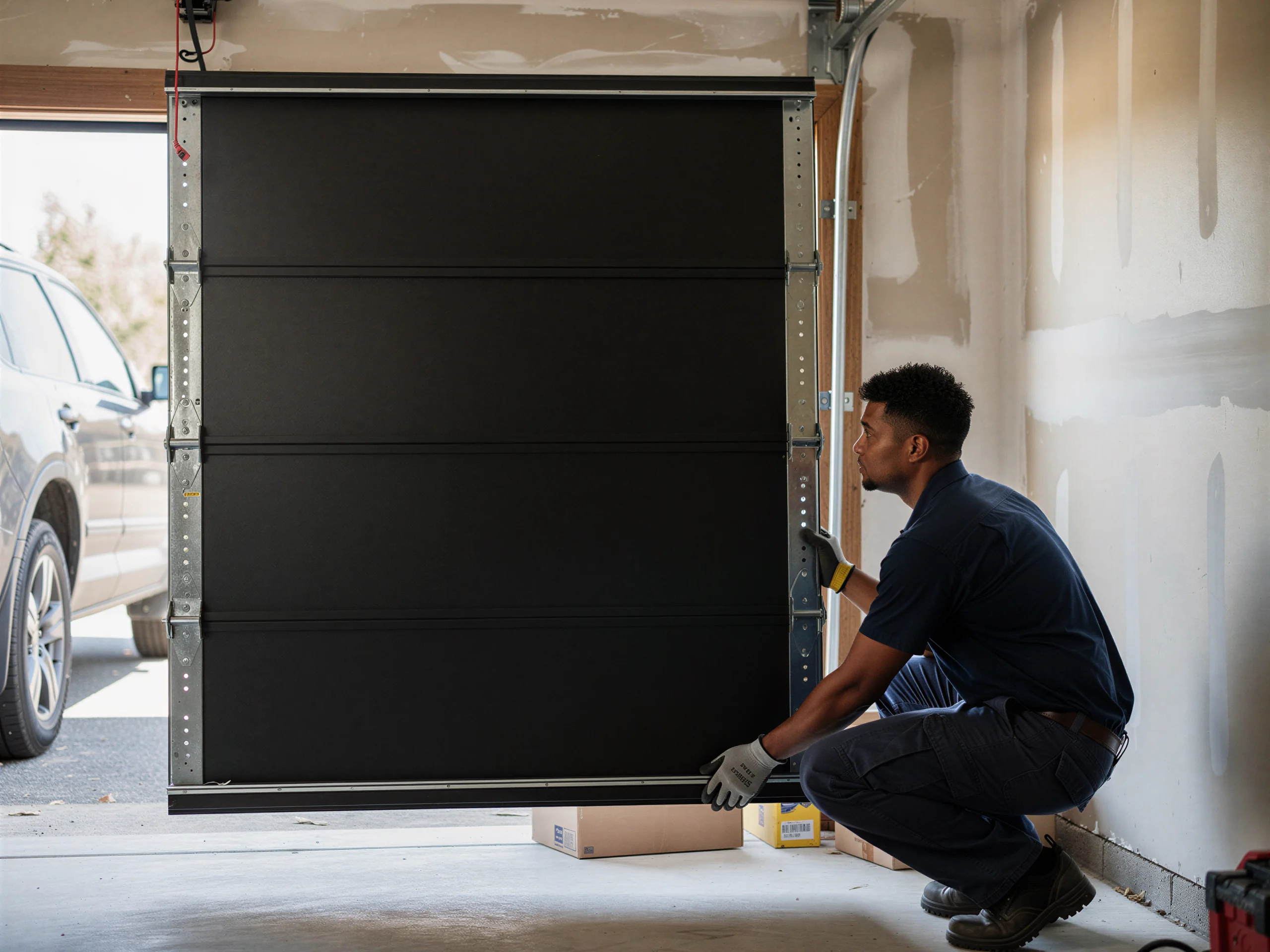
If you're not sure which repair you're looking at, that uncertainty is the signal to stop, not to guess. We'll say plainly: a repair that keeps failing after two visits usually means the door itself is done, and at that point paying for another round of parts is money spent delaying a decision you were going to make anyway.
The Complications
This area sits in a cold-severe climate band, and that changes what breaks and when. Steel contracts in hard cold, which tightens tolerances in track and roller assemblies that were already loose from decades of use.
Grease turning to paste
Grease that moved fine in October turns to paste in January, which is why a lot of the winter service calls out this way are openers straining against a door that isn't moving freely rather than openers that are actually broken. Cables and springs don't like the cold either.
Cold-contracted track strain
A cable with a few frayed strands that held together through summer can snap on the first hard freeze, because the metal's less forgiving when it's cold and the extra tension from a stiff, cold-contracted track pushes it past where it was already weak.
Climate hits older hardware
None of this is unique to any one house - it's the climate band this whole area sits in - but it lands hardest on doors that are already older and already carrying the original hardware, which is a fair description of a lot of what's out there on houses built in the 1970s.
How It Shows Up
On a house from this era, the door is most often a standard steel panel on a single torsion spring, sized for a garage built before anyone was thinking about insulation values or heavier opener motors. The symptom we hear most isn't a dead opener - it's a door that opener strains to lift, shudders partway up, or reverses on its own. That's almost always the spring losing lift, not the opener failing.
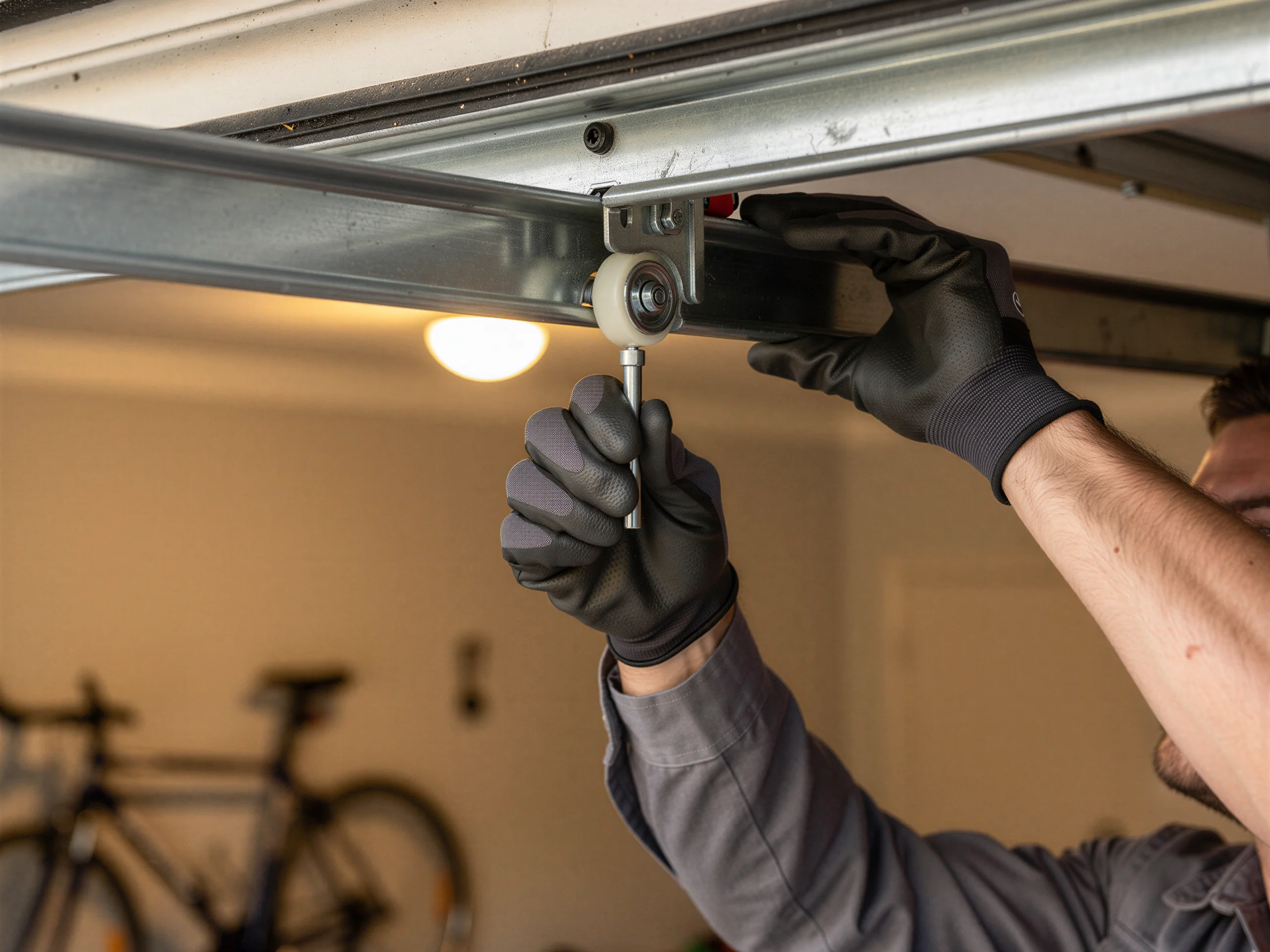
The second common pattern is a door that's noisy and slow to respond on cold mornings, then loosens up by afternoon. That's the grease-and-steel issue above, not a wiring problem, and people sometimes replace a perfectly good opener chasing it. Rollers on these older doors are often still the original nylon or steel, and by now they've usually worn enough that you can hear the difference - a grinding or clunking at each roller as it crosses the track joints, worse in winter, quieter in summer.
Why It Happens Here
Put the pieces together and the pattern is straightforward. A house built around 1976 is now at the point where torsion springs rated for a fixed number of cycles are well past due, whatever that number was. A cold-severe climate adds stress to hardware that's already tired, and does it worst in the months when nobody wants to be out in the driveway dealing with it. And a median income of $88,544 means the decision to repair versus replace gets made more conservatively here than in a town with a bigger households-and-income base to draw on - people keep fixing rather than swapping, which keeps old hardware in service longer.
Across the roughly 177,301 owner-occupied houses in the wider area this company serves, Randallstown's own count of 13,829 households is a meaningful slice, but it's not a special case - it's just further along the same curve as the rest of the 1960s-70s stock out this way, aging on the original parts.
Talk to a local pro
Garage door service in Ellicott City?
Same-day service with honest, upfront quotes.