Time on the Job
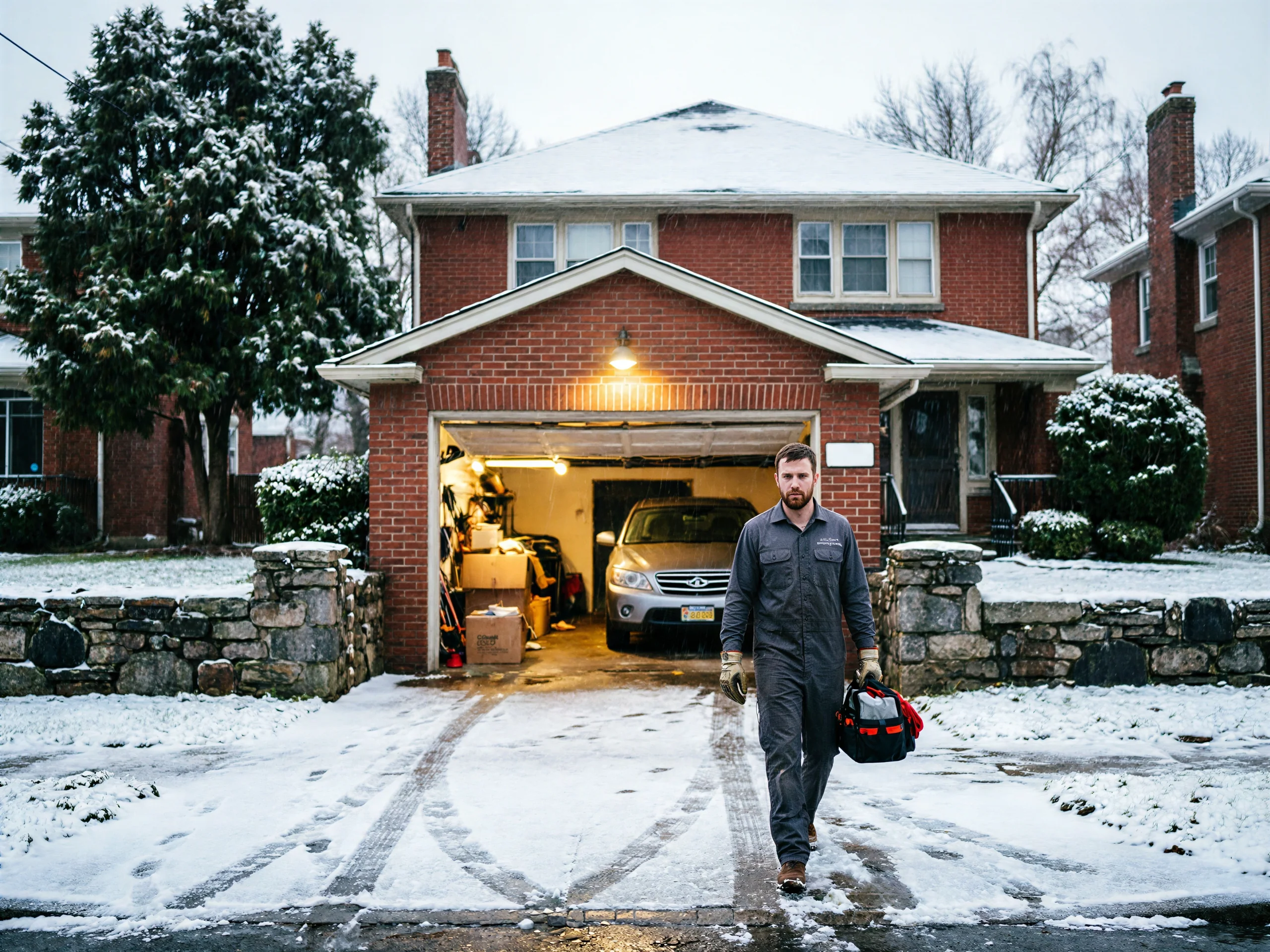
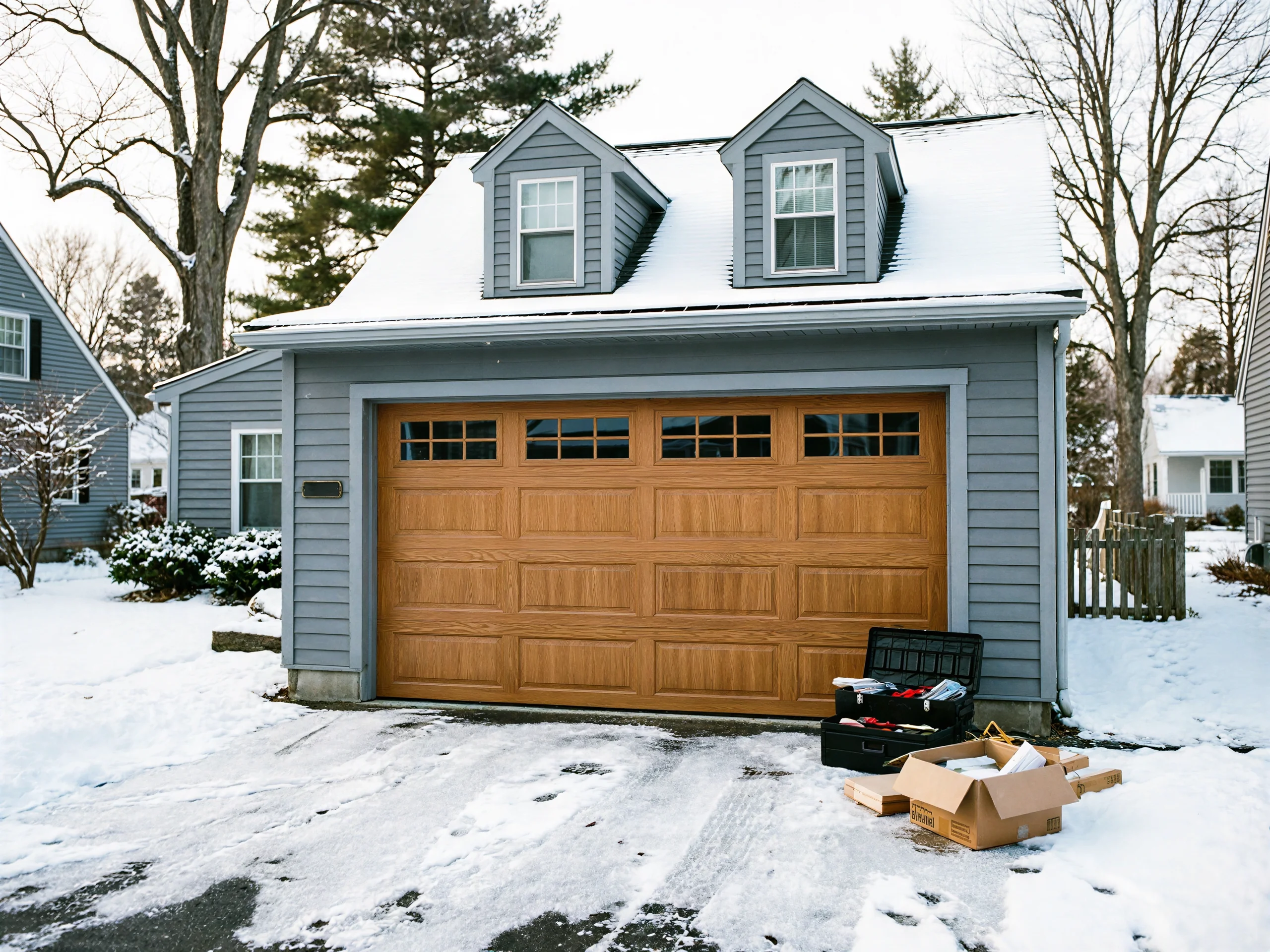
We run this job out of Ellicott City, about 7 miles southwest of Randallstown. That means no crew sitting idle in a Randallstown lot waiting for a call - we load the truck with panel stock based on what you tell us on the phone, then drive it out.
Same-day panel sourcing
For a straightforward single-panel swap on a door we can identify from a photo, that's usually not a problem. It becomes a problem when a homeowner wants a same-day fix on a panel we don't carry and can't source without a special order.
No Randallstown depot
We'll tell you straight if that's the situation before we quote the job, not after we're standing in your driveway. Randallstown itself has no garage door depot that we know of, which is normal for a suburb this size - most of Howard and Baltimore County gets covered the same way, from a central shop.
Walk-up counter tradeoff
The tradeoff is scheduling a visit instead of a walk-up counter, but it also means the crew that shows up has already pulled the right panel style for a door built when most of this area's housing went up, rather than guessing on site.
Doing It Yourself
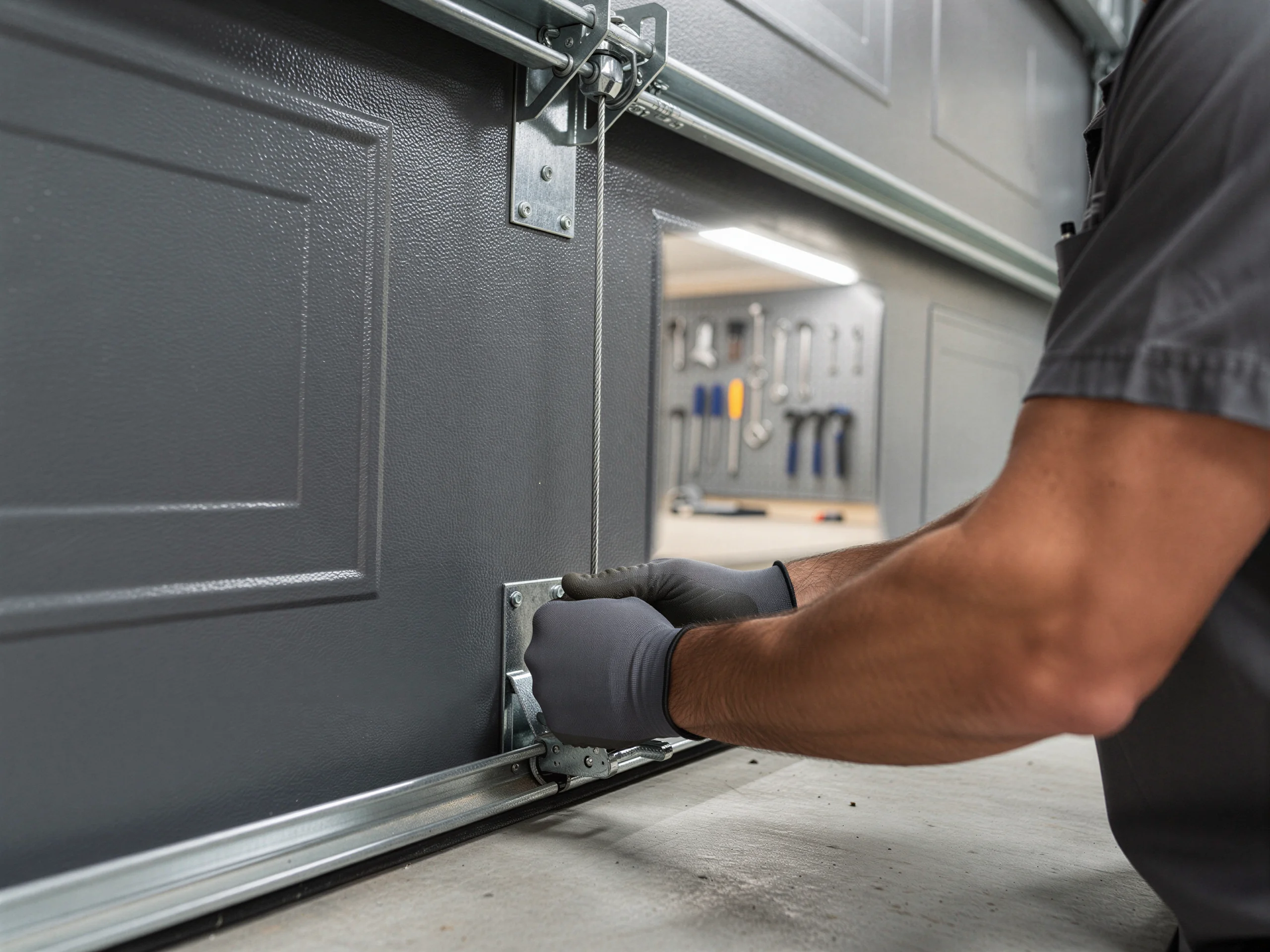
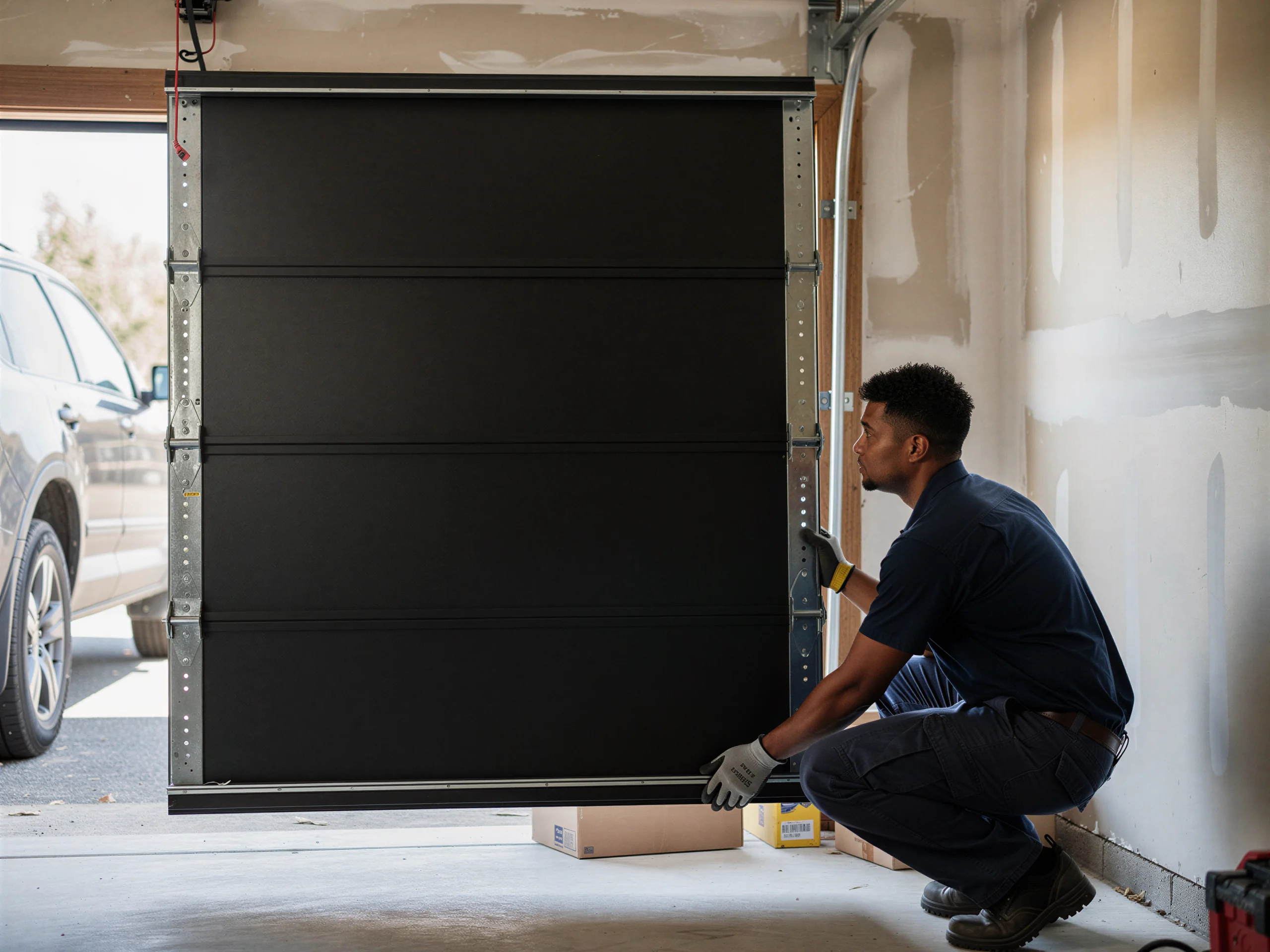
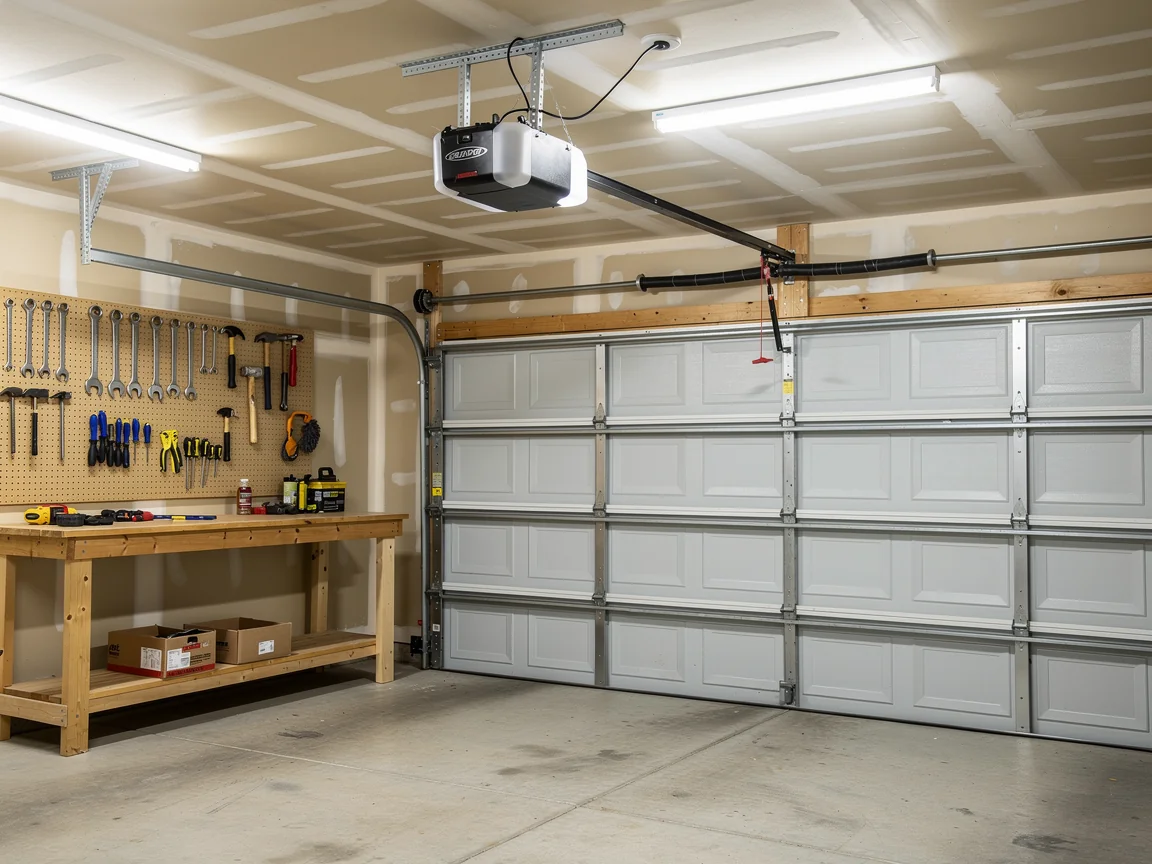
A single replacement panel on a steel sectional door looks like a bolt-on job, and on a newer door it mostly is. On a door that's been hanging since the 1970s, the panel you buy new almost never matches the panel you're replacing - the rib spacing, the panel height, even the hinge spacing can be off by enough that the door racks when you reinstall it.
Discontinued tooling mismatch
We've seen homeowners get two matching panels on and then find the third doesn't sit flush, because the manufacturer changed tooling decades ago and the old run is long gone.
Uneven track before starting
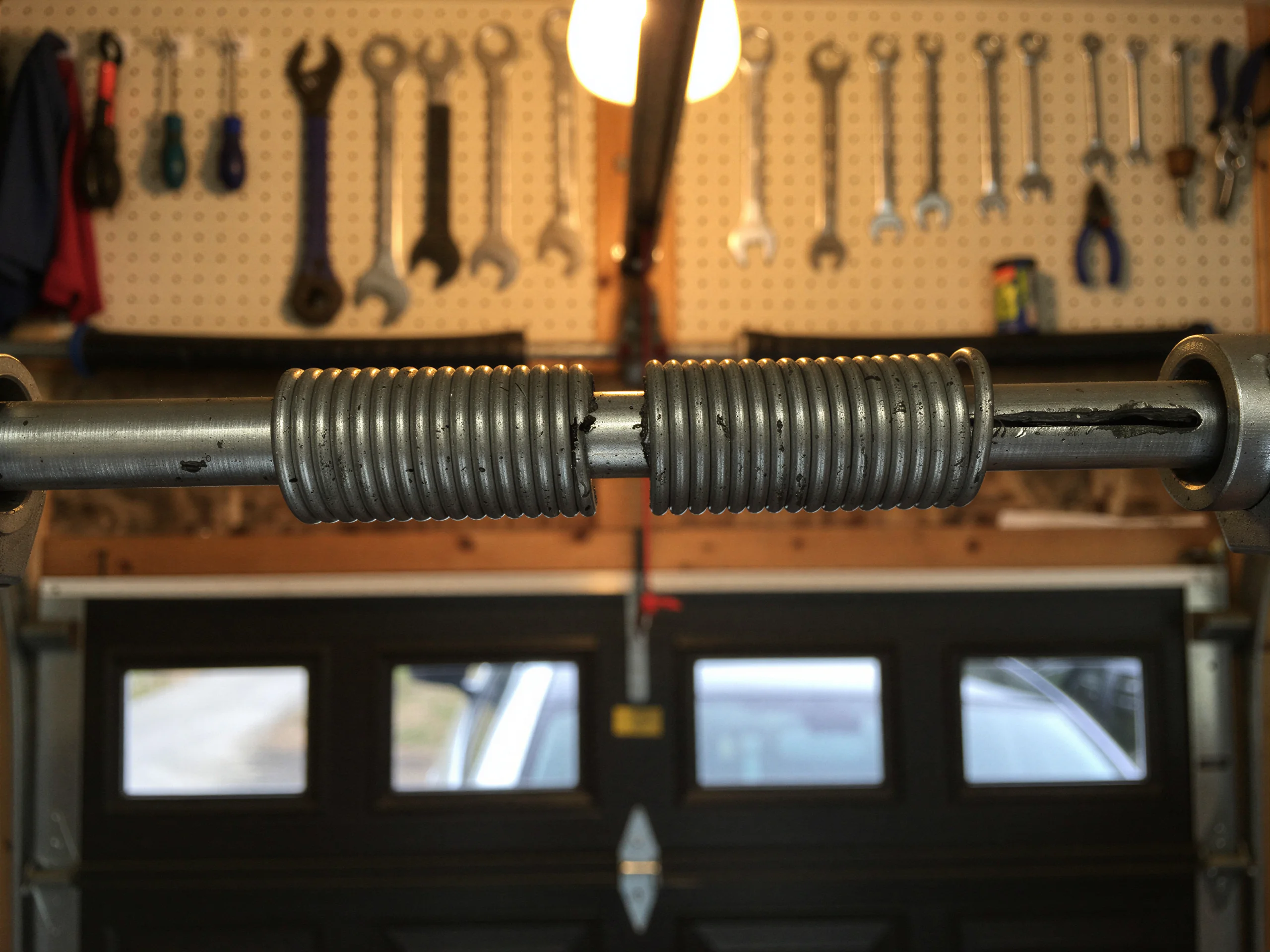
If your door is already uneven on the track before you start, pulling one panel can let the whole section shift, and a loaded torsion spring makes that genuinely dangerous - not a place to learn as you go.
Cosmetic DIY versus panels
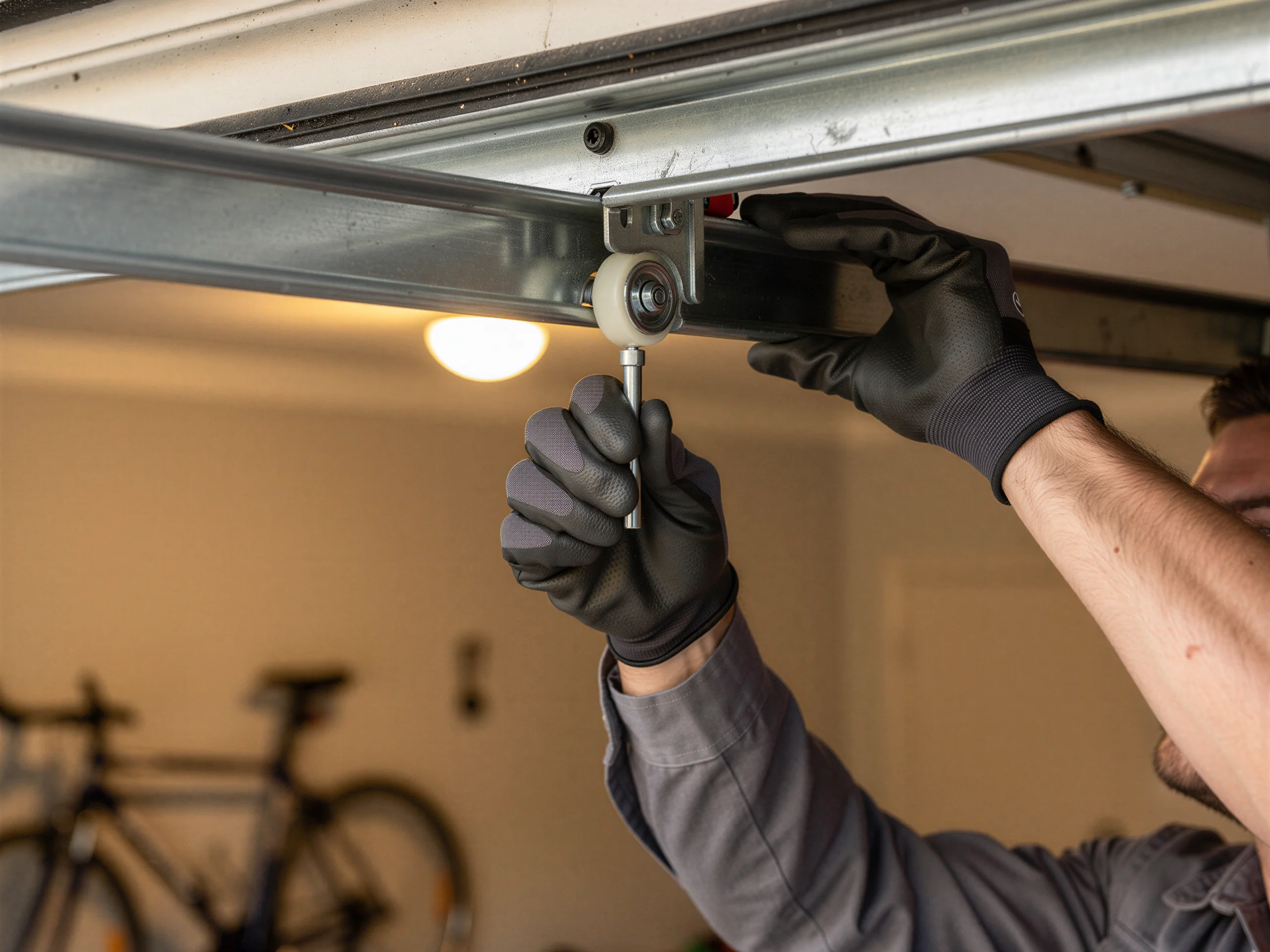
Where DIY does make sense is cosmetic: touch-up paint on a dent, tightening loose hinge bolts, lubricating rollers. Full panel swaps on an older door are where we'd rather you call first and find out what you're dealing with before buying parts that won't fit.
The Complications
The honest limitation here: if your door in Randallstown was installed anywhere near the neighborhood's median build year of 1976, we often can't get an exact factory match for a single damaged panel.
Old stock match limits
Steel door lines from that era were discontinued long before current manufacturers standardized panel dimensions, so a true match means finding old stock, which isn't reliable, or replacing more than one panel so the mismatch is less visible, or replacing the full door.
Cheaper option first
We'll always give you the cheaper option first if it's workable, but we won't pretend a close-enough panel will look seamless when it won't. The other wrinkle is hardware. A door this old usually has hinges and rollers sized to its original panel gauge, and a new panel sometimes needs re-drilled hardware points to hang correctly.
Slower than newer doors
None of this is unusual for a 1970s-era door - it's just slower and sometimes pricier than a two-bolt swap on a 2015 door, and we'd rather you know that going in than get surprised by it on the invoice.
How It Shows Up
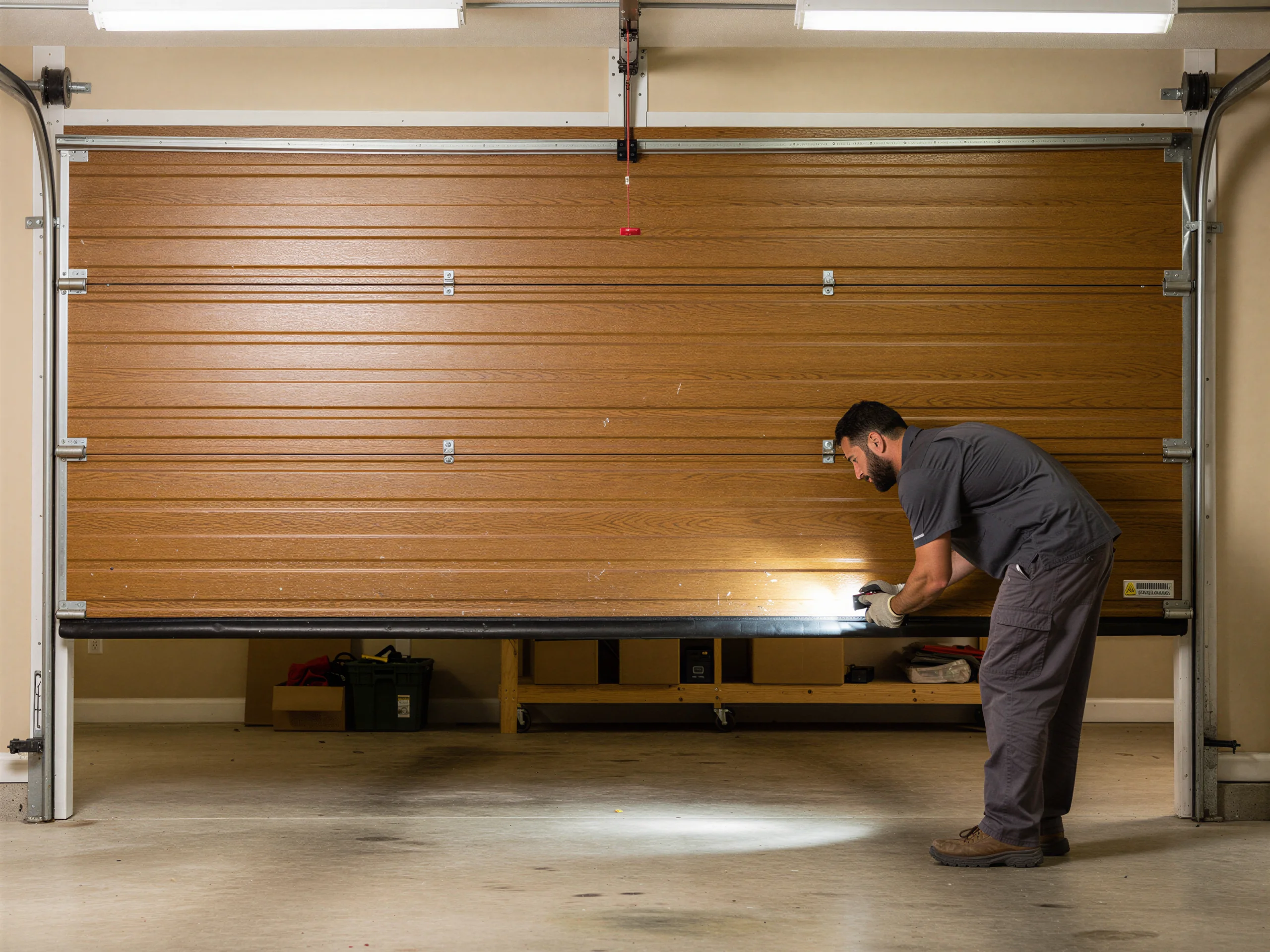
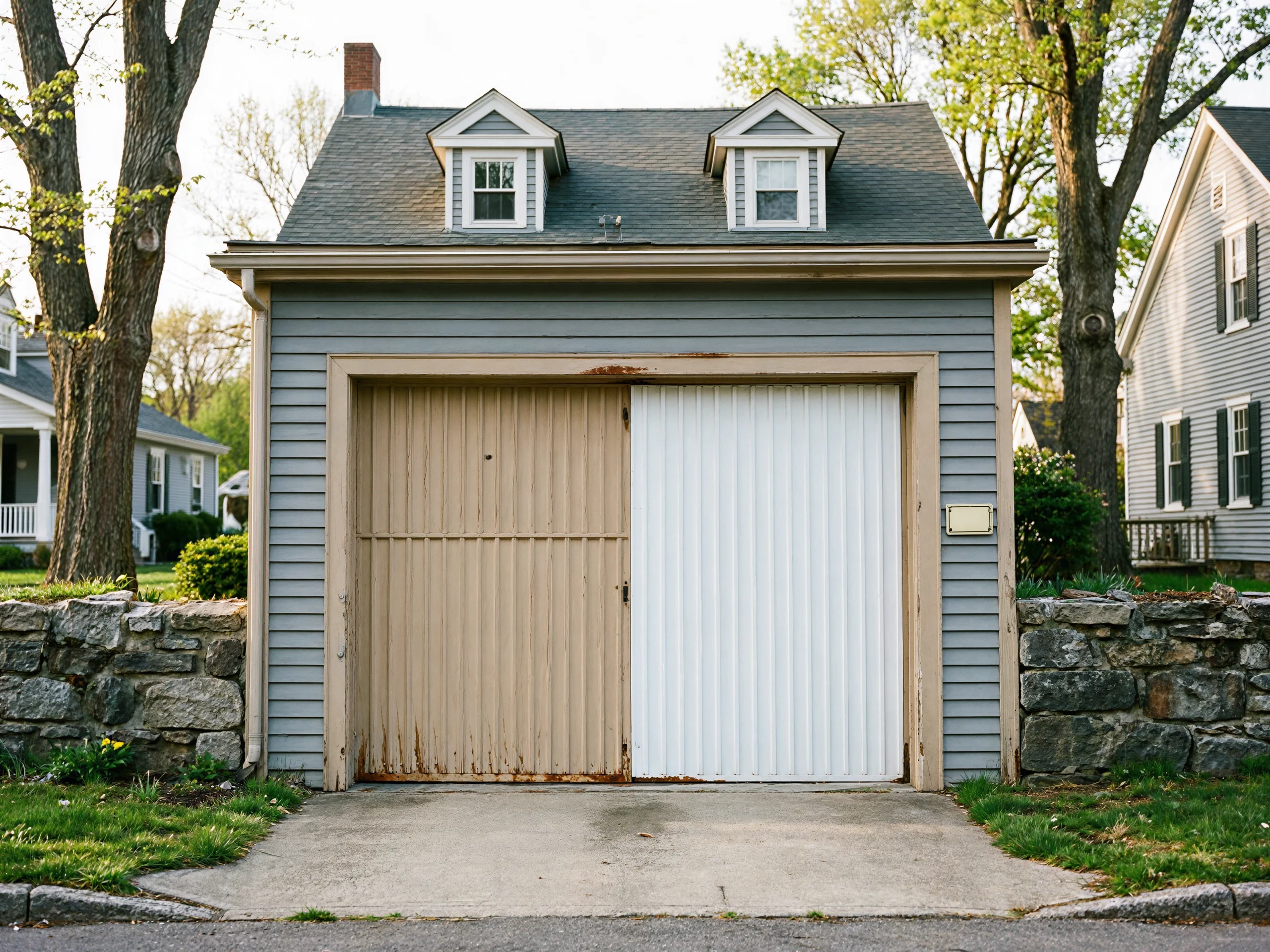
On older steel doors, panel damage in this area tends to show up as bottom-panel rust-through before anything else - years of ground moisture working at the lowest section, especially on doors that haven't been repainted. Dents from a car bumper or a dropped bike are the other common call, usually on the second panel up where a trailer hitch or ladder catches it. With a severe cold climate on top of that older steel, panels that have already thinned from rust get brittle and crack along a seam during a hard freeze-thaw cycle rather than just denting. We also see warping on insulated panels from this era where the foam core has separated from the steel skin over time, which shows up as a panel that looks fine but doesn't sit flat against its neighbors anymore. None of these are cosmetic-only problems forever - a cracked or separated panel changes how the door tracks, which is when a panel job turns into a spring or track call too.
Why It Happens Here
Randallstown's housing stock centers on 1976, squarely inside the wider service area's 1955-2014 range but on the older side of it, and that one number explains most of what we see on panel calls here. Doors installed in the mid-70s used steel gauges and panel profiles that newer manufacturers don't replicate, which is why an exact replacement panel is the exception rather than the rule. Add the region's severe cold climate band, and that older steel has had five decades of freeze-thaw cycling to work on seams, fasteners, and any spot where paint has worn through to bare metal. Across the roughly 13,829 households in Randallstown, a lot of garages have never had a panel touched since the door went up, so when one finally fails, it's often failing alongside hardware that's just as old. We don't treat every call as a full-door replacement - plenty of single-panel jobs here are still straightforward - but we size up the whole door before quoting, because on stock this age the panel is rarely the only piece showing its age.
Talk to a local pro
Garage door service in Ellicott City?
Same-day service with honest, upfront quotes.