Doing It Yourself
A torsion spring is wound under enough tension to break a finger or worse, and that doesn't change because you've watched a video. We're not going to pretend there's a safe shortcut here.
Spotting a dead door
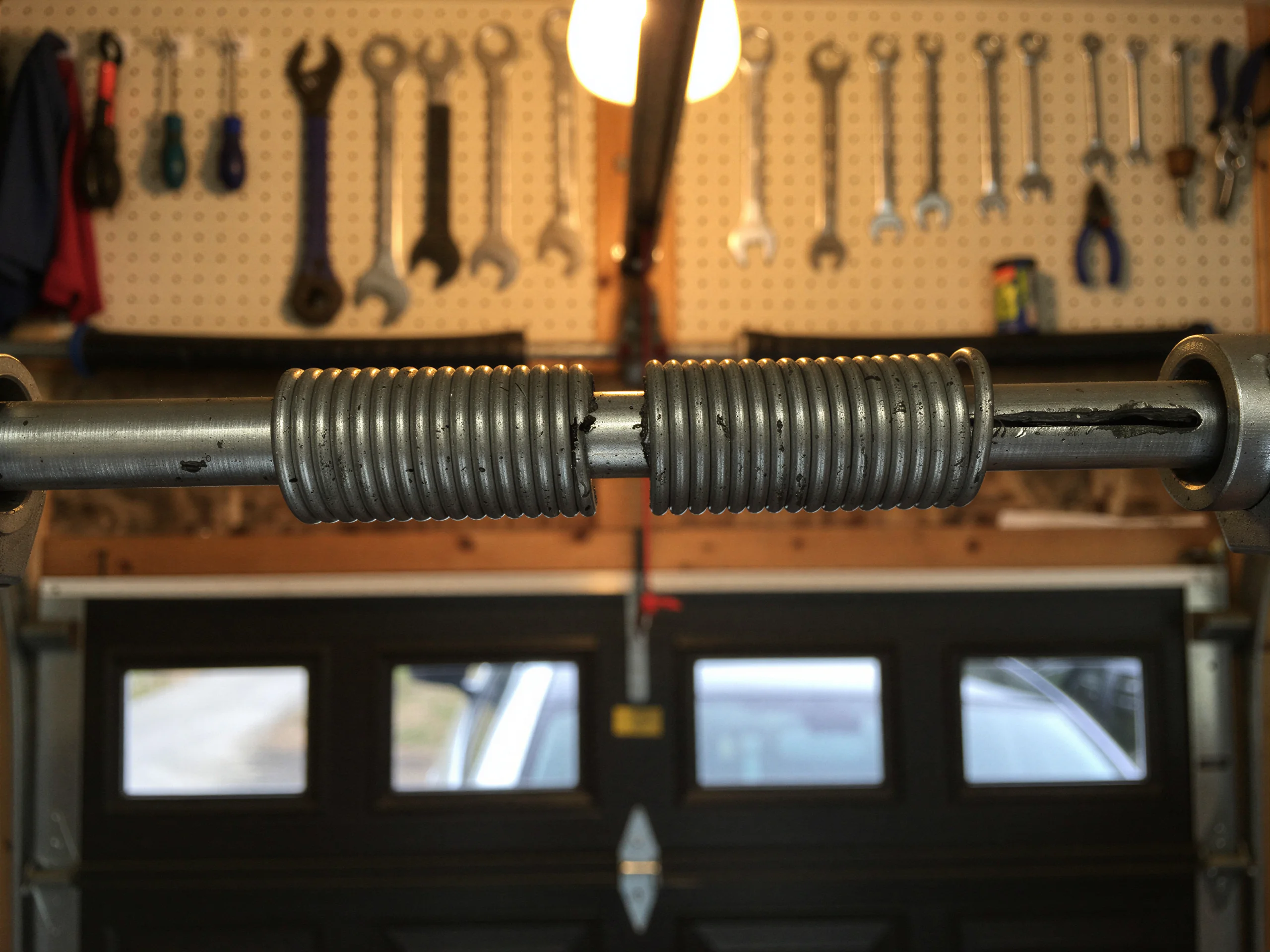
What you can do yourself: check whether the door is binding on a track, listen for a loud bang followed by the door going dead (that's almost always the spring, not the opener), and look at the spring itself - if one coil is visibly separated from the rest, stop opening the door until it's fixed. Don't cut a wound spring with bolt cutters to "release" it.
Torsion bar setups risk
Don't try to rewind one with a wrench you found in the garage. If the door is heavy, double, or on an older torsion bar setup, the margin for a bad outcome goes up, not down. Our honest limit: we don't walk customers through spring replacement over the phone, and we won't sell you a spring kit and wish you luck.
Spring not patchable
It's one of the few repairs where doing it yourself mostly saves money by avoiding an ER visit, not a service call. The torsion spring isn't repairable in the sense of patching it - it's either under correct tension and holding the door, or it's done and gets swapped.
How It Shows Up
Most spring failures don't give much warning. The door closes fine one evening and the next morning it won't lift past six inches, or it drops faster than it should when you hit the button.
Full snap versus partial
A full snap usually comes with a bang loud enough to bring someone out of the house to check. Partial failure is quieter: the opener strains, the chain or belt makes a grinding sound it didn't make before, or the door hangs crooked because one spring on a double-spring setup let go while the other is still holding its side.
Overnight freeze tension loss
Cold mornings make all of this worse. A spring that's been fine all fall can lose enough tension overnight in a hard freeze to finally give out the next time the door cycles.
Squeal at seasonal change
If you're hearing a new squeal or thud right as the weather turns, that's not a coincidence - it's the metal reacting to the temperature swing. The one thing that doesn't vary by season: a door that won't stay up on its own, with no obvious opener fault, is a spring problem until proven otherwise.
What the Repair Takes
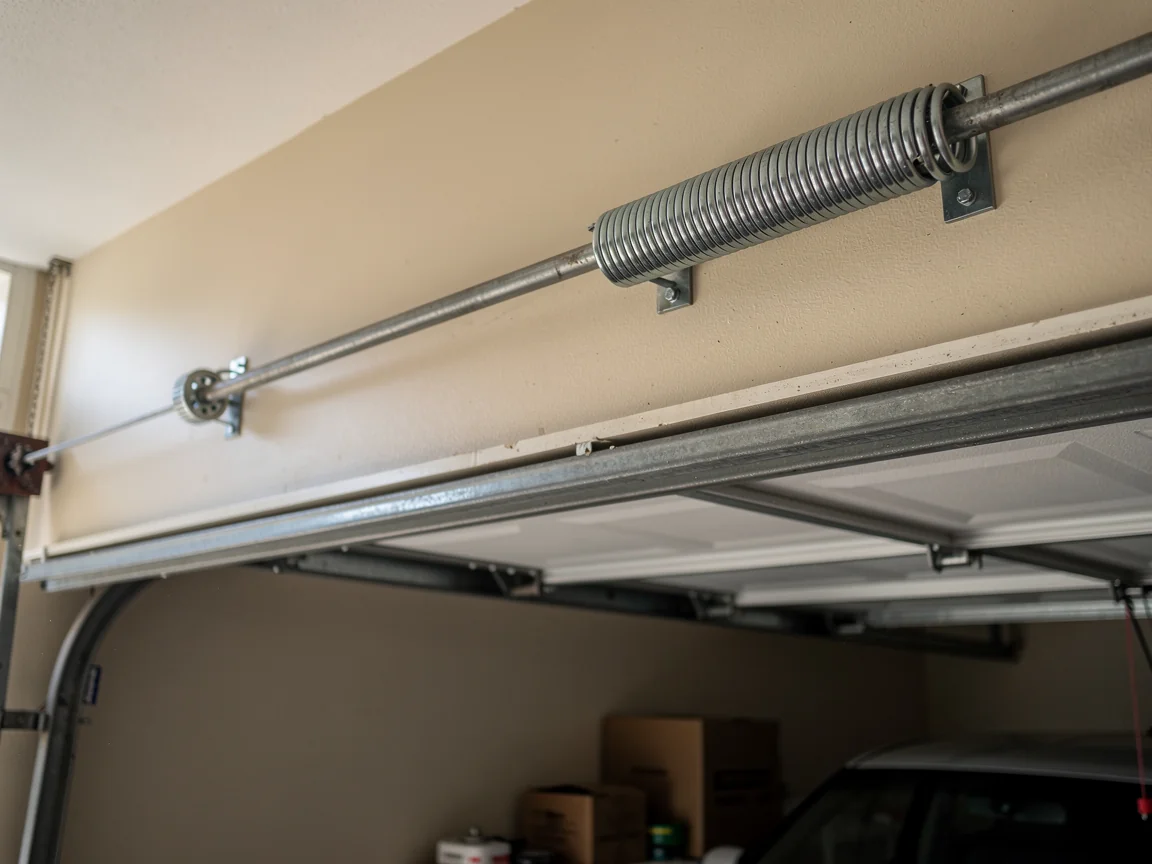
The job itself is straightforward for someone who does it regularly: wind down the old spring safely, pull it, match the new one to the door's weight and the drum size, wind it to the correct turns, and test balance before anyone touches the opener again.
Matching spring to era
The part that takes judgment is the matching - doors from different eras in this area carry different weights and track geometry, so a spring that's right for a 1979-build door isn't automatically right for one going up new.
Balance check after swap
We check the door's balance after the swap, not just whether it opens, because a spring that's slightly off tension will wear the opener and the other spring faster.
Short-term spring-only fixes
The honest limitation: if the springs are original to a door built decades ago and the drums, cables, or bottom brackets show the same age and wear, replacing the spring alone and leaving the rest is a short-term fix. We'll tell you when that's the case instead of just doing the one job you called about and letting the next failure be a surprise.
Why It Happens Here
Most houses in the Ellicott City service area went up between 1955 and 2014, with the median home dating to 1979, which means a lot of doors are riding on torsion springs installed, repaired, or replaced on a schedule set decades ago. Across the 62 named communities we cover, the bulk of the stock is 1960s and 70s construction, the exact era when spring steel on these doors starts fatiguing from decades of cold-weather cycling rather than from any one bad winter. The climate here is classified as cold and severe, which matters more than it sounds: a torsion spring contracts and expands with every freeze-thaw swing, not once a season but dozens of times, and that repeated flex is what finally snaps a coil that looked fine in September. Dorsey's Search is barely two miles southwest and Windsor Mill about six miles northeast, and both sit on the same cold-weather torsion-spring timeline as Ellicott City itself. With 177,301 owner-occupied houses across the service area and a median household income of $109,790, most owners here are maintaining original equipment on schedule rather than replacing doors wholesale - which is exactly why spring failure, not full door replacement, is the call we get most.
Talk to a local pro
Garage door service in Ellicott City?
Same-day service with honest, upfront quotes.