Doing It Yourself
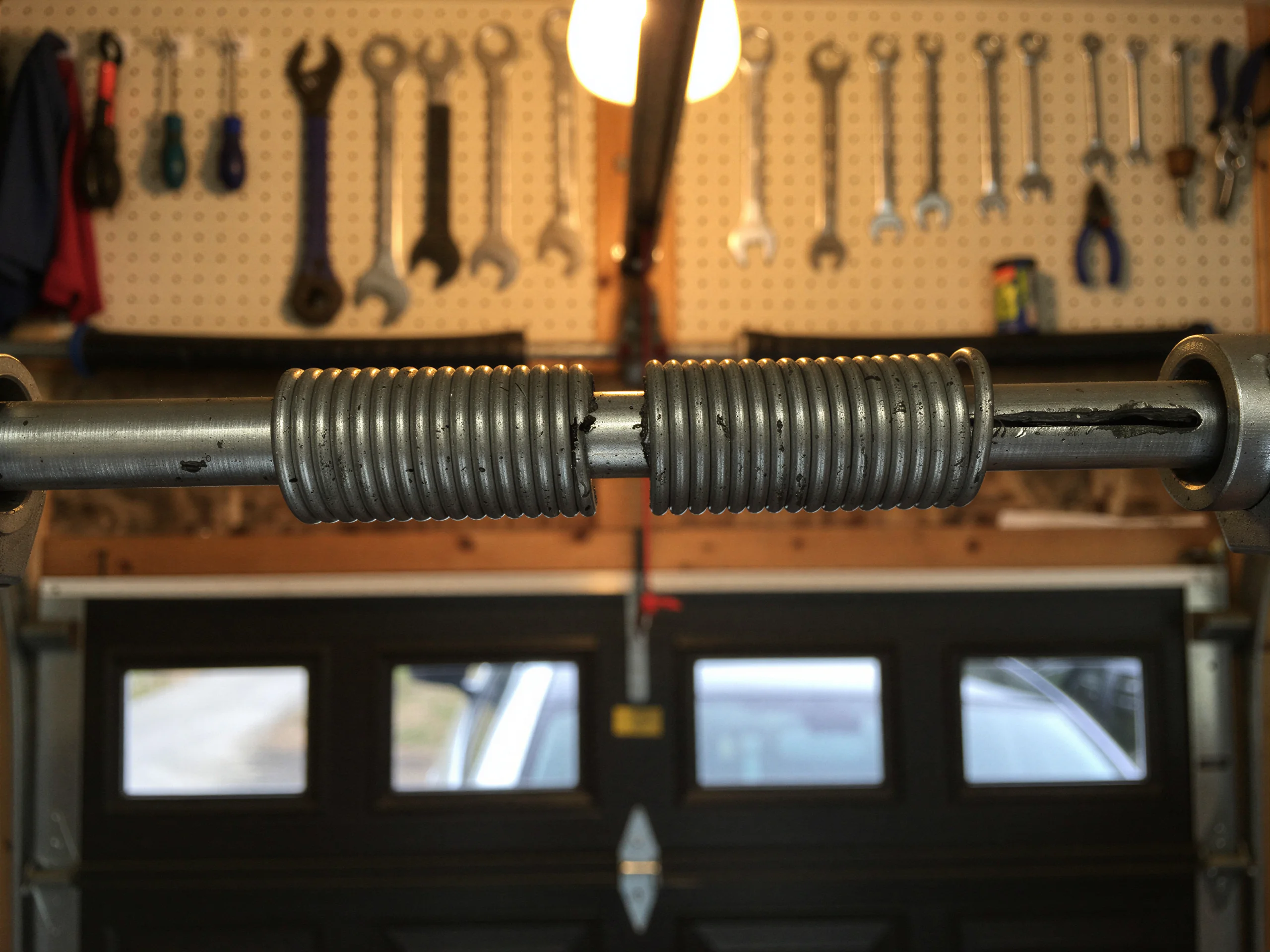
A lot of homeowners try to free up a stuck door before calling anyone. If the door won't open because a cable jumped the drum or a torsion spring let go, stop there - that's not a tighten-a-bolt job, and a wound spring under tension can take a finger off.
Photo-eye and force checks
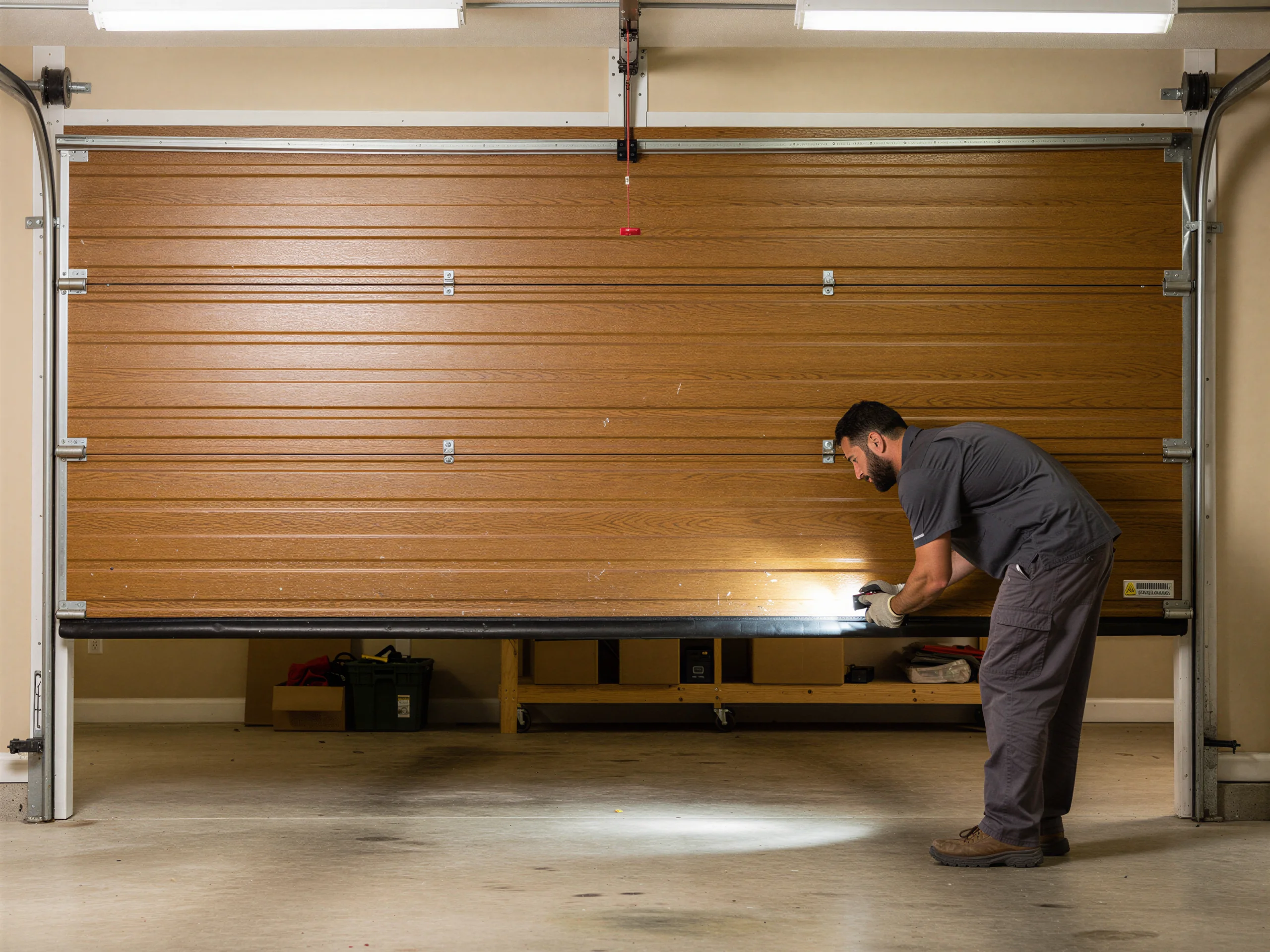
What you can safely check yourself: the track for a bent section, the photo-eye sensors near the floor for dust or misalignment, and whether the opener's force setting is just set too low after years of use. If the door is heavy to lift by hand with the opener disconnected, the springs are tired, not the opener.
Spring sized for old door
Houses in this area built in the 1960s and 70s often still have the original spring size for a door that's been upgraded or re-skinned since, so the door is heavier than the spring was ever sized for.
Reading spring stamps
That mismatch is something a homeowner usually cannot diagnose without pulling the spring stamp and doing the math, so this is where we'd rather you call than guess. The honest limit here: we don't talk anyone through a spring swap over the phone. It's one of the few repairs where getting it wrong costs more than the service call would have.
How It Shows Up
In homes going back to the 1955-2014 build range common across this service area, the failure pattern is pretty consistent. A door that used to lift with one hand starts needing two.
Daily temperature swing wear
It opens fine at 2pm and groans at 7am. You hear a bang from the garage on a cold morning - that's usually a torsion spring giving out after years of temperature swings working the coil.
Rollers worn undersized
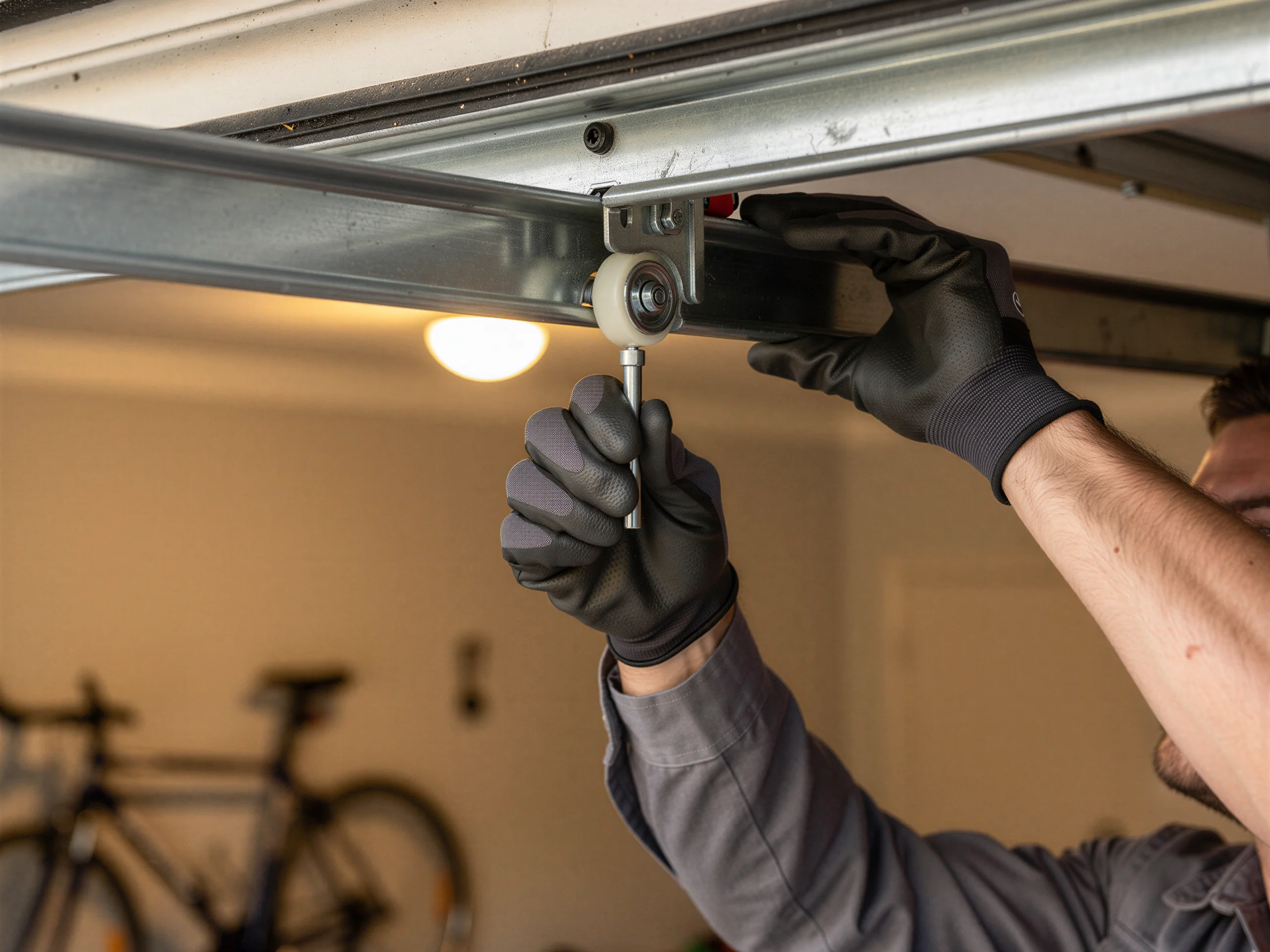
On older tracks, especially the stock installed on houses from the 1960s and 70s, you'll see the rollers worn down to a smaller diameter than they started, which lets the door rock side to side instead of running straight.
Openers failing in batches
Openers from a mid-2000s build-out of a neighborhood tend to fail together, within a year or two of each other, because they were installed by the same builder on the same schedule. If your door reverses before touching the floor, that's the force or sensor, not the spring. If it just won't move, that's almost always the spring or a broken cable.
What the Repair Takes
A torsion spring replacement on a standard double door is a this-visit job once we've got the right spring on the truck - we measure wire size, coil diameter, and length on-site rather than guess from the house's age, because even within the same block two doors can have different spring specs depending on who replaced the door last. Roller and cable work is usually done the same visit too. Where it slows down is parts for openers tied to a specific builder-installed model from a particular era; if a board or gear set isn't something we stock, that becomes a lead-time item and we'll tell you straight instead of promising same-day. We also won't recommend a spring-only fix on a door that's showing rust-through on the bottom panel or a track that's bent in more than one place - at that point you're paying twice, once now and once in a year, and replacement is the better call. That's the limitation worth saying out loud: not every repair is worth doing as a repair.
Why It Happens Here
This matters more here than in a lot of places because of what's actually in the ground and air. Housing across the area runs from 1955 up through recent builds, with the bulk of it dating to the 1960s and 70s across the named communities nearby - Catonsville, Woodlawn, Dorsey's Search just southwest of here, Windsor Mill to the northeast. That means a huge share of doors and openers are original or on their second system, installed when spring sizing standards and opener safety sensors were different than what's sold today. Layer on a cold, severe winter climate and you get steel coils that contract and expand every season for decades, concrete floor slabs that shift slightly with frost, and tracks that go out of plumb by fractions of an inch that add up. A door that was fine in October starts binding by January because the cold stiffens the lubricant and tightens the coil at the exact moment it's being asked to do the most work. That combination - older hardware plus real winter - is the specific reason this fails here on a schedule you can almost set a calendar by.
Talk to a local pro
Garage door service in Ellicott City?
Same-day service with honest, upfront quotes.