Doing It Yourself
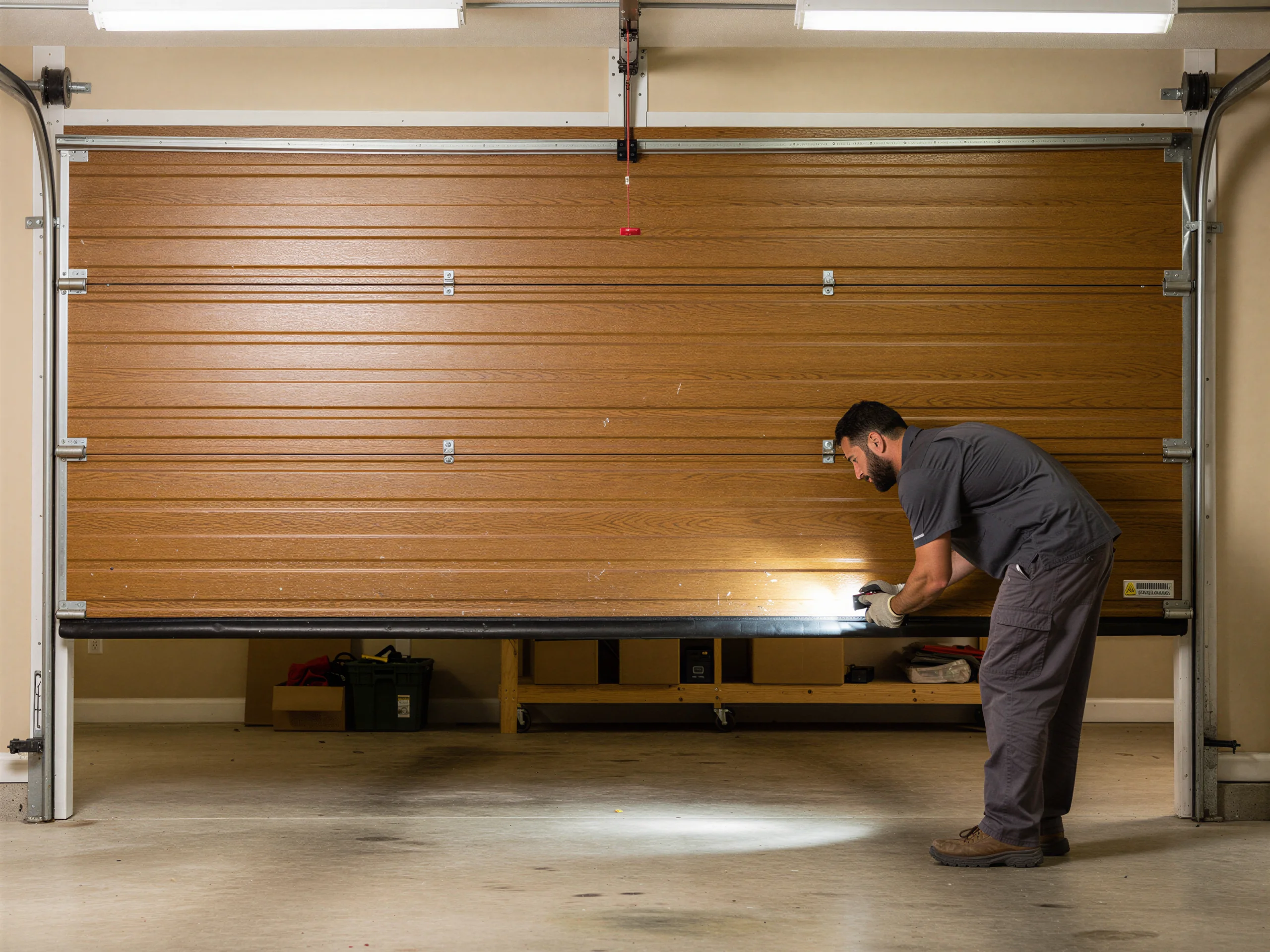
There's a real piece of this job you can do on your own, and a real piece you shouldn't touch. Pop the garage light on and watch the rollers travel the track while someone else runs the opener.
Lithium grease on stems
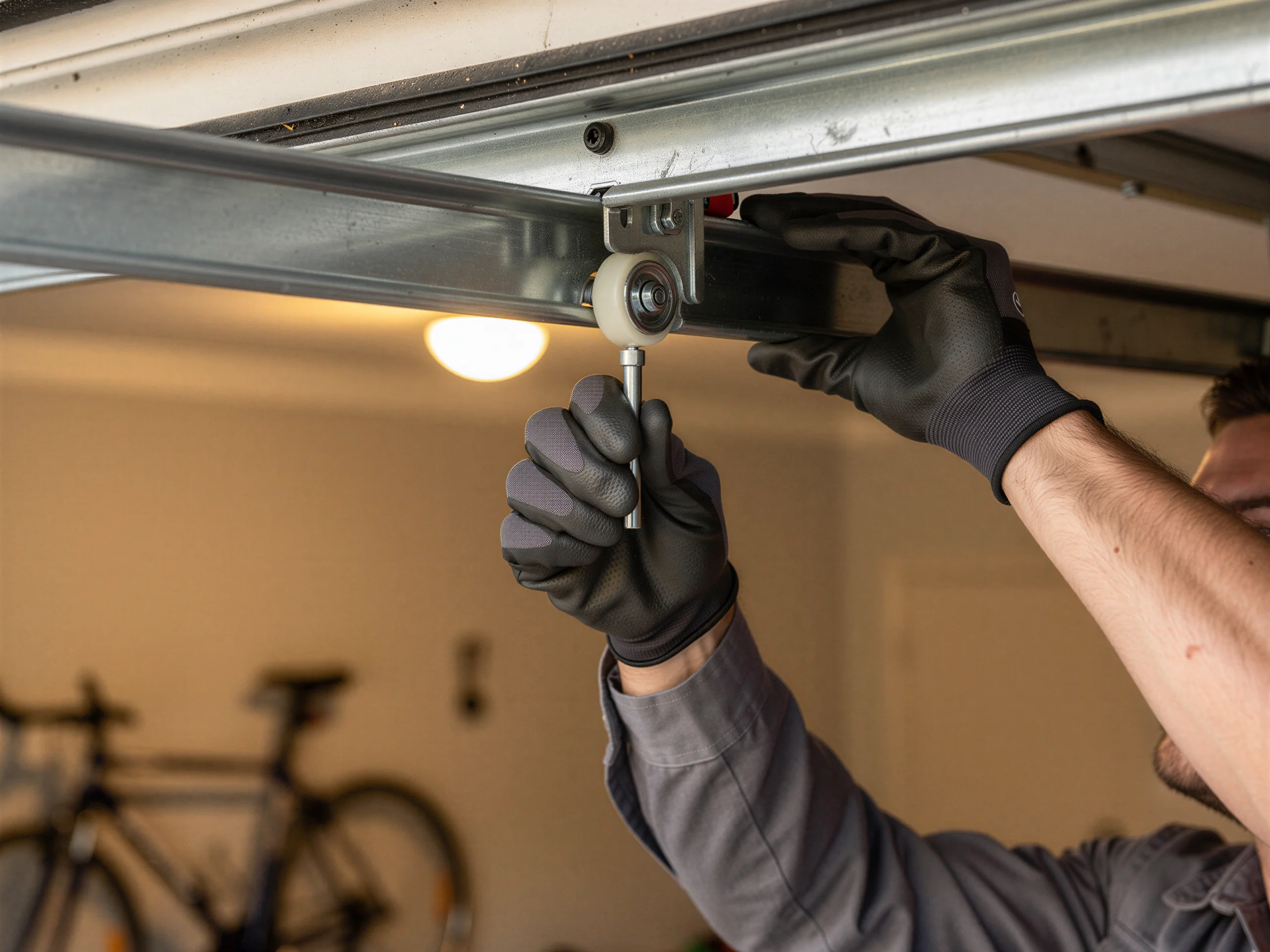
If a roller wobbles, sits chipped, or the wheel has worn down to a smaller diameter than its neighbors, it's done. A can of white lithium grease on the roller stems (not the track) once or twice a year keeps the rest running quiet longer. What you shouldn't do: pull a roller near the bottom bracket while the door is down and the cables are under tension, or mess with anything near the torsion spring at the top of the track.
Spring tension hazards
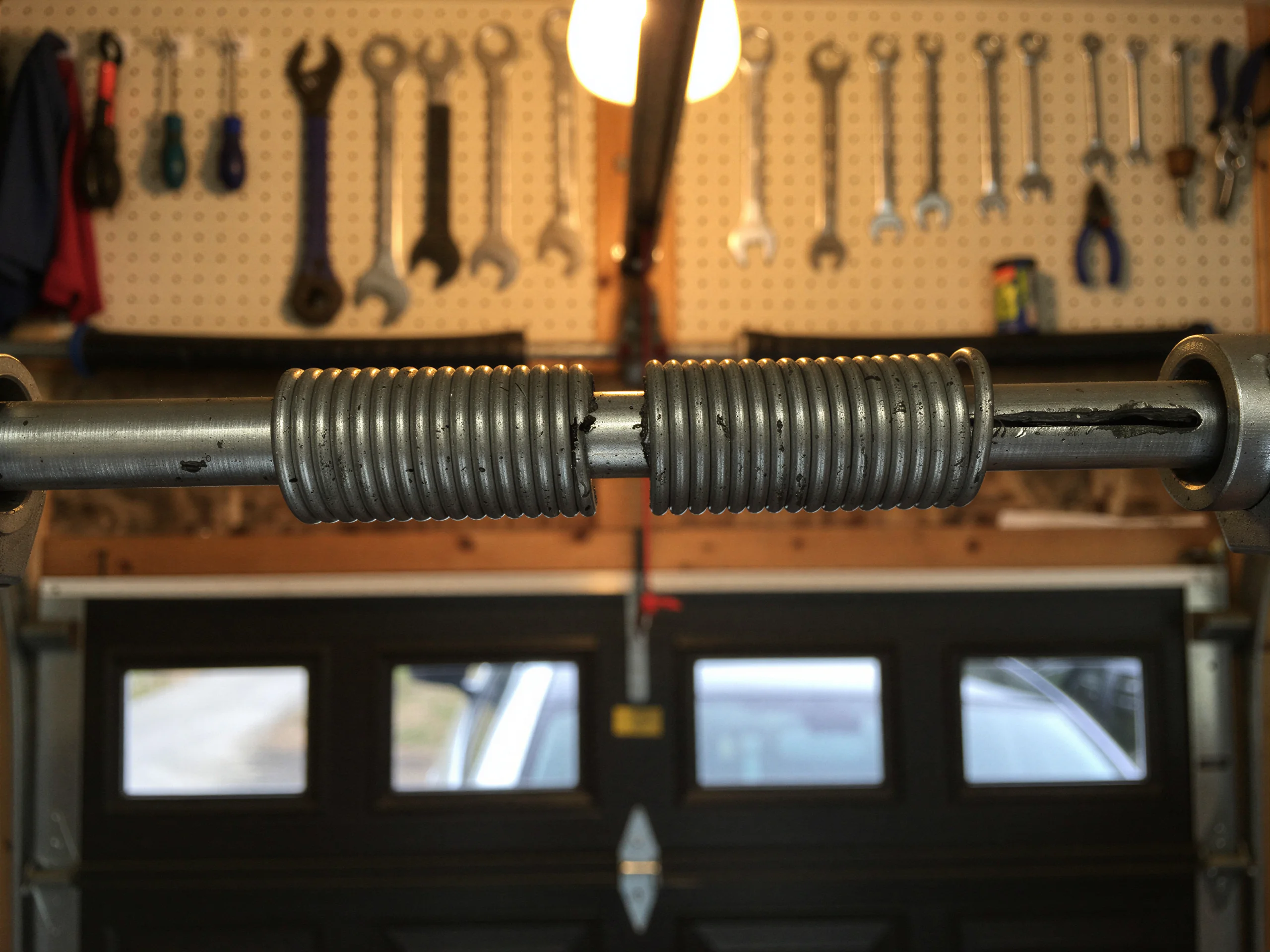
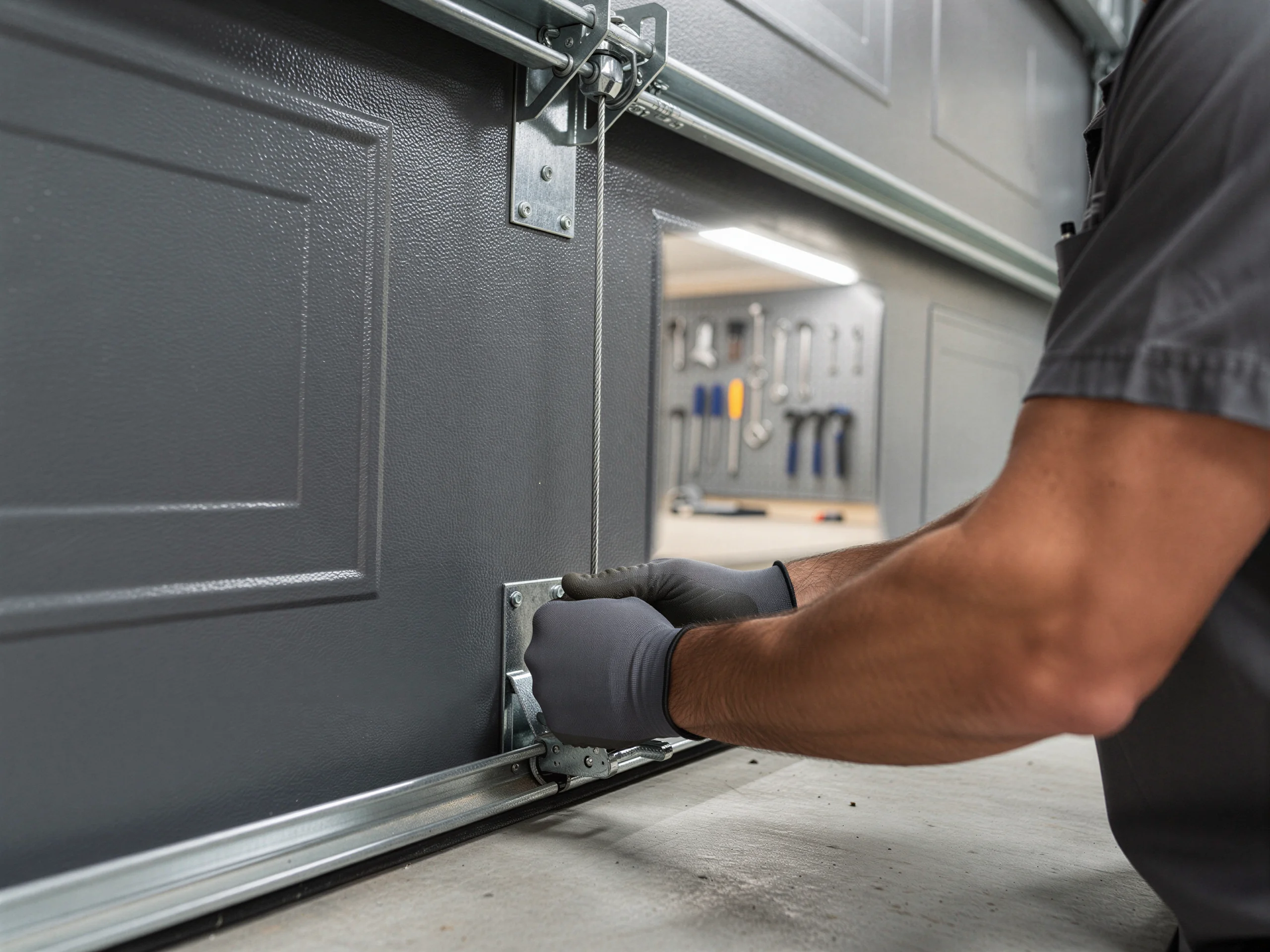
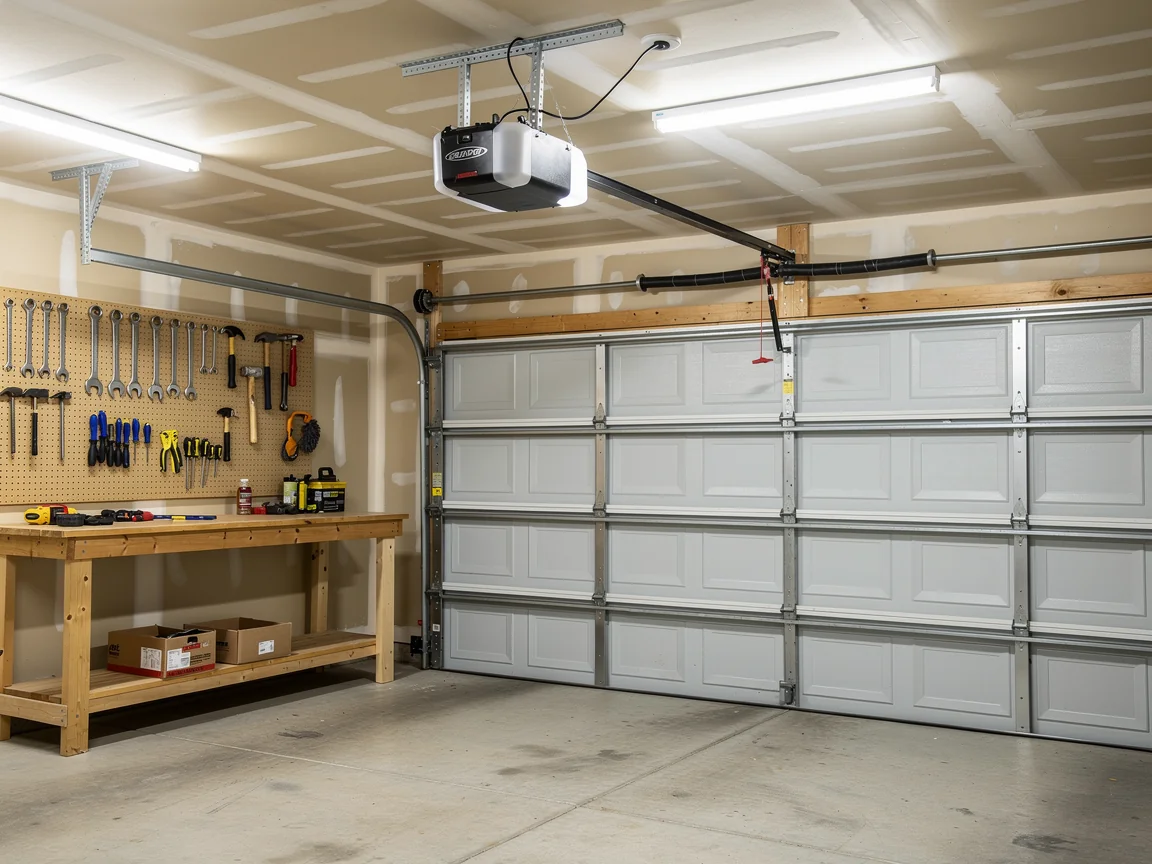
That spring holds the full weight of the door and it doesn't care that you were just trying to swap a $4 part. If a roller near the bottom corner has already jumped the track, leave the door where it is, block it from moving if you can, and call someone before you try to walk it back in.
Bent track needs straightening
The honest limit here: once a roller failure has already bent the track or pulled a hinge, it's not a roller job anymore. That's track straightening or replacement, and trying to force a new roller into a bent channel just wears the next one out twice as fast.
How It Shows Up
The first sign is usually sound, not sight. A door that used to roll up with a low hum starts grinding, or you get a rhythmic thunk-thunk-thunk as a flat spot on one wheel hits the track once per rotation.
Hesitation mid-travel
Then it's a hesitation, a spot halfway up where the door catches and the opener strains for a second before it clears. Most of the houses in this service area were built between 1955 and 2014, with the median landing around 1979, and across the 62 named communities in the area the bulk of that stock is 1960s and 70s construction.
Steel-on-steel wear
That matters because doors from that era were almost always hung with steel rollers on steel track, not the sealed-bearing nylon rollers that show up on newer installs. Steel-on-steel wears faster, rusts if the garage holds any moisture, and gets noisy well before it actually fails. Cold makes it worse.
Cold morning grinding
This area sits in a severe cold-climate band, and steel contracts in hard freezes just enough to tighten tolerances that were already worn loose. You'll often hear the worst grinding on the first really cold morning of the season, even though the roller's been wearing down for months.
What the Repair Takes
A roller job starts with securing the door - locked in the down position or propped if it has to stay up - so there's no tension working against you while the old hardware comes out.
Sequential roller removal
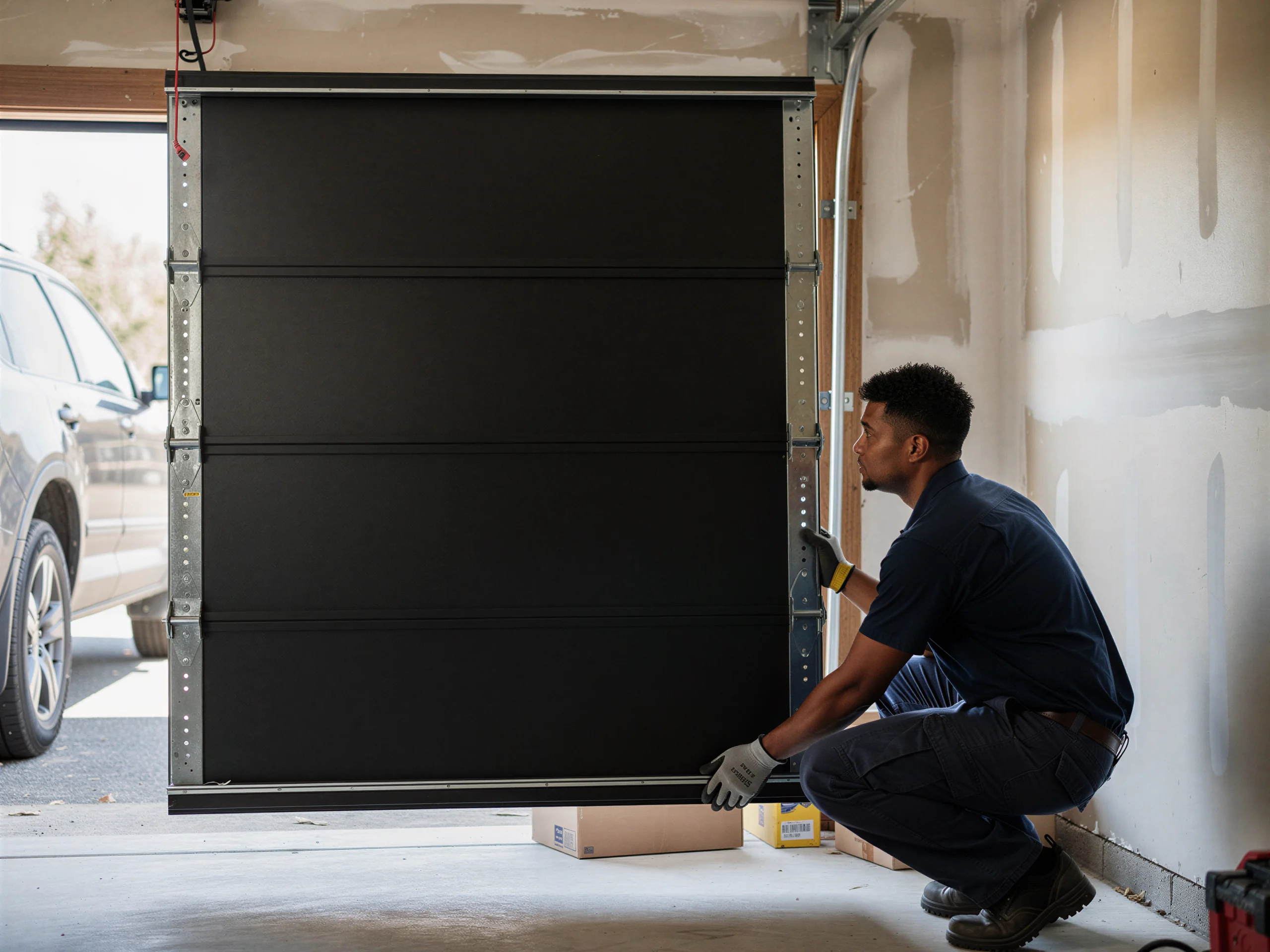
Each roller gets pulled one at a time, starting away from the spring side, with the hinge or bottom bracket checked for wear while the stem's exposed. A roller rarely fails alone; if one wheel is shot, its neighbors are usually close behind. Track gets inspected at the same time, since a roller that's been grinding for weeks can score or bend the channel it rides in.
Test cycles after install
If the track's still straight, new rollers go in and the door gets run through a few full cycles to check that it's riding center and not binding anywhere. If the track's bent, that gets corrected or replaced before new rollers go in - putting fresh rollers into a bent track just buys you a few weeks.
Whole-system single visit
The honest limitation: if the springs are also near end of life, or the opener's been compensating for the rough roller for a long time, it's worth looking at the whole system in one visit rather than coming back out in six months for the next part that failed under the same strain.
Why It Happens Here
This comes down to two things: how old the doors are and how cold it gets. With 177,301 owner-occupied houses across this service area, a large share of those garages still carry the original hardware from whenever the door was installed, often steel rollers on steel track from a build era centered on 1979. Steel rollers have a shorter working life than sealed nylon ones to begin with, and they don't get quieter or smoother as they age - they get louder.
The severe cold-climate band this area sits in adds a second layer of wear. Freeze-thaw cycles tighten metal tolerances and dry out the thin lubricant film on a roller stem faster than a mild climate would. A roller that might limp along for another year somewhere warmer gives out here in the middle of a cold snap instead.
Geography plays a role too, though mostly in confirming the pattern rather than causing it. Out toward Dorsey's Search, about 2 miles southwest, or Windsor Mill, roughly 6 miles northeast, the housing age and the climate exposure don't change much, so the same roller wear pattern shows up on either side of town rather than being specific to one street or subdivision.
Talk to a local pro
Garage door service in Ellicott City?
Same-day service with honest, upfront quotes.