How It Shows Up
Pikesville has about 13,620 households, which is a fraction of the roughly 510,000 across our whole service area, but it's enough that we see the same panel failures repeat across the neighborhood.
Steel and aluminum era
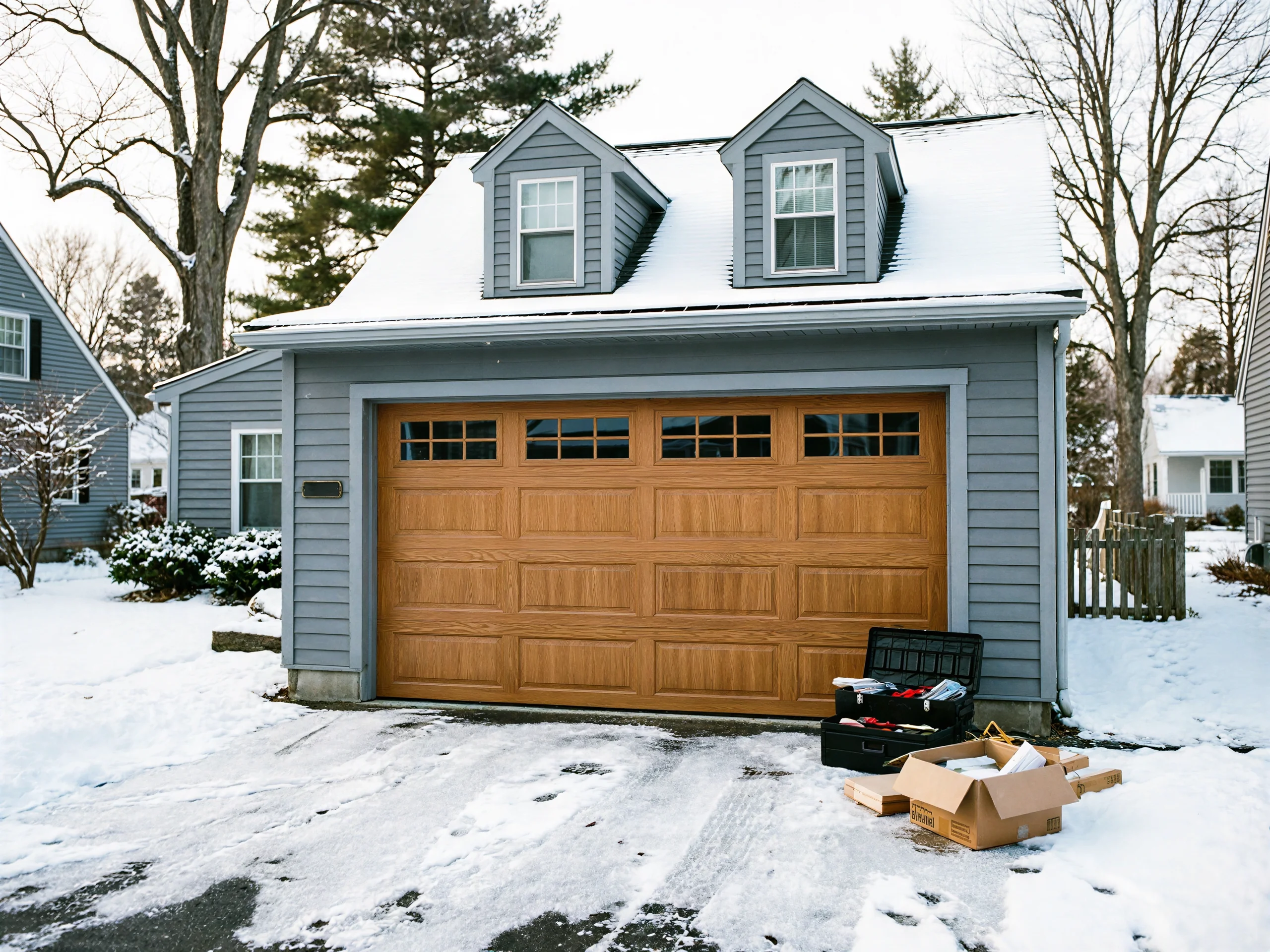
Most of the houses here went up around 1974, give or take a decade on either side, which puts the garage doors squarely in the steel and early-aluminum era.
Crumpled bottom panels
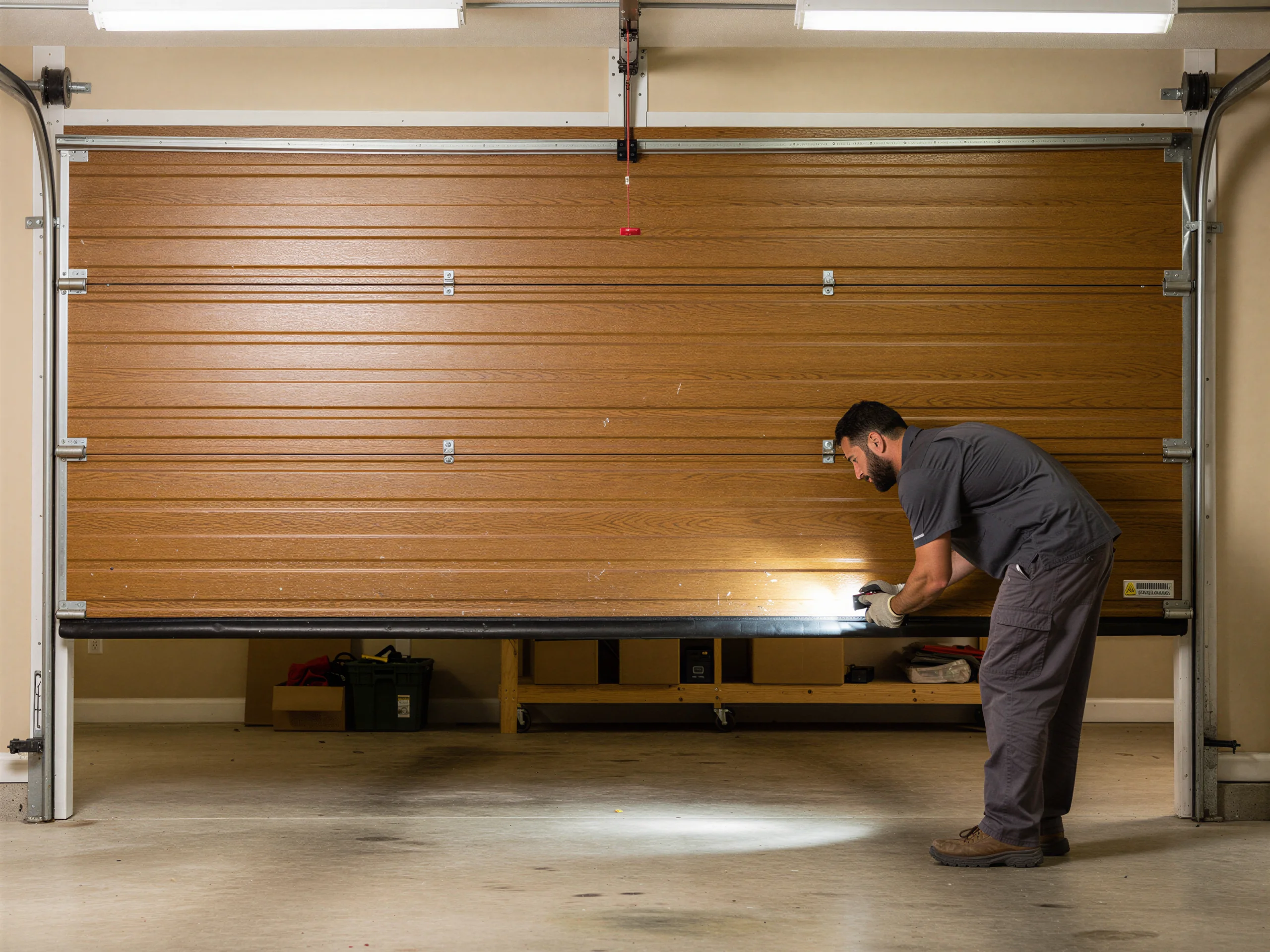
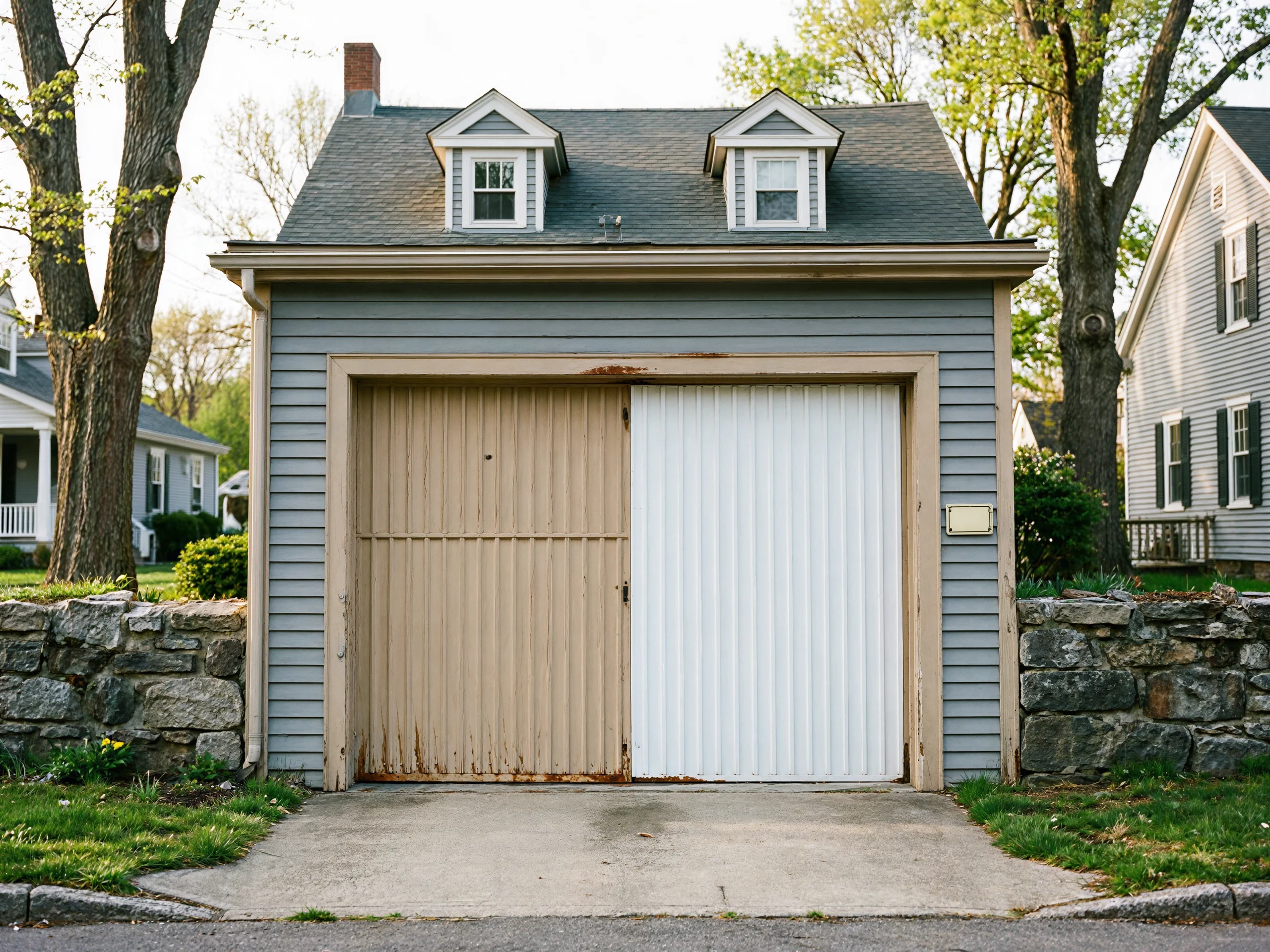
The damage shows up a few ways: a bottom panel crumpled from a backed-into car, a middle section bowed from wind pressure, or a run of rust blooming along the bottom edge where water sits after snowmelt.
Riveted track complicates swaps
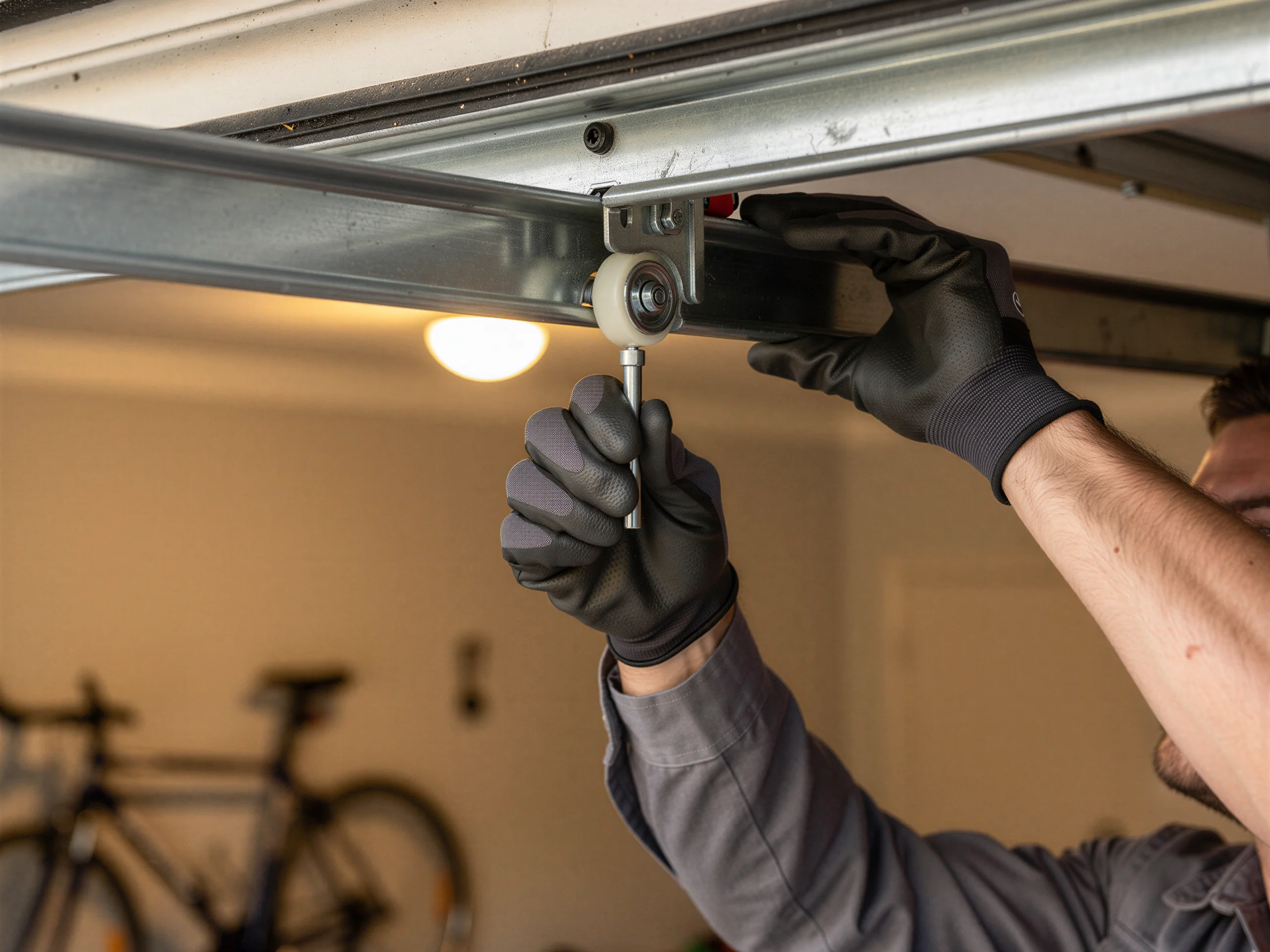
On older doors the panel is riveted into a track system that wasn't built to swap out a single section cleanly, so what looks like a one-panel fix sometimes turns into matching a whole run of hardware that the original manufacturer stopped making years ago.
Doing It Yourself
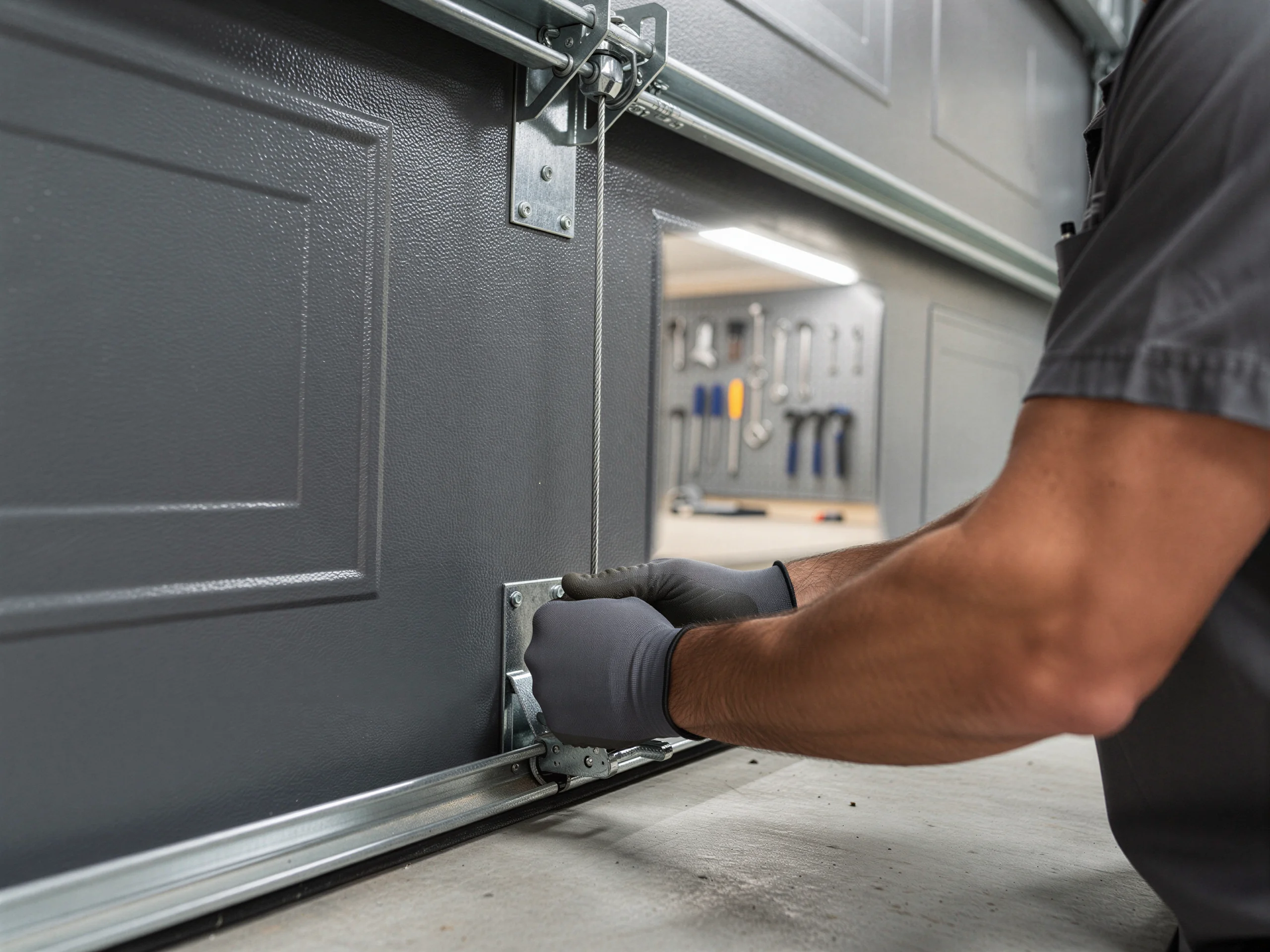
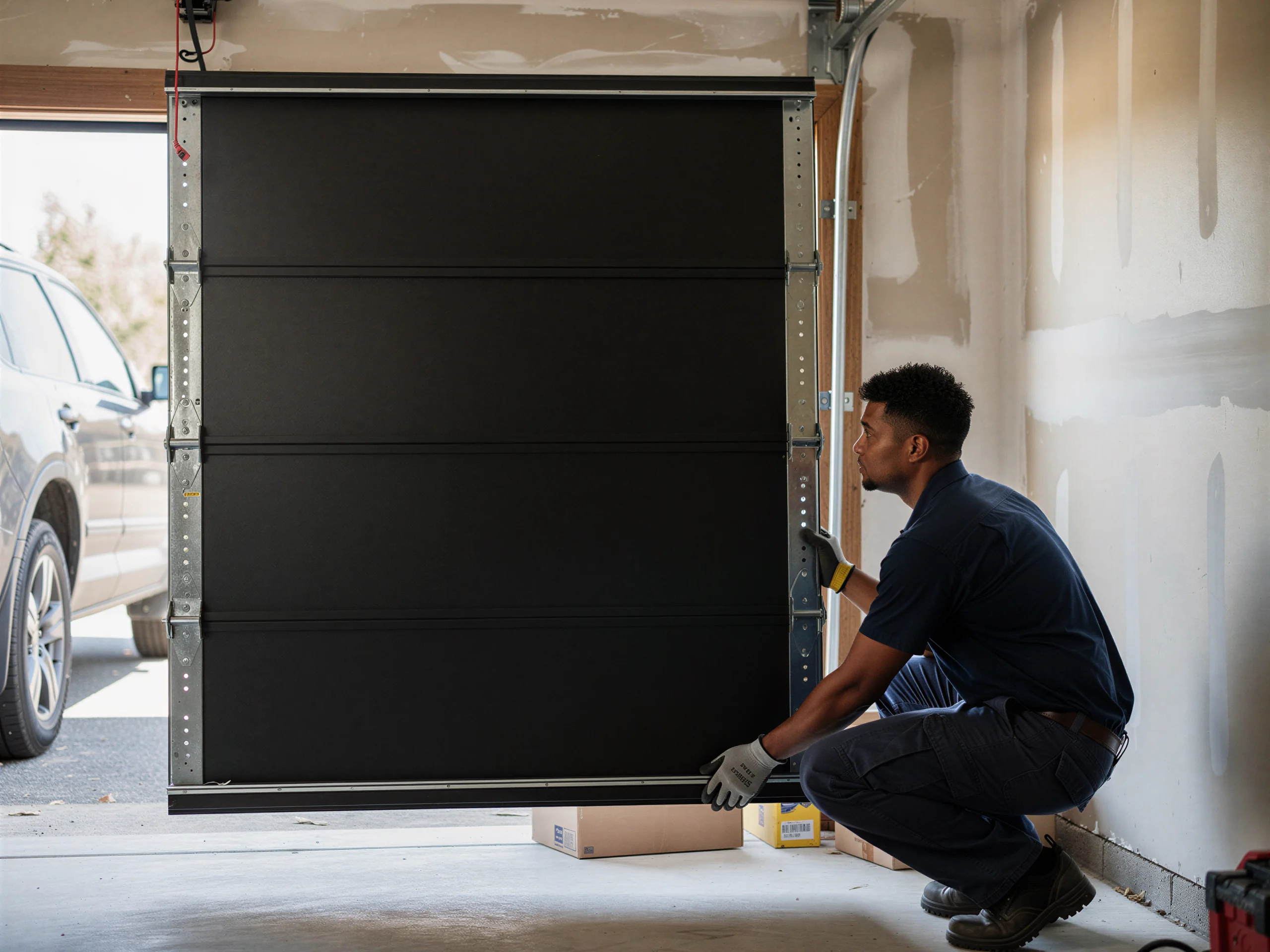
If you're handy and the damaged panel is cosmetic only - a scrape, a shallow dent, nothing structural - you can sometimes pop a panel and swap it without touching the spring system.
Spring disconnect dangers
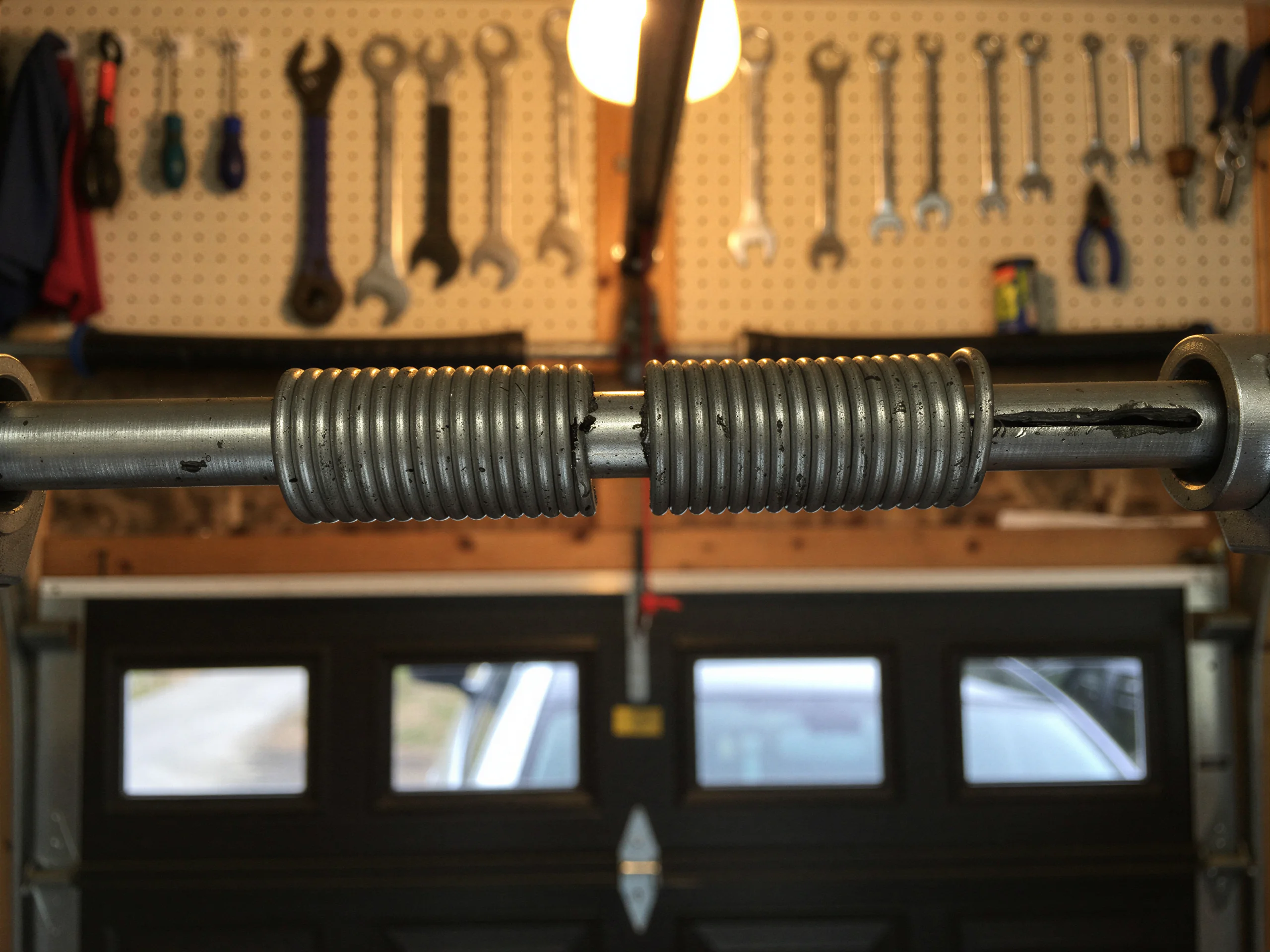
Where it gets risky is anything that requires disconnecting the torsion spring or lifting the door off its track to get the panel out. A wound spring under tension is not a weekend project, and we'd rather tell you that upfront than have you find out the hard way.
Online panels mismatch hinges
If your door is original to a 1970s build, there's also a decent chance the replacement panel you order online won't match the track width or the hinge spacing exactly.
Quarter-inch height variance
We've measured doors where the panel height is a quarter-inch off from what's sold today. That mismatch is the kind of thing that's cheap to check and expensive to guess wrong on.
The Cost of This Job
We're not going to throw out a number here that doesn't hold up once we're standing in front of your actual door - panel cost swings a lot depending on the door's age, the material, and whether we're matching an existing run or replacing the whole thing because a match isn't available. What we can tell you is the honest trade-off: on a door built in the 1970s era common to Pikesville, sourcing one matching panel sometimes costs close to what a full door replacement would run, because of how scarce the original steel gauge and panel profile have become. We'll tell you straight which way the math points before we start, rather than sell you a patch that costs nearly as much as doing it right.
Time on the Job
A single-panel swap on a door where the hardware still matches is a same-visit job once parts are in hand.
Tracking down matching panels
The slower part is almost never the install - it's tracking down a panel that fits a door built decades before current standard sizing.
Panel lead time upfront
If your door dates to the 1970s stock common around Pikesville, we may need to order a panel rather than carry it on the truck, and that lead time is on us to tell you upfront, not something we guess at on-site.
The Complications
The complication we run into most in Pikesville is mismatch: a panel sold today doesn't always drop into a track built for a door from the 1974 era. Hinge spacing, panel height, and the gauge of steel have all shifted since then. We also deal with doors where one earlier repair already replaced a panel with something close-but-not-quite, so now there are two slightly different panel profiles on the same door and a third one has to split the difference. Add in our winter weather - this area sits in a cold climate zone with real freeze-thaw cycles - and steel panels that took on rust years ago from condensation along the bottom seal are often softer than they look, which means a replacement sometimes reveals a second problem (a rusted-through bottom bracket or track) once the old panel comes off.
Why It Happens Here
Housing in this part of the service area mostly dates to the 1955-2014 range, with Pikesville's own stock centering around 1974 rather than the service-area median of 1979 - close, but old enough that a lot of these doors are on their second or third decade of panels. Combine that housing age with a genuinely cold climate - the kind with hard freezes, not just an occasional frost - and you get steel panels that have spent forty-plus winters expanding and contracting at the seams. That's the cycle that eventually cracks the paint, lets water in, and starts the rust that ends in a panel swap. It's less about bad luck and more about the math of an older door meeting a real winter, year after year.
Talk to a local pro
Garage door service in Ellicott City?
Same-day service with honest, upfront quotes.