How It Shows Up
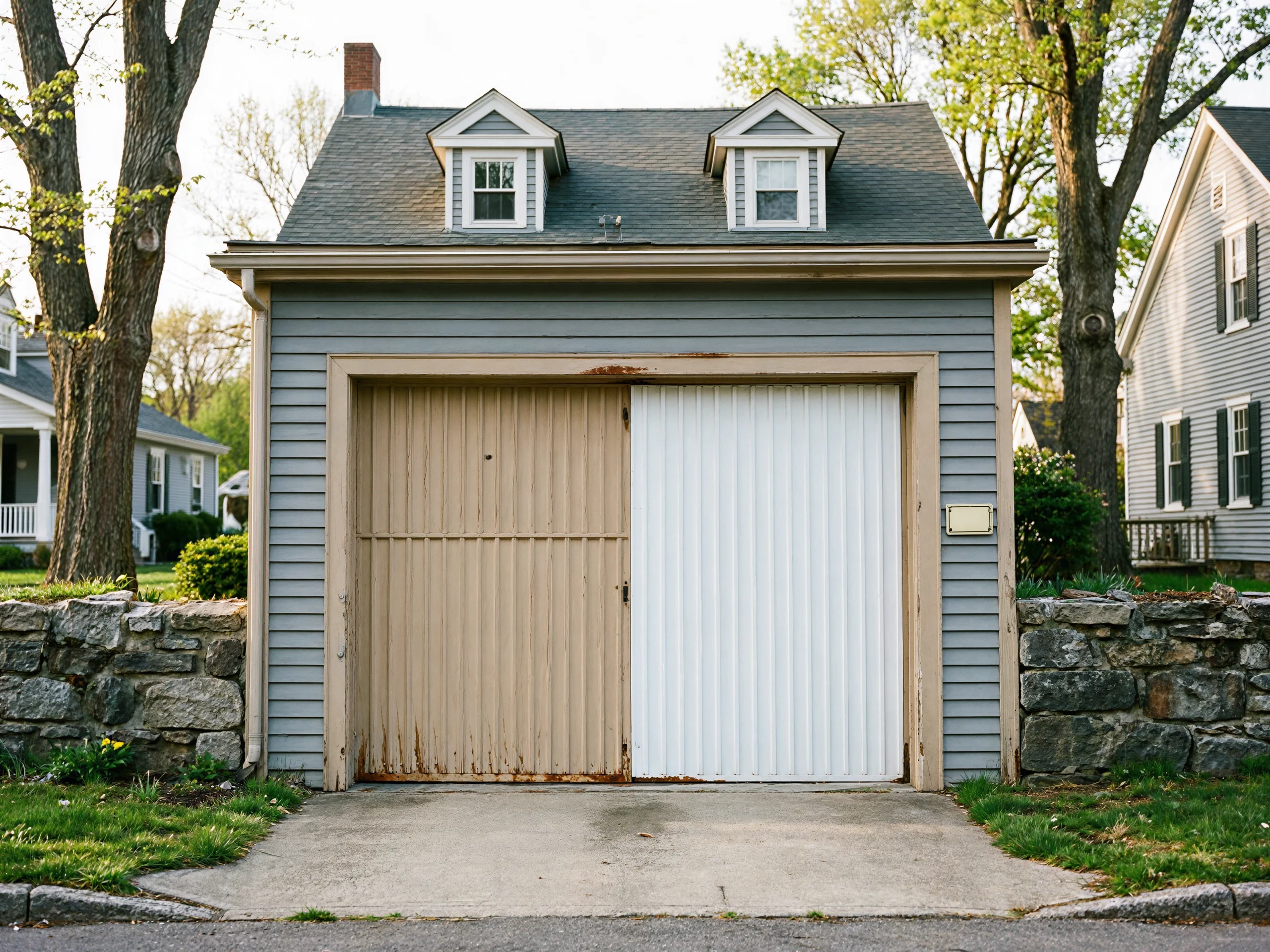
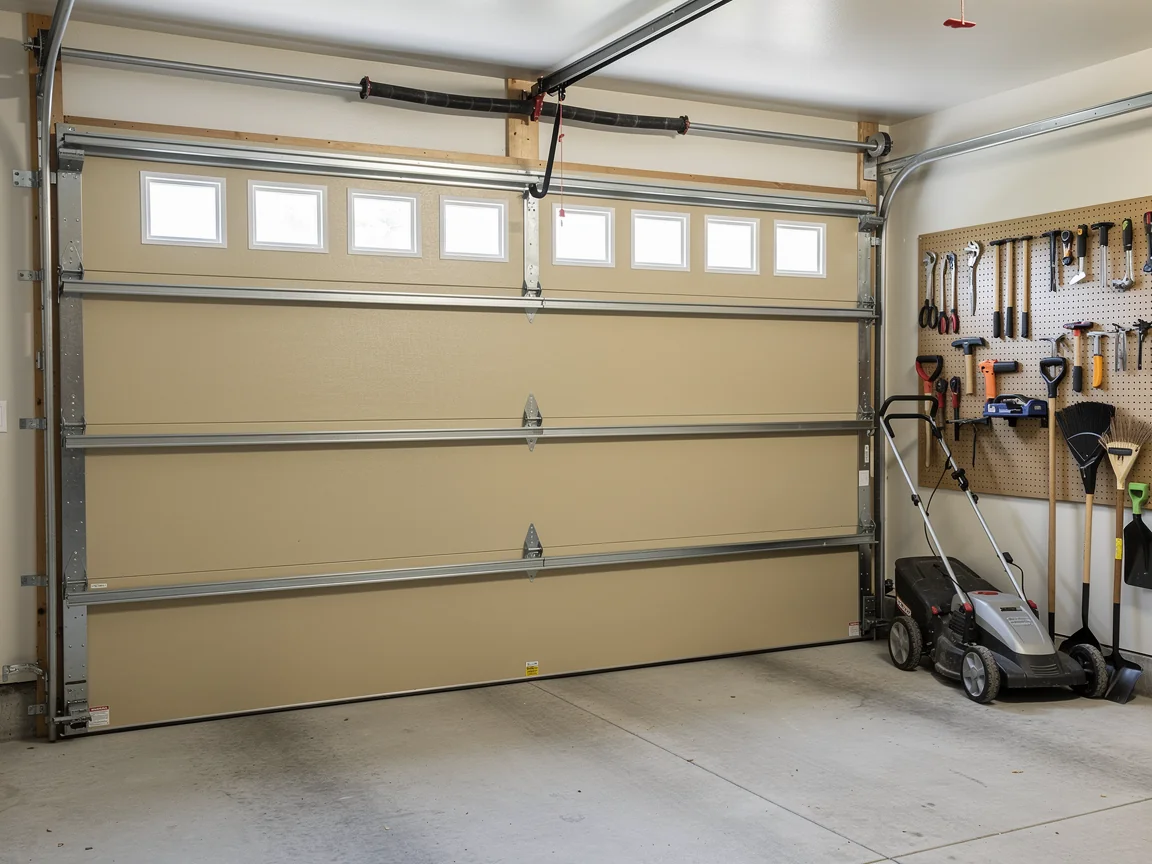
Most houses in Pikesville were built around 1974, which puts the original garage door somewhere in its second or third replacement cycle by now. These are typically steel doors, single-layer or light double-layer, hung in a standard 16x7 double opening or a 9x7 single, on steel track that was sized for a lighter door than what's sold today.
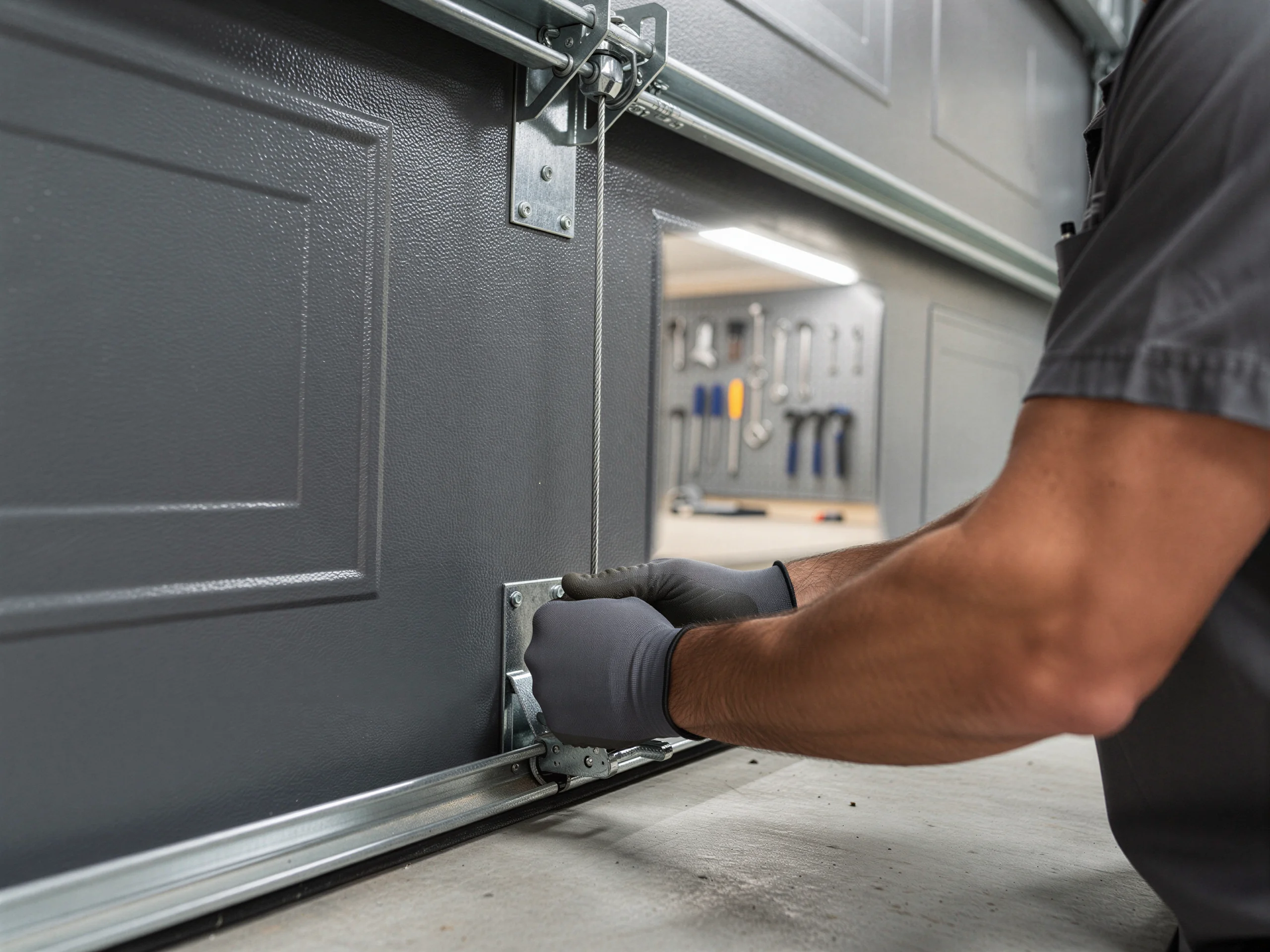
Wavy rusted panels
You'll see it in the door itself before you see it in the opener: panels that have gone soft and wavy from rust creep at the bottom corners, a factory finish that's chalked out, or a door that's been repainted once already and is starting to show it again.
True square tract openings
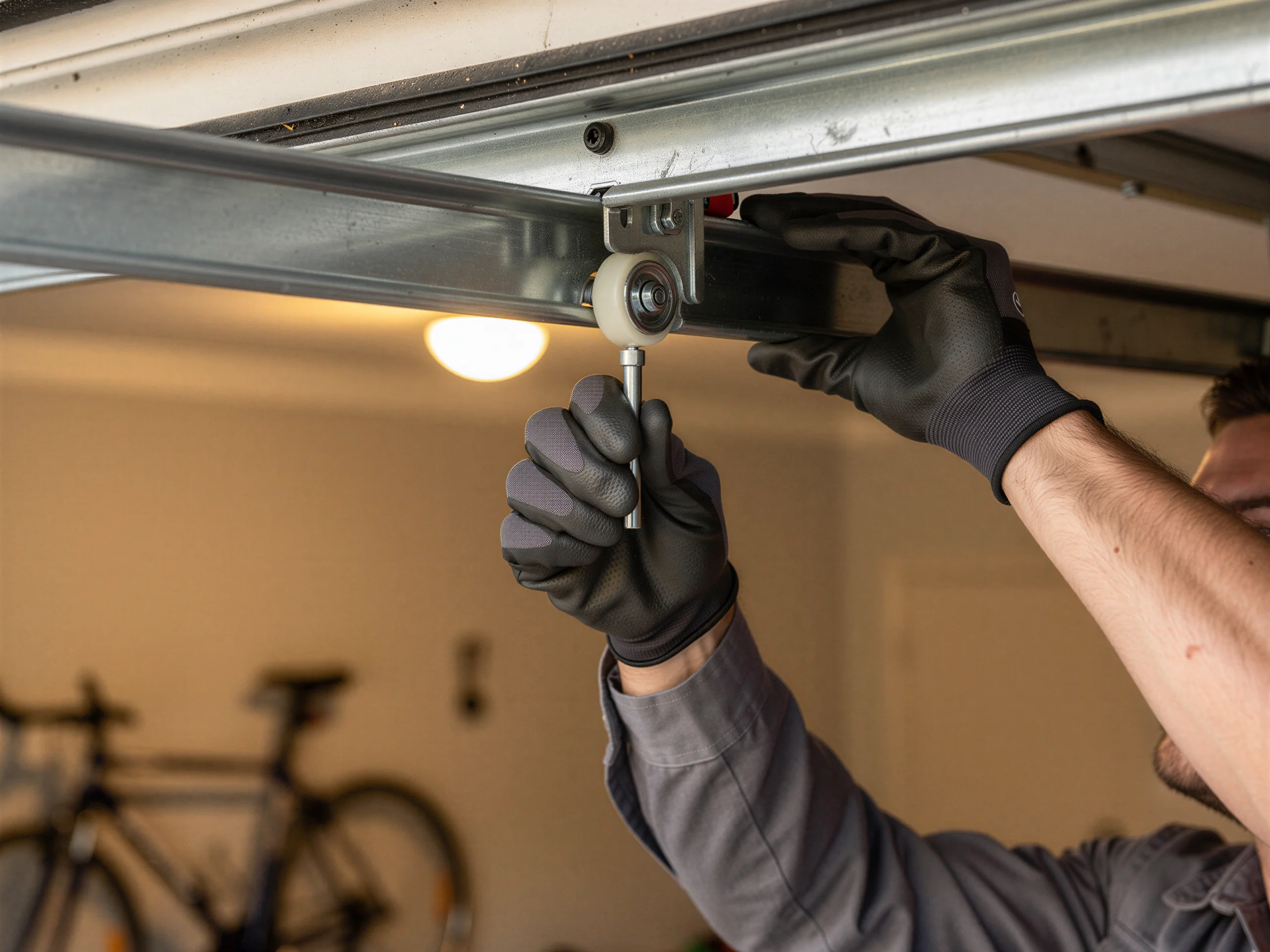
On the 1970s tract-built blocks, the opening itself is usually true and square, which is good news, because it means a new door install doesn't turn into a framing job. The hardware - hinges, rollers, the torsion assembly overhead - is often the second-generation replacement already, not original, since a 50-year-old door has had at least one spring swap along the way.
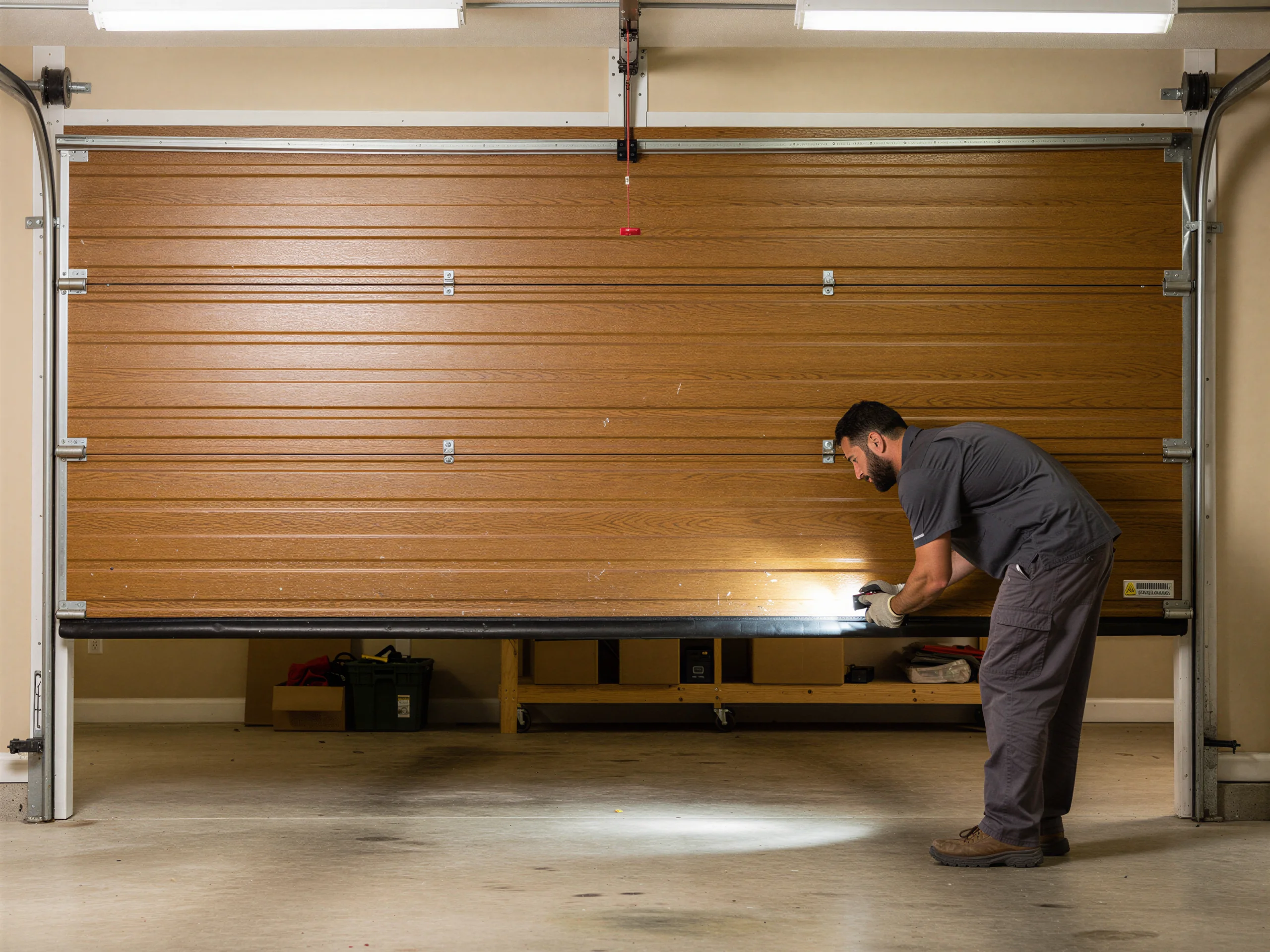
Weatherseal and bottom panel
Before we talk price or timeline, that's the starting point: an aging steel door on an opening that's still sound, in a climate that asks a lot of the weatherseal and the bottom panel every winter.
Doing It Yourself
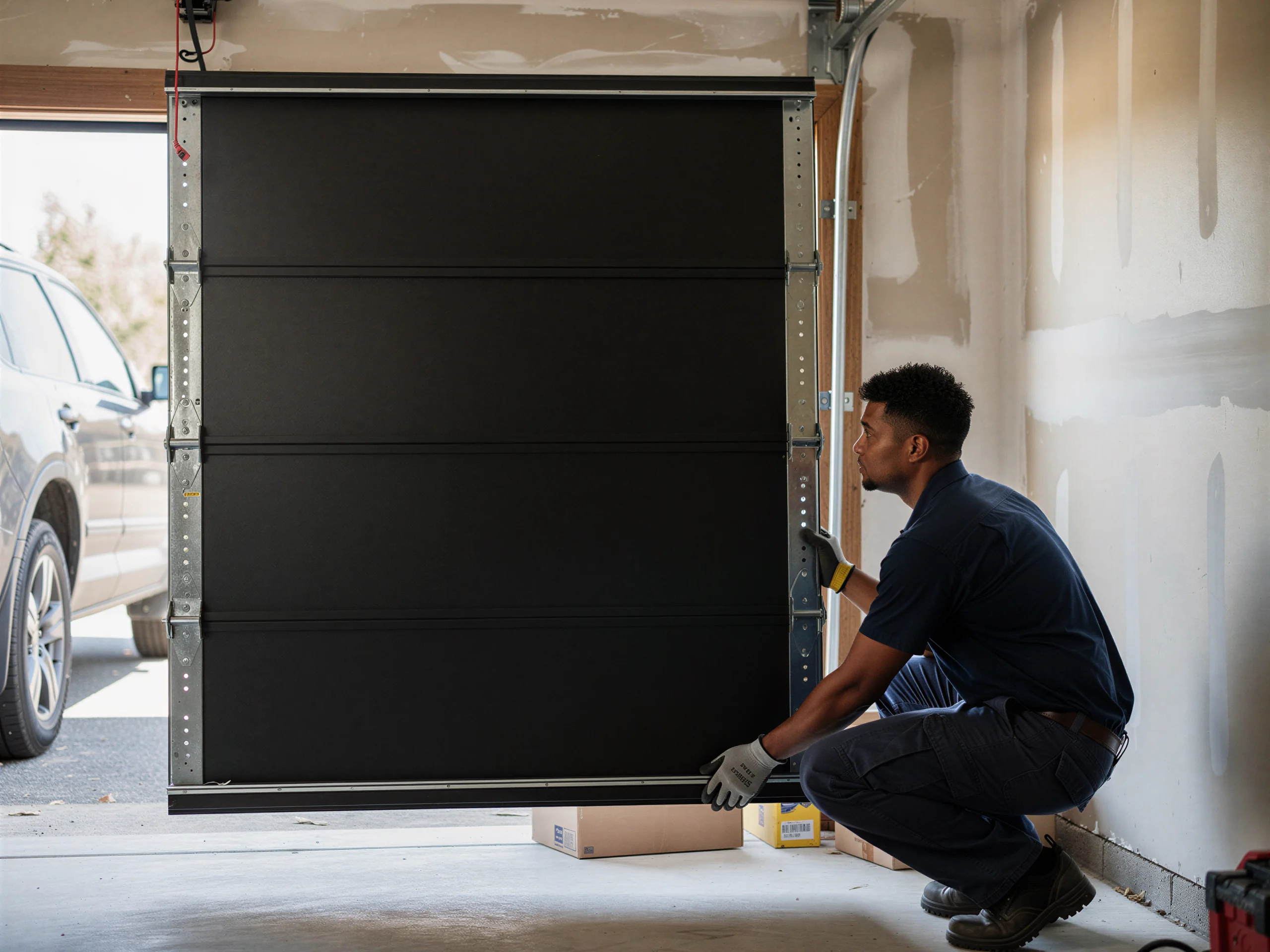
A new door is heavier and more awkward than it looks on a shelf, and torsion springs under tension have put people in the ER more than once. If you're set on doing some of the work yourself, the panel sections and a new opener install are the parts most DIYers can handle safely. Setting new track plumb and squaring a door to a 50-year-old opening that's settled slightly - which happens on houses this age - is where it gets harder than a video makes it look. We'd rather talk you through what's reasonable to do yourself than sell you a job you didn't need.
The Cost of This Job
We don't have a posted price list for new installs here, and we're not going to guess a number that doesn't hold up once we've seen the actual opening and door size.
Door size and track reuse
What we can tell you is what drives the cost on a Pikesville job specifically: whether you're replacing a 16x7 double or a 9x7 single, whether the existing track and springs can be reused or need to go too, and insulation level, which matters more here than in a milder climate given the cold winters this area gets.
Solid steel over premium insulated
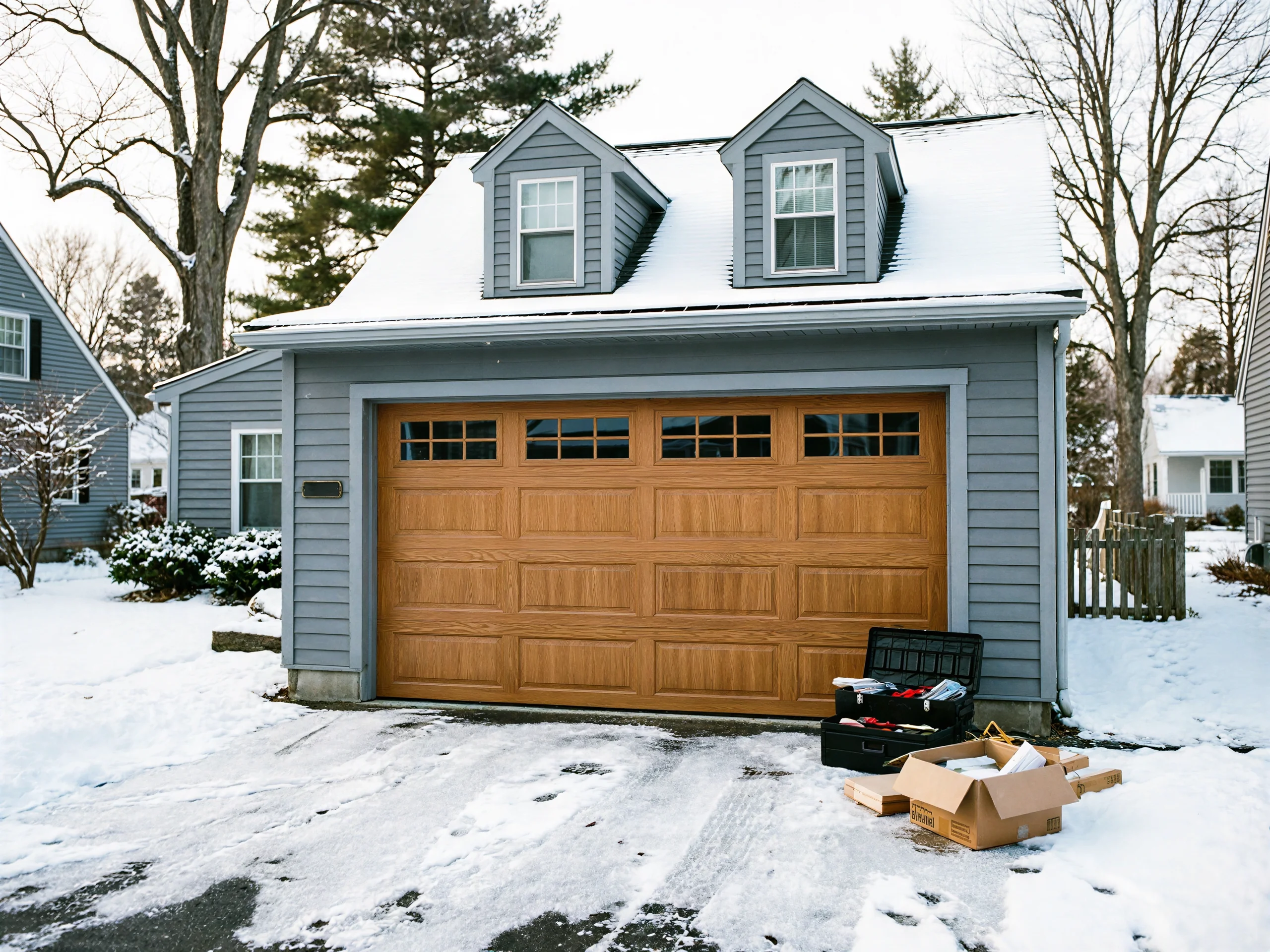
Household income in this part of the service area runs a bit under the wider area's median, and we size recommendations to that - a solid steel door with a reasonable R-value, not the premium insulated option, covers most of what this climate actually demands.
Time on the Job
A straight swap - new door on existing, reusable track and springs - is a different job from a full tear-out that includes new track, new springs, and opener work. We travel from Ellicott City, about 11 miles to reach Pikesville, so we schedule the visit with enough time on site to do the whole job in one trip rather than coming back for a second day. We'll give you a real window once we've looked at the door, not before.
The Complications
The most common surprise on a house built in the 1960s-70s stock that makes up most of this area isn't the door - it's what's behind it.
Settled framing needs shimming
Framing settles over 50 years, and a double opening that was square in 1974 can be out of level by enough to matter now, which means shimming or minor jamb work before a new door will seal properly.
Upgraded springs in odd sizes
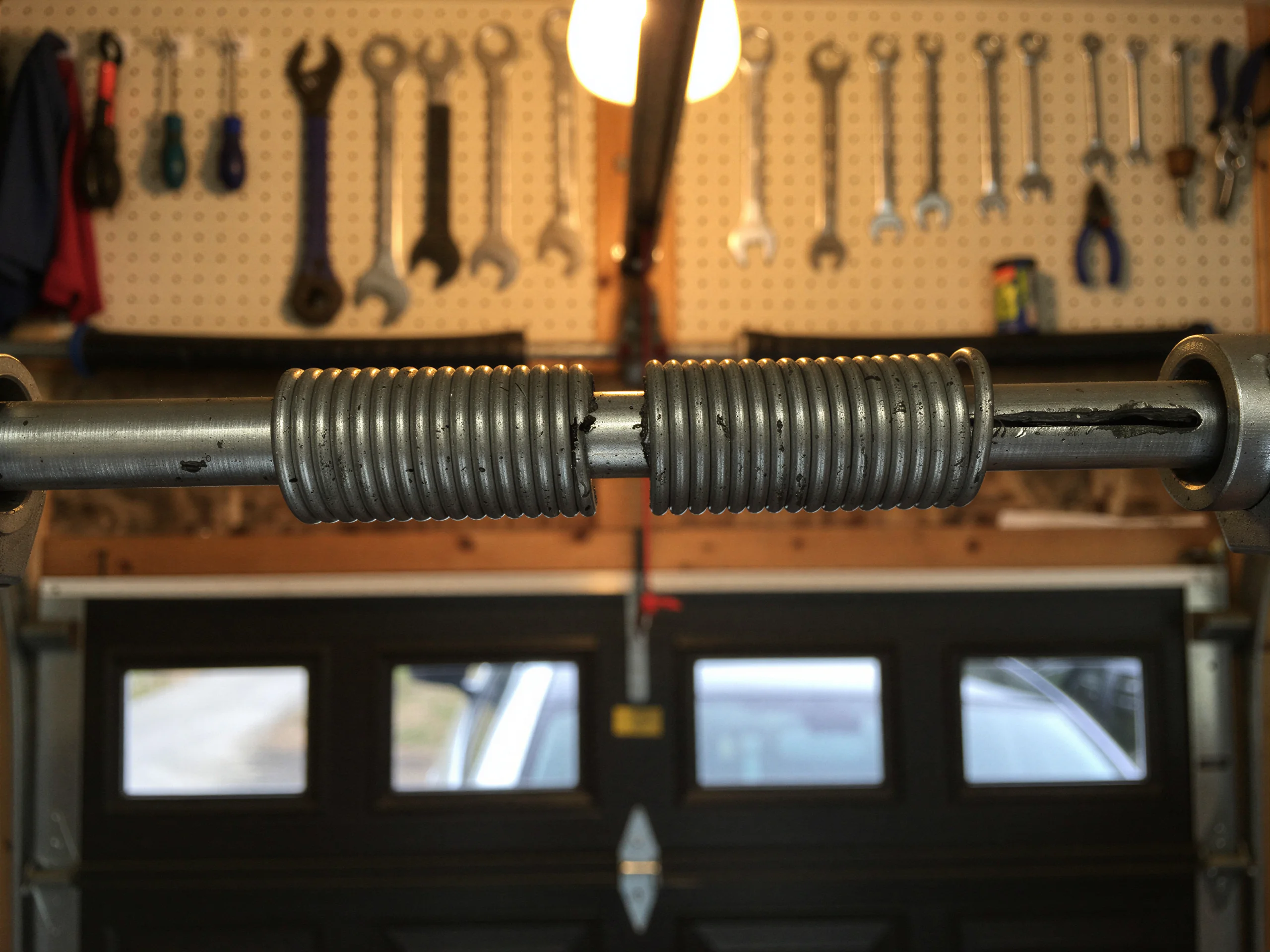
Torsion springs that were upgraded at some point rather than original also come in odd sizes that don't always match a new door's weight, so we check that before quoting rather than after.
Tighter headroom than brackets expect
And on a handful of these older openings, the headroom above the door is tighter than current opener brackets expect - workable, but it needs a look first, not an assumption.
Why It Happens Here
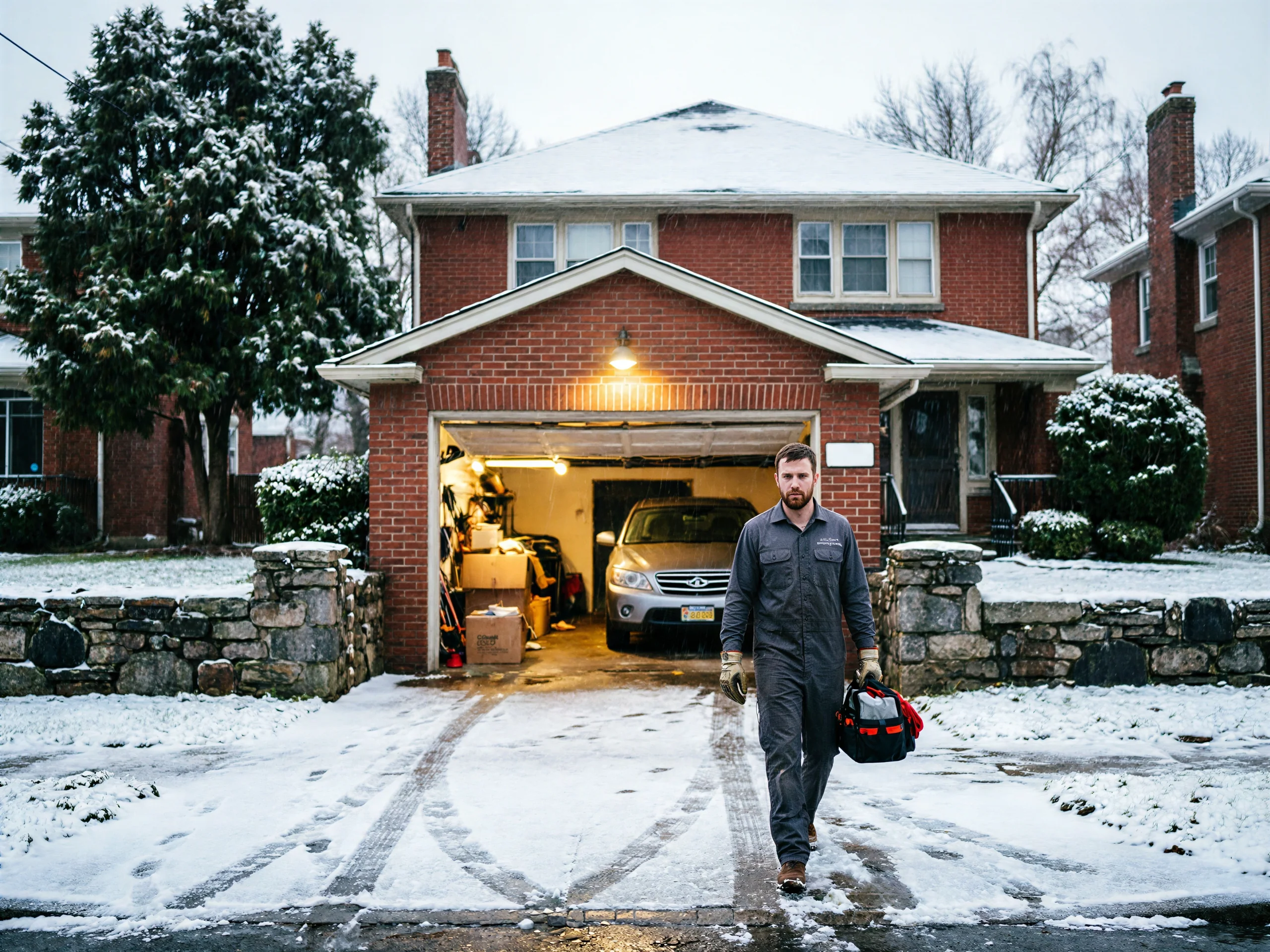
Pikesville's housing stock centers on 1974, squarely inside the broader 1955-2014 range for the area but on the older end of it, and that era of door and track just wears out on a predictable schedule - panels first, then springs, then the opener. Add in a cold, severe winter climate that works bottom seals and panel bottoms harder than a mild one would, and a steel door from the 1970s or 80s that's still original is usually past the point where patching makes sense. This isn't a story about one bad batch of doors; it's just what 50 years of winters does to steel and rubber on a house this age.
Talk to a local pro
Garage door service in Ellicott City?
Same-day service with honest, upfront quotes.