Time on the Job
Arbutus is a small place as these suburbs go - 8,136 households, which is a fraction of the roughly 177,301 owner-occupied houses spread across our whole service area.
Failures cluster by decade
That size matters for roller work: when a town this compact was mostly built out around a single decade, the failures don't scatter randomly, they cluster. A median build year of 1956 means a lot of these garages are closing in on seventy years of door hardware, and a lot of that hardware was never upgraded past what the builder put in.
Repeated block patterns
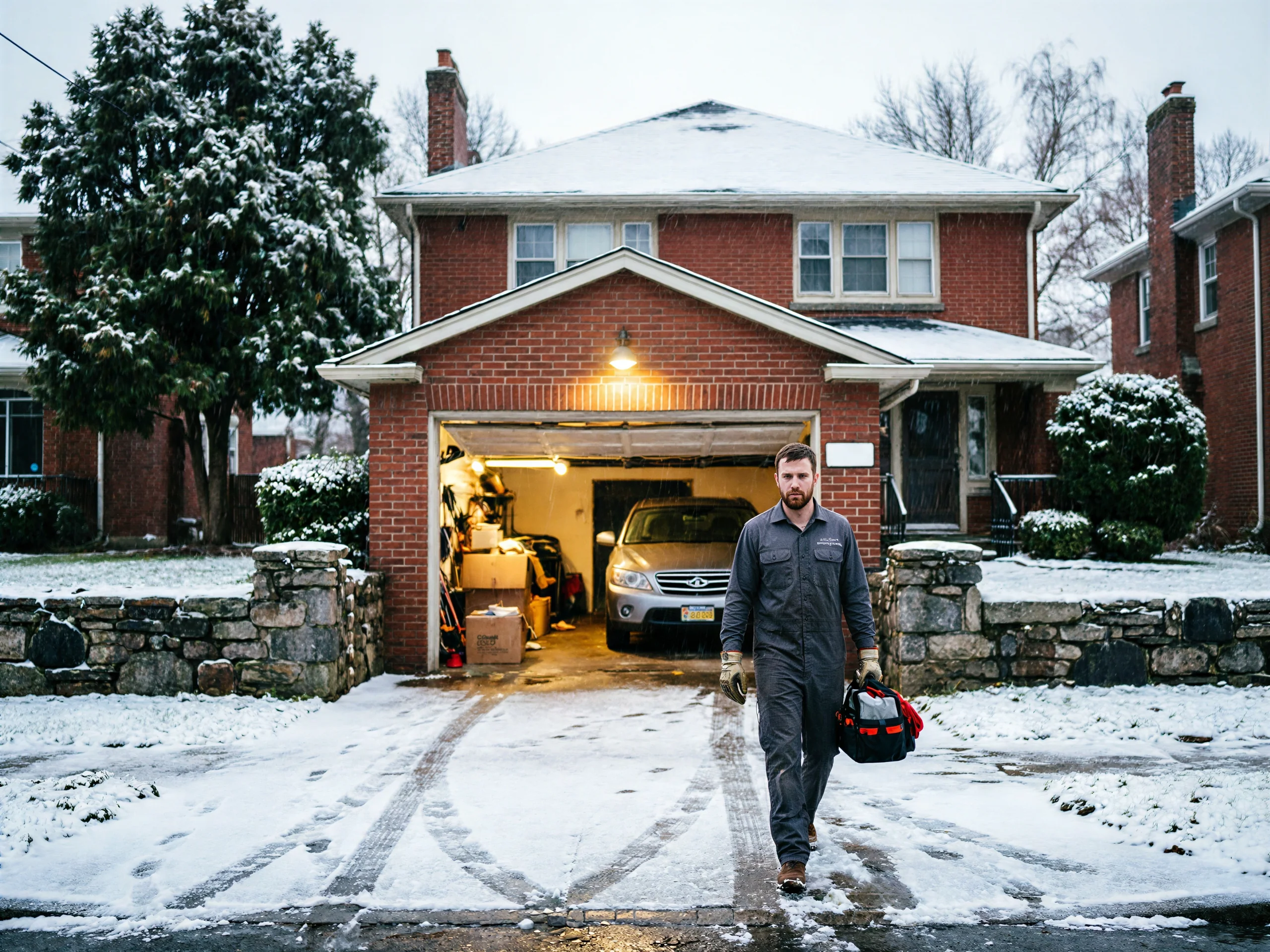
We see the same roller styles, the same track wear patterns, and often the same fix, door after door on the same block pattern repeated across town. We're not based in Arbutus - we run this job from our Ellicott City shop, about eight miles out.
Hardware decade question
That's close enough that a roller call here isn't a special trip, it's a normal part of the route. What we bring with us depends on what decade your door's hardware actually dates to, which is why we ask the build year before we ask much else.
Booking a Visit
When you call about a roller problem, tell us roughly when the house was built if you know it. In Arbutus that's often going to land near 1956, and that single number tells us a lot before the truck even leaves Ellicott City - original hardware gauge, track width, whether the door is likely a single steel panel or something replaced later.
We don't keep a branch in Arbutus, so we schedule the visit as a drive-out job. That means it helps to know which bay is acting up (if you've got a two-car layout, one door) and whether the noise or binding happens on the way up, the way down, or both. Rollers that squeal on the way down but run quiet going up usually point to a different wear pattern than ones that bind both directions, and that distinction changes what we load on the truck before we leave.
How It Shows Up
On a door this old, roller failure rarely announces itself as a dead stop. It starts as noise - a grinding or clicking as the roller turns in a track that's lost its factory alignment decades ago.
Oval roller hitch
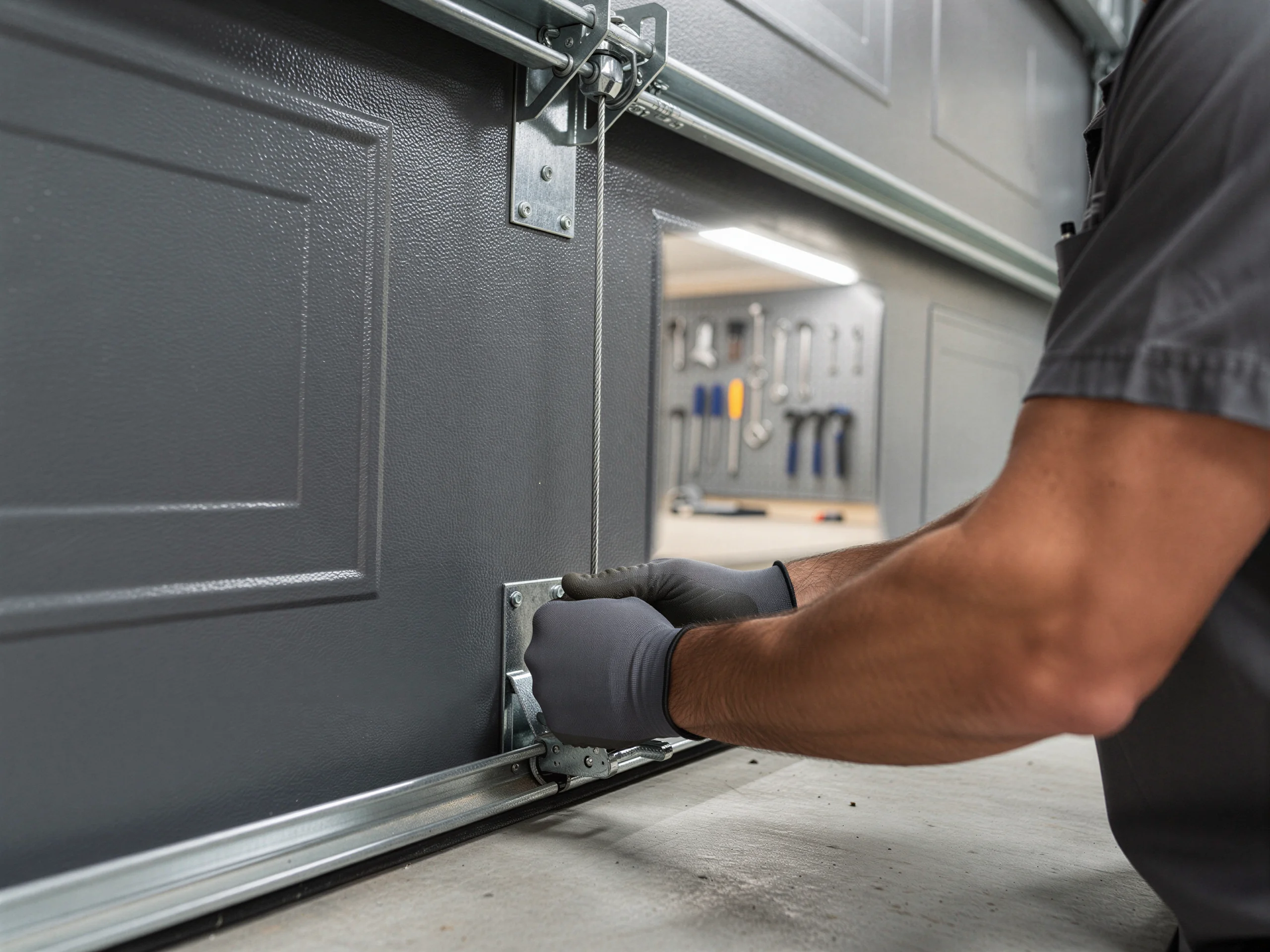
Then it becomes a hitch, a spot in the travel where the door hesitates because a roller has gone oval instead of round, or the stem has worn loose in its bracket.
Unsealed plain bearings
Houses built around 1956 commonly still run on the original steel rollers with plain bearings, no sealing, nothing to keep grit out over sixty-plus years. Those rollers don't fail all at once - they wear a flat spot, then another, and the door starts to shudder at the same point in its travel every single time.
Same-height hitch signals
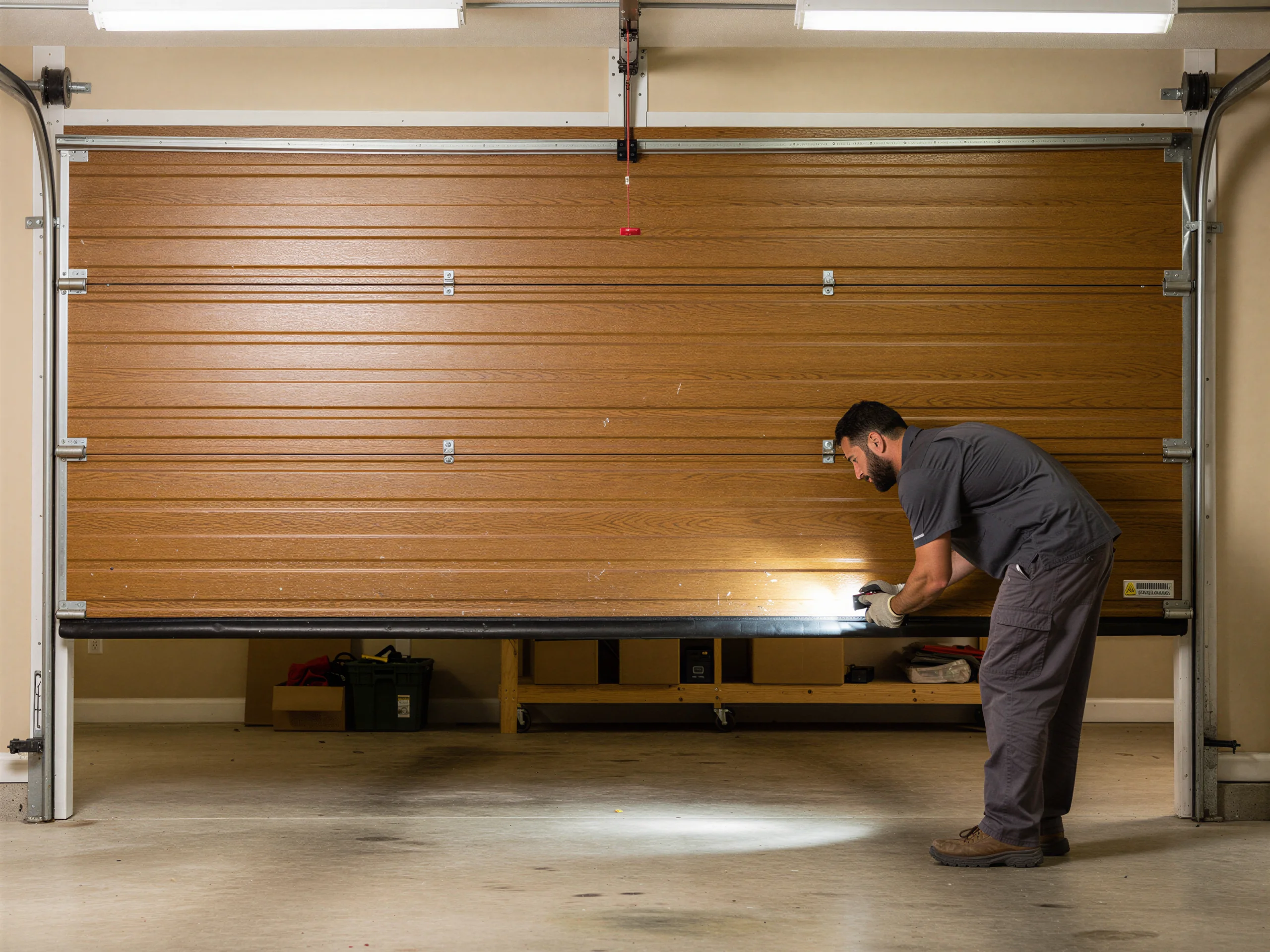
If you're hearing that same hitch at the same height on every open, that's a roller, not a spring, and it's worth catching before the flat spot starts chewing into the track itself.
The Complications
The climate here runs cold and severe through the winter months, and that's hard on aging rollers whether they're steel or the newer nylon type.
Seizing bearings in cold
Dried-out lubrication on a steel roller gets worse, not better, in freezing temperatures - the bearing seizes slightly, the roller stops turning freely, and it starts dragging instead of rolling.
Cracked flanges from drag
On a door that's already seventy years into its working life, that drag is often the thing that finally cracks a worn track flange. The honest limitation here: if the track itself has worn a groove from decades of a dragging roller, swapping the roller alone won't fix the noise.
Track replacement alongside roller
We'll tell you straight if the track needs replacing alongside the roller - trying to save a worn track with a new roller just transfers the wear back onto the new part faster than it should.
Parts We Carry
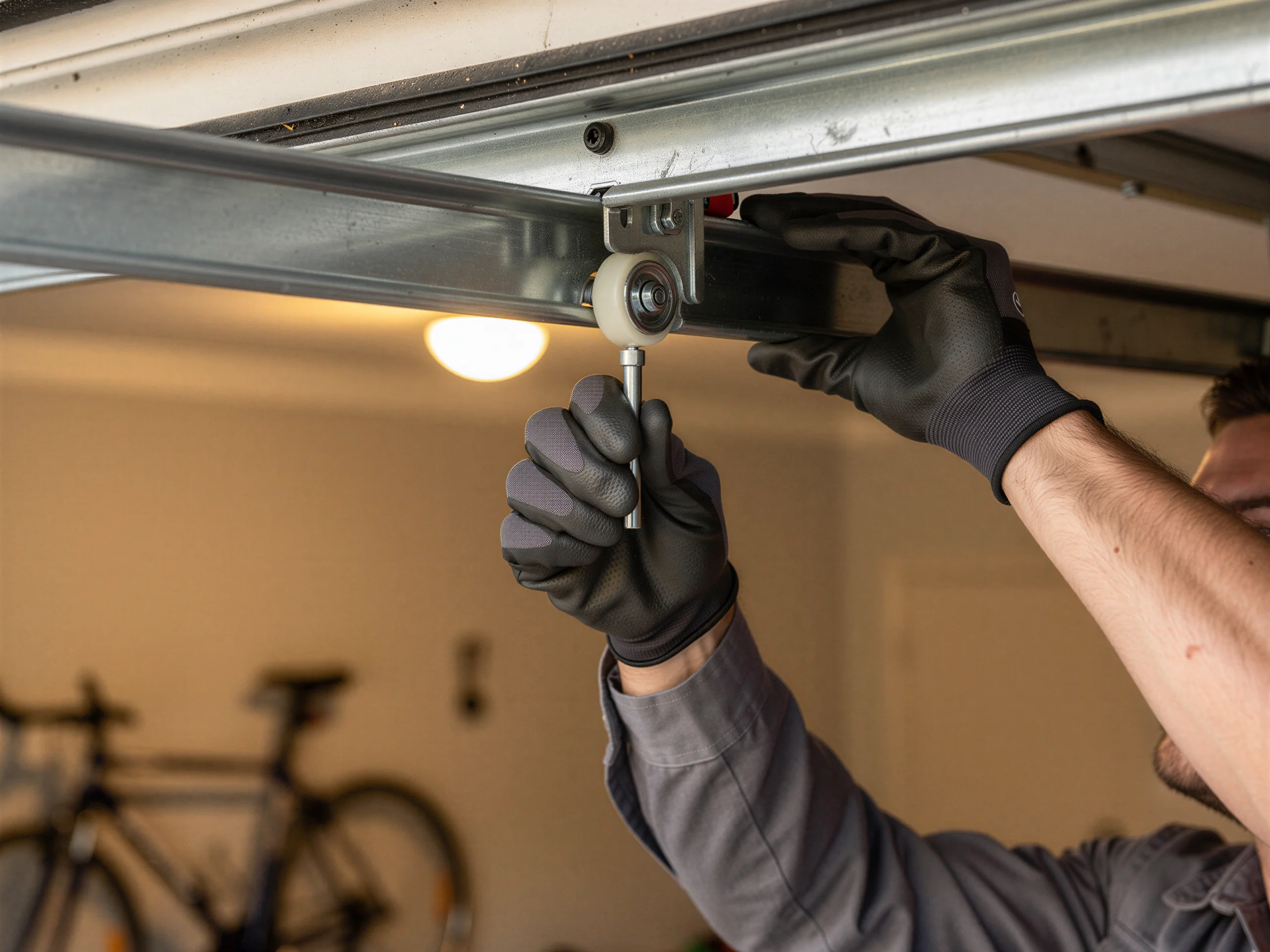
We carry both steel and nylon rollers on the truck because a town with Arbutus's building history needs both. The steel rollers match what's original on a lot of the 1956-era doors, where the stem length and bracket spacing were set to older standards. Nylon rollers with sealed bearings are what we recommend for most replacements now, since they run quieter and hold lubrication longer through a cold winter, but they only work if the bracket and stem geometry match what's already there.
Arbutus's median household income, at $97,215, runs a bit under the wider service area's $109,790, and that's part of why we stock a range rather than pushing one roller grade. A full 13-ball bearing nylon roller costs more than a basic steel replacement, and for a door that only needs a few rollers swapped, we'll tell you which grade actually makes sense for the rest of the door's remaining life instead of upselling the top tier by default.
What the Repair Takes
Most roller jobs on a door this age mean replacing more than one roller at a time - if one has gone flat from age, the others riding the same track are usually close behind. We'll check the whole set rather than swap just the noisy one and leave three more about to fail.
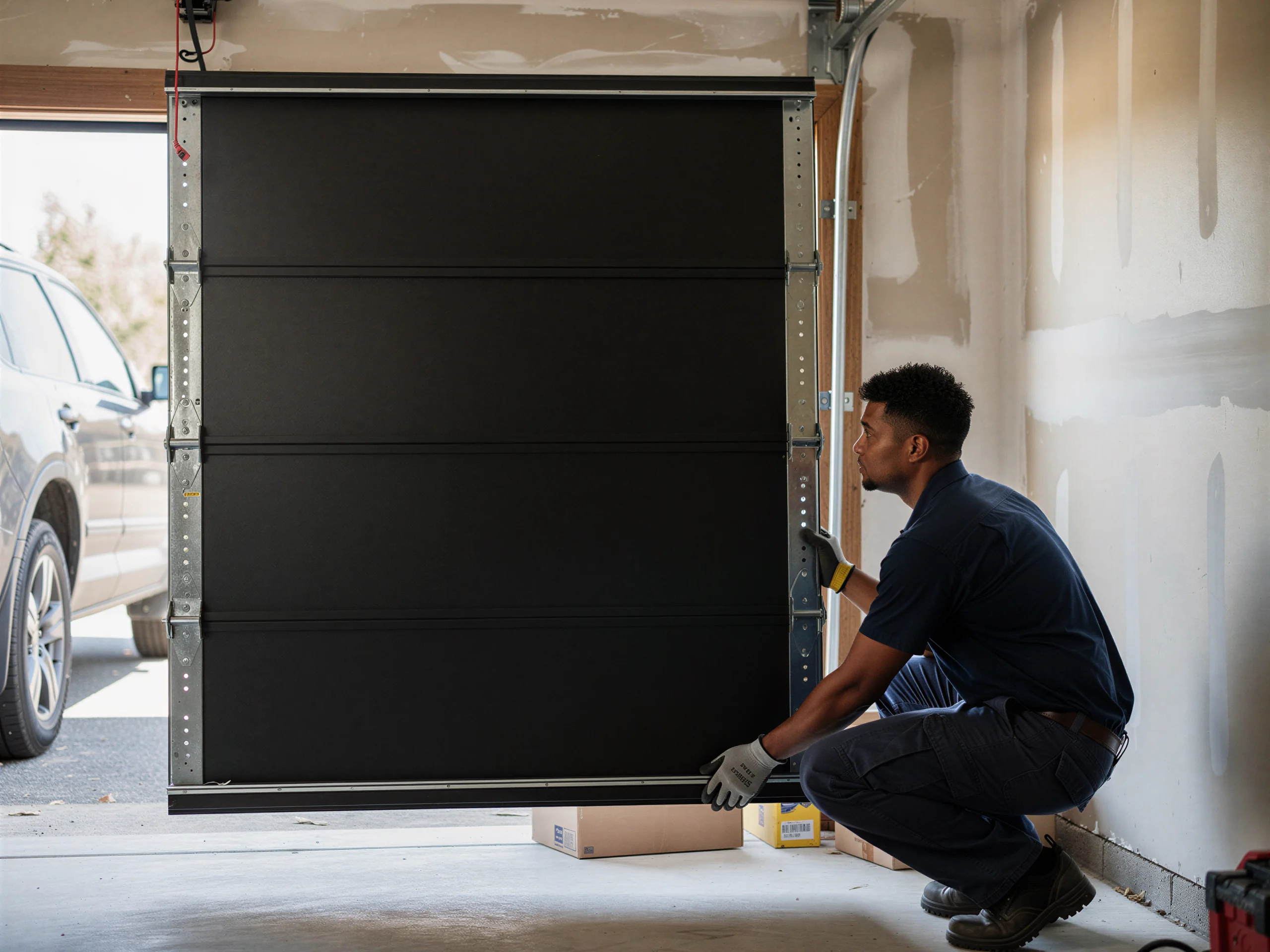
On a door with a worn track, we'll also check the track alignment and mounting bolts, since a loose bracket often gets blamed on the roller when it's actually the track pulling away from the jamb. That's common enough on houses from this build era that we check it as a matter of course. If the door is a single steel panel original to the house, we'll also flag whether it's worth keeping the panel at all once the roller and track are both due - sometimes the honest answer is that a repair this far into the hardware's life is a stopgap, not a fix.
Talk to a local pro
Garage door service in Ellicott City?
Same-day service with honest, upfront quotes.